Quintana Roo prosecutors and federal health inspectors shut five tourist-zone pharmacies in Playa del Carmen over illegal and adulterated drugs.
A joint operation by Quintana Roo’s prosecutor’s office and federal health regulators has shut down five Playa del Carmen pharmacies in the heart of the city’s tourist zone. The businesses, operating under the “D’ Francia” name, were seized on Thursday after investigators accused them of selling controlled and adulterated medicines to foreign tourists.
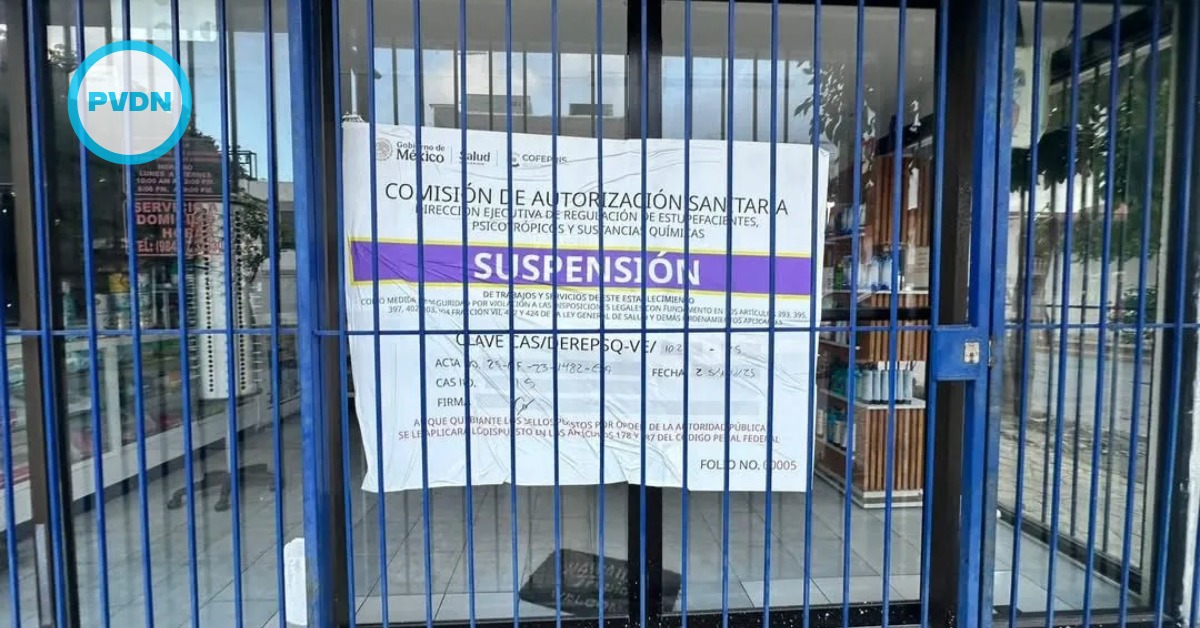
The raid unfolded along the busy pedestrian corridor where visitors shop, eat and catch the ferry to Cozumel. For several hours, officers from the state prosecutor’s office and the Federal Commission for Protection against Sanitary Risks (Cofepris) surrounded the storefronts, blocked access and began clearing shelves. By the end of the operation, the facades carried official “Asegurado” and “Suspendido” seals and boxes of seized medicines had been loaded out as evidence.
Early information from the investigation points to a scheme that used apparently ordinary pharmacies as fronts. Authorities say the outlets are suspected of selling psychotropic and other controlled pills without prescriptions, alongside medicines that may not match the ingredients on their labels. The alleged primary market was foreign tourists, with many purchases handled in dollars at steep mark-ups.
For now, officials have confirmed the seizure of the five outlets but have not announced arrests or formal charges. Prosecutors are expected to open criminal case files to determine whether the owners or managers face health and fraud-related offenses. Health regulators will also have to decide on administrative sanctions, including the permanent closure of the businesses and potential license cancellations.
Crackdown on Playa del Carmen pharmacies
The closure of these pharmacies lands at the start of the high holiday season, when Playa del Carmen’s central streets are packed with international visitors. The idea that controlled medications and falsified pills could be sold steps from hotels and bars strikes at the trust that tourists place in local services.
According to the preliminary case file, investigators are working on a timeline to understand how long the network operated before Thursday’s raid. The pharmacies are believed to have targeted visitors seeking painkillers, anxiety medications and other psychotropic drugs that are more tightly controlled in their home countries. Selling such products without a valid prescription would violate federal health rules; offering altered or counterfeit versions raises the stakes even higher.
Residents who work in tourism worry about both sides of the problem. On one hand, unsafe medications can put visitors in immediate danger. On the other hand, each scandal chips away at the destination’s reputation at a time when competition between beach resorts in the Caribbean is intense. For small businesses that depend on repeat visitors and word-of-mouth recommendations, news of falsified medicines in the main tourist strip is more than a passing embarrassment.
This is not the first time Cofepris has targeted pharmacies in Quintana Roo’s resort cities. In 2023, a federal operation carried out inspections in Cancún, Playa del Carmen and Tulum, suspending more than twenty pharmacies and seizing products after finding irregular sales of controlled medicines. Those actions followed complaints that some outlets were selling powerful drugs outside the legal supply chain and without proper prescriptions.
The new raid in Playa del Carmen suggests that, despite earlier enforcement, gaps remained in day-to-day oversight. It also highlights how profitable this type of scheme can be when aimed at short-stay tourists who often pay in cash and fly home within days.
Tourist trust and the wider counterfeit pill problem
Health risks from counterfeit and adulterated medicines are not limited to the Riviera Maya. A 2023 study by researchers working in northern Mexico documented pharmacies in tourist towns selling counterfeit pills that actually contained fentanyl, heroin or methamphetamine while being presented as common prescription opioids or stimulants. The researchers stressed that the fake tablets were visually indistinguishable from real ones, making it impossible for customers to tell the difference at a glance.
That kind of finding fed into wider concern from health authorities on both sides of the border. The U.S. Embassy in Mexico has issued health alerts warning travelers that counterfeit pharmaceuticals may be available at some Mexican pharmacies, including pills that contain unexpected synthetic opioids. Travelers were urged to exercise caution when buying medicine, even in brick-and-mortar stores that appear legitimate.
International health agencies also remind patients that falsified medicines can cause harm in several ways. Some contain no active ingredient, leaving illnesses untreated. Others contain the wrong dose or unexpected chemicals that can trigger overdoses, allergic reactions or organ damage. Even when they do not cause immediate poisoning, counterfeit or altered drugs can delay proper treatment while a patient assumes they are taking a reliable medication.
Against that backdrop, the Playa del Carmen operation carries a message beyond the five shuttered storefronts. For tourists who genuinely need care while traveling, access to safe, regulated pharmacies is essential. When a few businesses chase quick profits by cutting corners or selling dangerous substitutes, they put both patients and the wider community at risk.
Authorities now face a dual challenge. The first is to build a strong case that traces responsibility for the seized products and, if warranted, brings it before a judge. The second is to rebuild trust by tightening routine inspections in tourist corridors, making it far more challenging for similar schemes to take root.
For visitors, the safest step remains simple but sometimes overlooked: seek medical advice before taking any controlled drug abroad, use established pharmacies that follow prescription rules and be wary of anyone offering strong medications quickly, in cash and without questions. The shutdown of these five pharmacies may be the most visible sign yet that regulators are paying closer attention to what is sold over the counter in Mexico’s beach resorts. Whether that attention endures after the headlines fade will matter for both public health and the future of Playa del Carmen as a trusted destination.