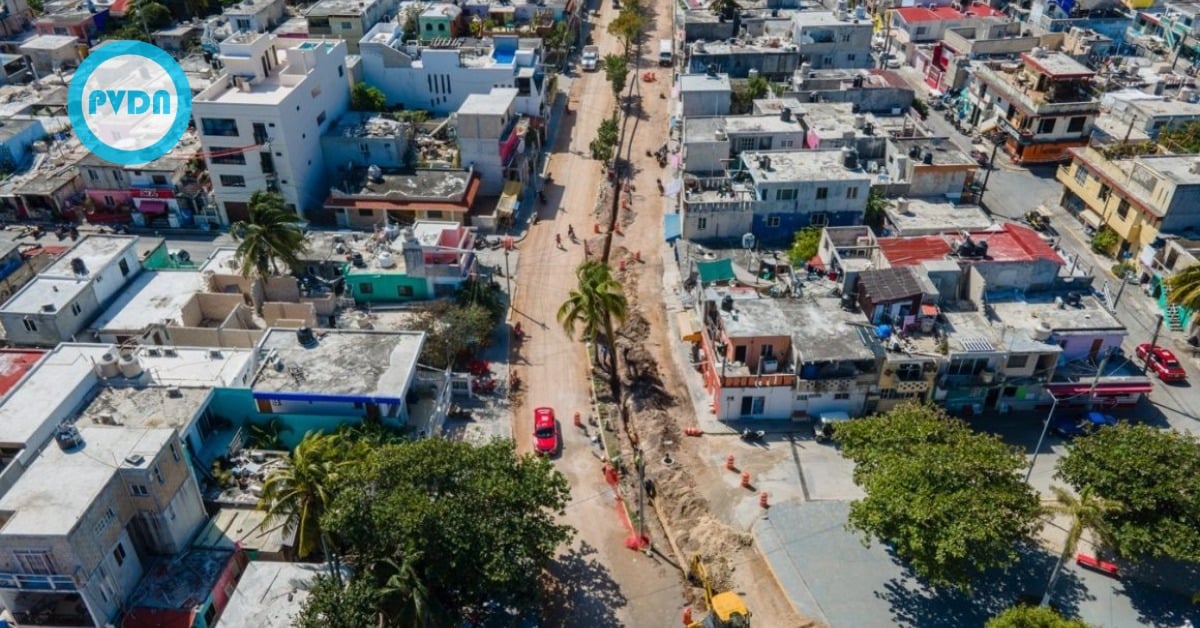
Aguakan has started tearing up the old mains in central Playa del Carmen, swapping them for new pipe across seven circuits from Avenida 10 into nearby streets. The utility says the work will run through March and include 18.4 kilometers of new line and more than 2,000 household reconnections. City Hall is treating it as part of a broader Avenida 10 overhaul, promising staged closures and detours to keep people moving. For residents, the question is simple: short-term headaches now, steadier pressure and fewer leaks later.
The first barricades went up along Avenida 10 this week as Aguakan opened trenches to replace decades-old potable water lines beneath the city’s core. The company states that the project will span from September 2025 to March 2026 and encompass more than 18.4 kilometers of new pipe, with diameters ranging from 3 to 18 inches. It also includes 2,155 rebuilt household connections, the kind of detail that determines whether a faucet sputters or runs steady. Officials estimate more than 14,000 people will feel the difference over the coming years.
City Hall has tied the timing to its broader makeover of Avenida 10. Rather than paving a street now and having to cut it again next season, the municipality and Aguakan are sequencing the work so that utilities are installed first and the surface is rebuilt once. The first stage runs on Avenida 10 between CTM and 34 Norte. Later phases push into interior blocks between 15 Norte and 10, and finally east toward Albatros, brushing the city’s Fifth Avenue spine. The method is open-cut trenching, which is messy but straightforward, and when done in sections, can help limit the chaos.
Playa del Carmen pipes
Residents are already seeing partial closures, cones, and flaggers guiding traffic around fresh excavations. Aguakan says detours are signposted and urges neighbors to check its channels and the 073 line for updates. The company is framing the push as leak prevention and service stabilization; less water lost underground means more pressure above it and fewer emergency digs later. Local outlets have echoed the scope, timing, and three-phase plan, confirming that seven independent circuits are involved in the downtown grid.
The politics of street work are unavoidable here. Earlier this year, council members pressed the administration to demand a complete plan before repaving Avenida 10, arguing that piecemeal fixes hurt the city’s image and waste money. By late summer, Solidaridad published procurement notices for the repaving and pedestrian upgrades on Avenida 10, effectively locking the calendar that Aguakan is now working against. In practical terms, it means the utility and the city are finally pulling in the same direction.
What changes for the neighborhood
For most folks living and working near Avenida 10, the near term is about noise, dust, and the everyday puzzle of getting around barricades. The longer horizon looks better: new trunk lines should reduce the chronic seepage that softens subsoil and spawns potholes after storms. Coordinating with the avenue’s redesign—wider sidewalks, a protected cycle lane, and full resurfacing—could create a corridor that’s safer to cross and easier to serve without compromising it again. That’s the promise on paper; the test will be how consistently crews restore each block as they move.
Aguakan’s construction lead insists the company is moving “in strict order” with environmental care and municipal coordination, and the firm has been nudging people to follow its Facebook and X accounts for daily notices. As always, the measure that matters is at the tap. If the schedule holds and the tie-ins are clean, downtown households should see steadier pressure and fewer surprise outages once the seven circuits are live. Until then, patience and good detour signage will suffice. Playa del Carmen pipes work is disruptive by nature; done once and done right, it’s also the cheapest way to avoid ripping up the street twice.