Playa del Carmen just switched on a new North Access Arch that’s more than a welcome sign. It’s wired into the state C5 and local C4 and adds license-plate readers and RFID to watch who’s coming in. Officials frame it as a safety and traffic tool for a fast-growing city. Residents will likely notice the lighting, sculptures, and sheer size. They may also ask the right questions about how the data is used, how long it’s kept, and what it means for daily life.
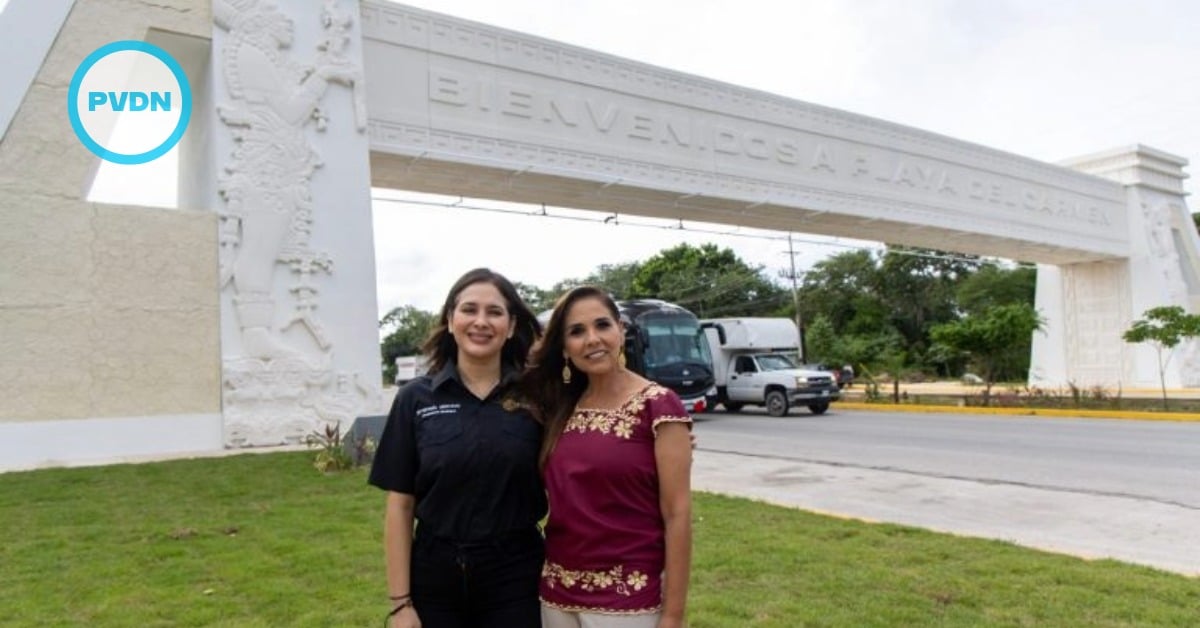
On Monday, October 20, 2025, Governor Mara Lezama stood with Mayor Estefanía Mercado to open Playa del Carmen’s North Access Arch, a striking gateway that doubles as a security checkpoint. The installation links directly to the state’s C5 and the city’s C4 monitoring centers and adds automatic number-plate recognition and RFID readers to track vehicles entering the city. Playa del Carmen surveillance just became both more visible and more centralized.
The city pitched the arch as identity and security in one move. It rises about 13.15 meters, spans roughly 60 meters, and carries Mayan-inspired finishes. Fifteen programmable lighting systems will change colors on command, turning a traffic threshold into a civic statement. The site sits near the Kanai complex on the highway from Puerto Morelos, a spot most visitors hit long before the beach.
Officials also cited costs “a little over 40 million pesos,” consistent with budget signals shared when construction began earlier this year. In February, the project was flagged as a fast build with advanced cameras, radar, and RFID as part of the plan. That timeline and price tag match City Hall and local outlets’ words as steel went up along the north entrance.
The municipal announcement frames the arch as a welcome to a “world-class” destination and a tool to keep the flow orderly and safer for residents and visitors. It’s designed to feed live data back to command centers coordinating patrols, road incidents, and emergency calls across Solidaridad.
Playa del Carmen surveillance
What actually happens at the arch? ANPR cameras read plates using optical character recognition and match them in real time, while RFID can identify tagged objects or vehicles as they pass. With speed control measures and the C5/C4 link, the system can flag suspicious plates, spot stolen vehicles, and ease choke points at the city’s busiest entry. Authorities argue that the tools help a town that claims more than 300,000 residents and heavy daily traffic from Cancún and the airport.
This is not Playa’s first bet on cameras, but it is its most visible. The arch makes the security layer literal. As always with surveillance, acceptance tends to hinge on what happens next. People want fewer robberies and faster responses. They also wish to clear rules for data: who sees it, how long it’s kept, and how mistakes are corrected. Mexico’s privacy framework expects those answers on paper; residents should be able to find them in municipal policy, not just press lines.
The rollout also extends a story that started months ago. February coverage noted the plan for C4-compatible gear, plate readers, radar, and RFID, and an estimated finish in a few weeks. Monday’s ribbon-cutting suggests the city largely hit its ambition, with an even sharper emphasis on plate recognition and the C5/C4 pipeline as the system went live. La Jornada Maya’s report echoes those technical details and state and municipal leaders’ “work as one” message.
What this means for drivers and residents
Most people will feel the change as smoother entries and more patrol awareness at peak hours, not as checkpoints. The system is built to watch, not to stop, unless a plate pings an alert. As for the symbol, the arch plants a very public stake in how Playa sees itself: modern, busy, and trying to stay safe without losing its charm. That narrative appeared across regional coverage, from city press to evening news hits, and in photos of lit columns at the north gate. Quadratín Quintana Roo logged the opening on Monday evening, emphasizing identity and security.
If the city follows through with clear safeguards and honest metrics—response times, stolen-vehicle recoveries, traffic impacts—the arch can be more than a photo op. It can prove that visibility and accountability can ride together on the same stretch of highway.