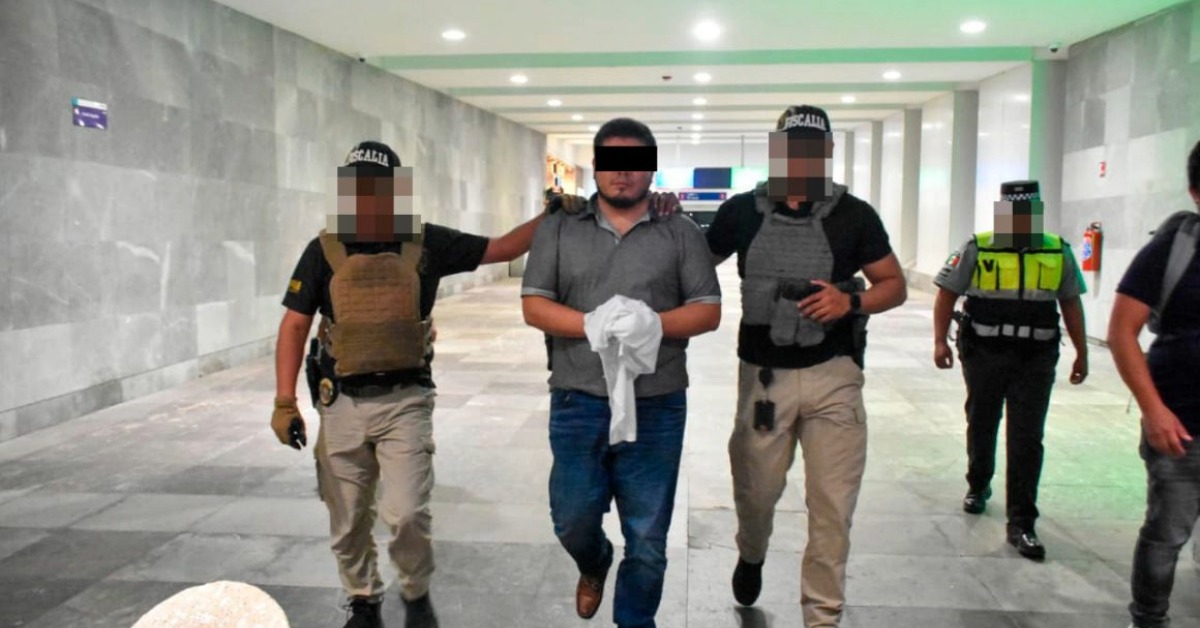
Authorities say a man identified as Abelsasar “N” didn’t make it far. Stopped at a checkpoint in Tabasco, he ended the day in custody and—by night—on a flight back to Quintana Roo. Investigators link him to a brutal crime that rattled drivers along Highway 307 in mid-July. What led detectives from a roadside stop to a homicide case 700 kilometers away? We trace the path, the unanswered questions, and what this arrest could mean for a taxi union coping with a deadly year.
Playa del Carmen taxi murders
A man identified as Abelsasar “N” was arrested in Centla, Tabasco, and transferred to Quintana Roo. There, prosecutors say he is under investigation for his probable role in the July 18 killing of three taxi drivers near Playa del Carmen. State prosecutors detailed an inter-agency operation that included federal and Tabasco authorities. They say the suspect was intercepted on the Villahermosa–Ciudad del Carmen highway and later handed to Quintana Roo’s judicial officers.
Prosecutors link the arrest to a triple homicide on Highway 307 between Playa del Carmen and Puerto Morelos. The three victims—members of the Lázaro Cárdenas del Río taxi union—were found with gunshot wounds on the morning of July 18. This case deepened safety fears along the corridor.
The roadside stop that opened the case
Local reports say the detention unfolded at kilometer 87 of the Villahermosa–Ciudad del Carmen highway. Officers flagged a white Nissan Sentra without plates traveling at high speed. After the driver struck roadside markers, a search reportedly found a small amount of marijuana. The man was held on a minor drug offense while his identity was checked. This revealed an outstanding arrest warrant tied to the Playa del Carmen case, according to outlets that cite the state communiqué.
Following the verification, the suspect was flown to Playa del Carmen and placed at the disposal of a control judge. Prosecutors have not publicly detailed evidence beyond the warrant and the stated link to the July crime. They stress the presumption of innocence under Mexican law.
What we know about the July 18 crime scene
On July 18, authorities discovered three bodies off Highway 307. This was near the municipal line with Puerto Morelos and close to the Nickelodeon resort area. Early reporting described signs of torture and gunfire. Investigators cordoned off the scene while they collected evidence. The killings brought the year’s toll for union drivers to six, according to contemporaneous national coverage.
Independent local reports at the time placed investigators’ focus on organized-crime activity in the corridor. Retail drug sales aimed at tourists have drawn rival groups for years. That line of inquiry remains part of the public record surrounding the case. Though prosecutors have not announced formal charges on that specific motive.
A deadly year for drivers—and a union under strain
The Lázaro Cárdenas del Río union anchors taxi service in Playa del Carmen. This year it has also faced a string of killings that unsettle drivers and passengers alike. By mid-July, at least six union members had been slain in 2025. This figure underscores the risk drivers face on routes that cut through contested territory. The July 18 killings—three men in one discovery—marked the year’s darkest day for the sector.
The arrest in Tabasco will test whether investigators can convert a multi-state manhunt into a solid case. Families of the victims want more than an announcement. They want a clear account of why these three men were targeted and how far the network of accountability reaches. Those answers will likely emerge, if they do, through courtroom filings in Playa del Carmen. Not through press releases.
What comes next in court
With the suspect now in Quintana Roo, prosecutors will seek to justify the arrest in an initial hearing. They will lay out the basis for vinculación a proceso if a judge finds sufficient probable cause. Defense counsel may challenge aspects of the stop and identification. For now, authorities say the arrest follows a coordinated effort across agencies and states. This outcome, at minimum, shows the case is active and moving.
If the case advances, expect more detail on the evidence linking the July 18 scene to the man detained in Centla. For a city that runs on tourism and service jobs, a credible, transparent judicial process matters as much as the arrest. Drivers are still on the road tonight. They need to know someone is making those roads safer—not just counting bodies after dawn.