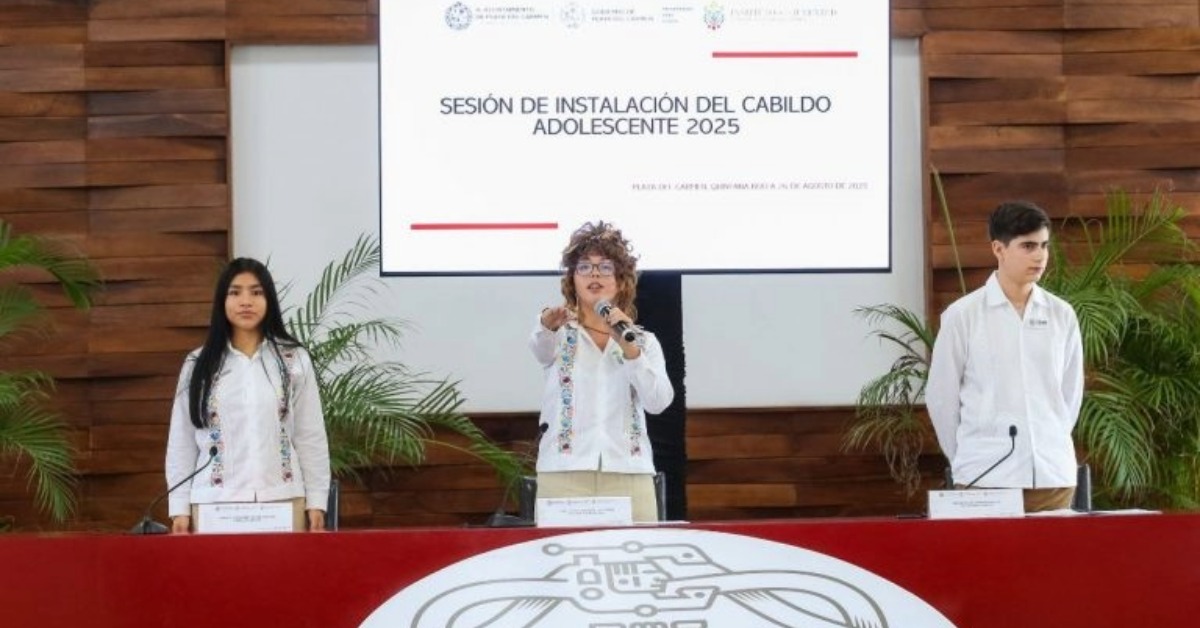
Playa del Carmen has installed a new adolescent council to bring teen voices into city decisions. The ceremony took place in the Leona Vicario hall at the municipal palace. Officials present described the forum as a working channel, not a stage prop. The message to the teens was simple. Your proposals should move into concrete action.
The slate includes a teen president, a syndic, regidores, and a secretary general. At the dais, the council took the oath to represent peers with respect and responsibility. Names matter here because of issues of representation. Teen President Irán Sandoval and Secretary General Edgar Sánchez stood out as they pledged to work through the formal procedure. The promise is to debate ideas and seek consensus rather than talk past each other.
What the council will take on next
The work starts in September, when the youth body is expected to hold its first ordinary session. That calendar matters. It gives the group a short runway to turn campaign ideas into draft initiatives. Proposals already circulating include installing panic buttons in schools, providing free or targeted student transportation for outlying communities, taking actions to curb neighborhood power outages, and strengthening animal protection. Those are not abstract themes in a city that has expanded fast and unevenly. They are everyday problems that teens encounter on their way to class, on the bus, and at home.
Why this council matters in Playa del Carmen
Playa del Carmen is young. Census data indicate that, in 2020, more than 23,000 residents aged 15 to 19 and over 25,000 residents aged 10 to 14 were living in the municipality. State planners project that each band will push past 30,000 by 2025. That is a civic footprint, not just a statistic. When a third of a city is youth and young adults, policy blind spots hit hard. Formal participation helps identify needs promptly, before they become safety risks or result in lost school days.
A legal frame, not a one-off
The council sits inside a larger framework. Quintana Roo’s child and adolescent rights law recognizes the right of young people to be heard in matters of public concern. Solidaridad’s municipal system for child and teenage protection also establishes structures that allow youth voices to influence local policy. The Municipal Youth Institute, a decentralized body, provides technical support. Together, they turn ceremony into process. That means guidance on how to write a proposal, how to route it through the relevant commissions, and how to track the results.
The road ahead
This council will only earn trust if it ships results. That starts with basics: an agenda, minutes, and follow-through. City officials say they will support training so members learn procedure, deadlines, and how to cost ideas. Teen leaders say they want to use that pathway, not just the microphone. If the first session moves even one project—from a panic button pilot to a small animal-care program—residents will notice. In a city growing as fast as Playa del Carmen, small wins compound. And teenagers, who live those gaps up close, can help the city close them faster.