A bilingual petition is rippling through Playa del Carmen’s expat chats. It targets a Fifth Avenue storefront that many people pass daily. Supporters say the business uses baby big cats and other wildlife as photo props. They want authorities to step in. Animalandia has drawn controversy before, yet it keeps returning to the tourist strip. Now signatures are jumping again. The conversation is shifting from outrage to enforcement. What can officials actually do, and what happens if they don’t?
A petition aimed at a Fifth Avenue storefront
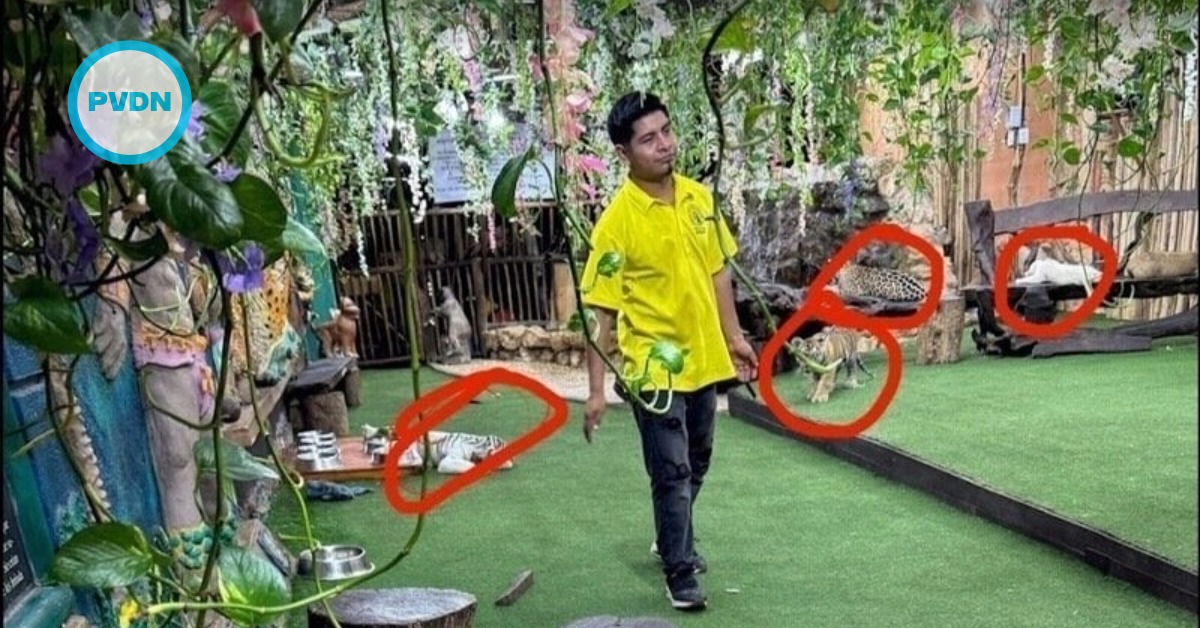
Foreign residents in Playa del Carmen are amplifying a Change.org petition to close Animalandia Maya on Quinta Avenida. The petition was created in April 2024, but it is surging again in early February 2026 in English and Spanish. Supporters say the business turns wild animals into tourist props, selling close-contact photos in the street’s busiest hours. Many signers say they live nearby and see the interactions daily. They allege that tiger cubs and other species are repeatedly handled, with little rest and no chance to avoid crowds. The petition also claims some animals appear sedated to stay calm around strangers. As of Wednesday, February 11, the campaign showed about 720 supporters. By Thursday, February 12, it had climbed past 1,100 verified signatures. Supporters want a definitive closure, not a short pause that ends with a reopened door. They are urging PROFEPA and other authorities to inspect the site and enforce existing wildlife rules.
What visitors are being asked to pay for
At the center of the complaint is a tourist pitch: hold a cub, pose for a photo, then move on. Advocates say the animals are often very young, and constant handling can cause stress and exhaustion. They describe cubs being passed from stranger to stranger during peak foot traffic on Fifth Avenue. Supporters say it is worse because many big cats are threatened in the wild. Some critics also point to the price, noting that it costs about 1,000 pesos to hold one animal. In earlier public descriptions, staff have said the operation has a wildlife management unit and federal permits. Critics counter that paperwork is only part of the story, and enforcement should focus on daily practice. Petition language alleges drugging to make animals docile, though that claim has not been independently confirmed. For many expats, the issue is also about the street itself, where families live alongside tourism. The debate is making residents ask what kind of experiences they want at the heart of Playa.
A long paper trail in Playa del Carmen
The petition is landing on ground that has been contested for years in the Riviera Maya. Federal environmental authorities have previously taken steps to stop wildlife photo sessions in the tourist corridor. In January 2015, PROFEPA said municipal police detained exhibitors on Quinta Avenida and handed over several wild animals. In February 2019, PROFEPA suspended the exhibition of a three-month-old lion cub after complaints from residents and activists. Authorities said the cub had legal provenance. They said the site lacked an updated plan approved by SEMARNAT, Mexico’s environment ministry. In another operation in Quintana Roo, PROFEPA reported the seizure of nine felines used for display or in tourist photos. Some were found on Fifth Avenue. The business has also been swept into separate security operations, outside the animal-welfare debate. In 2022 and 2023, authorities sealed the premises in cases linked to alleged drug storage. Reports described animals still inside. Supporters of the petition say the common thread is repetition: closures happen, then the photo sessions return. That history is part of why this online push is now being framed as a test of enforcement.
What enforcement could look like next
If authorities act on the current complaints, the process will likely be document-heavy and slow. Inspectors can verify legal provenance, permits, and the approved management plan for any wildlife held on site. They can also assess whether animals are kept and handled in accordance with standards designed to ensure dignified treatment. Sanctions can range from corrective orders to fines, suspensions, and removal of animals for relocation. For residents, pressure does not have to stop at signing, especially in a town built on word of mouth. The simplest step is to refuse paid wildlife selfies, even when the animal looks calm or sleepy. Anyone who witnesses suspected wildlife misuse can file a complaint with PROFEPA at 800 PROFEPA (776 33 72). Reports can also be sent by email to [email protected], along with photos or videos. In a tourist corridor like Quinta Avenida, choices travel fast, and so do reputations. As the petition grows, officials will face pressure to show clearly where the line is drawn.