A new warning from environmental monitors has put Playa del Carmen’s underground water system back under scrutiny. The concern centers on bacteria associated with fecal contamination in cenotes, caves, and other bodies of water beneath the city. The findings point toward a harder question that local authorities have faced for years: whether sewage systems, urban growth, and weak drainage controls are keeping pace with the city built above the aquifer.
What bacteria in Playa del Carmen cenotes could reveal
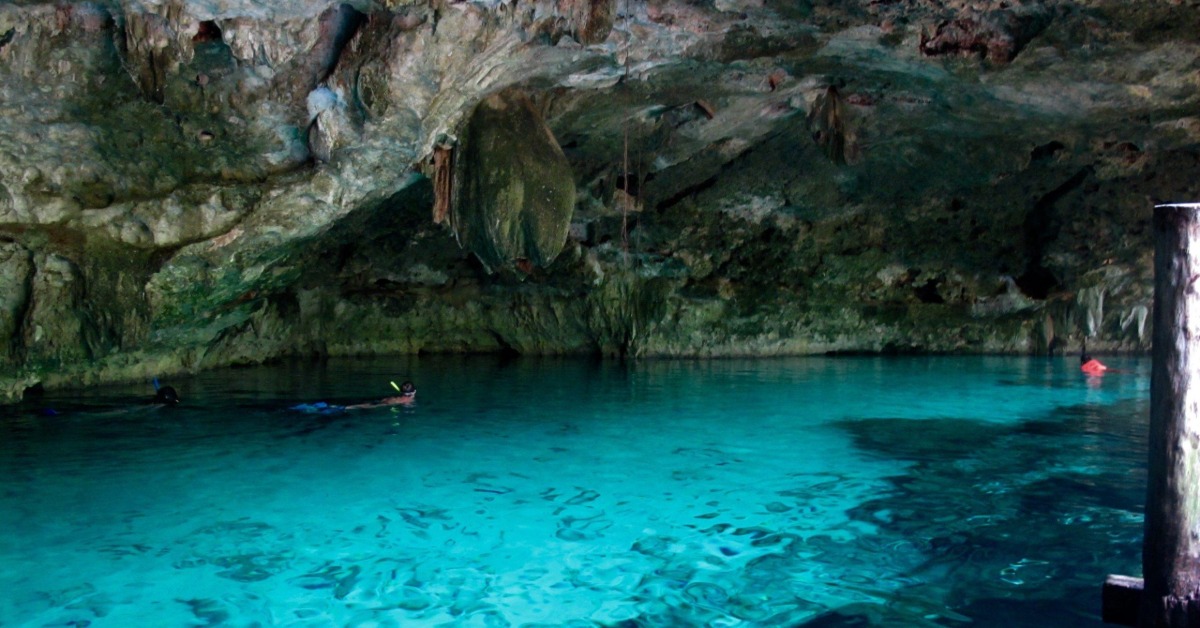
Environmental monitors in Playa del Carmen say bacteria tied to fecal contamination have appeared in roughly half of the city’s identified cenotes, sharpening concern over a groundwater system that sits directly under one of Quintana Roo’s fastest-growing urban areas.
The warning comes from Cenotes Urbanos, a local conservation group that has been testing water in caves, cenotes, and other underground bodies of water. The group says Playa del Carmen has more than 300 identified cenotes and that monitoring over the last year has found elevated levels of Escherichia coli (E. coli) in a significant share of them.
Laura Mendoza, a representative of Cenotes Urbanos, said the group had recorded “high amounts of E. coli” in the water. She described E. coli as a bacterium that naturally lives in the intestines of healthy people and animals, while warning that some strains can produce dangerous toxins when they enter water used by the population.
The finding does not mean every cenote is unsafe for swimming or that all water in Playa del Carmen is contaminated. The group has not released a public, site-by-site lab database naming every affected cenote. It does raise a more serious question for local authorities, because fecal indicators in cenotes can point to sewage leaks, failing septic systems, direct dumping, or gaps in drainage coverage.
A warning beneath the city
The latest warning follows a separate presentation by Guillermo D’Christy, a water-quality specialist tied to the Cenotes Urbanos project, during the Fourth Ordinary Session of the municipal Committee for the Prevention and Control of Water Contamination. He said monitoring in 37 cenotes, caves, and bodies of water in Playa del Carmen found high contamination, including E. coli, fecal residues, and excess nutrients.
“There is very evident high contamination in the water that runs beneath the city,” D’Christy said during that presentation.
His warning drew a line between the urbanized area and zones outside the city. According to the account of his presentation, the most serious readings were found under the urban footprint and nearby developed areas, while areas outside that footprint did not show the same critical levels.
D’Christy pointed to irregular settlements without sanitary drainage, cenotes and caves used as illegal dumps, improvised septic pits, and breaks in drainage lines as possible sources. That list matches the wider concern that has followed Playa del Carmen’s growth, where housing, tourism, and infrastructure have expanded faster than the systems meant to manage wastewater.
The new alert also builds on earlier coverage of Playa del Carmen water contamination, which tied nutrient spikes in urban wells and cenotes to suspected sewage problems in the city’s groundwater system.
The aquifer leaves little room for error
The concern is not limited to individual cenotes. Playa del Carmen sits over the Península de Yucatán aquifer, which federal water studies identify as the only source of water supply for all uses across much of the peninsula because rainwater quickly filters underground through the region’s highly permeable geology.
The same federal study says the aquifer faces contamination threats from wastewater discharges, settlements without drainage, dumps, gas stations, farms, cemeteries, and other land uses. It describes the aquifer as having extremely high vulnerability to human-caused groundwater contamination.
That vulnerability is what makes cenote testing more than an environmental complaint. In karst terrain, cenotes are openings into a connected water system. Contamination can move through underground pathways that are harder to inspect than a beach, a pipe, or a surface canal.
A 2025 scientific study of cenotes and a submarine groundwater discharge site along the Riviera Maya found metals, nutrients, and fecal indicator bacteria, including E. coli, in karst-associated waters. The study also identified antibiotic-resistant E. coli strains in nine cenotes and said the interconnected groundwater system could allow contaminants to travel long distances.
The study did not publicly name all sampled sites, and it should not be read as a direct map of the latest Cenotes Urbanos findings. It does support the broader concern that the Riviera Maya’s cenotes are vulnerable to pollution from human activity, especially when wastewater management does not keep up with growth.
What remains unverified
Cenotes Urbanos said it has obtained repairs to three drainage pipes through the Comisión de Agua Potable y Alcantarillado, known as CAPA, after detecting points of leakage. Mendoza also said more cases may exist in the city.
No public list of the affected cenotes, official closure order, or bathing restriction tied to this latest warning was found in the reviewed materials. That leaves a gap between the severity of the environmental warning and the public information available to people who use cenotes, own property near them, or depend on local water systems.
The immediate pressure now falls on testing and disclosure. If the contamination is concentrated around specific drainage failures, those points can be located and repaired. If the readings are more widespread, the issue becomes larger than isolated pipes and extends to land-use controls, drainage coverage, wastewater enforcement, and the pace of growth over the aquifer.