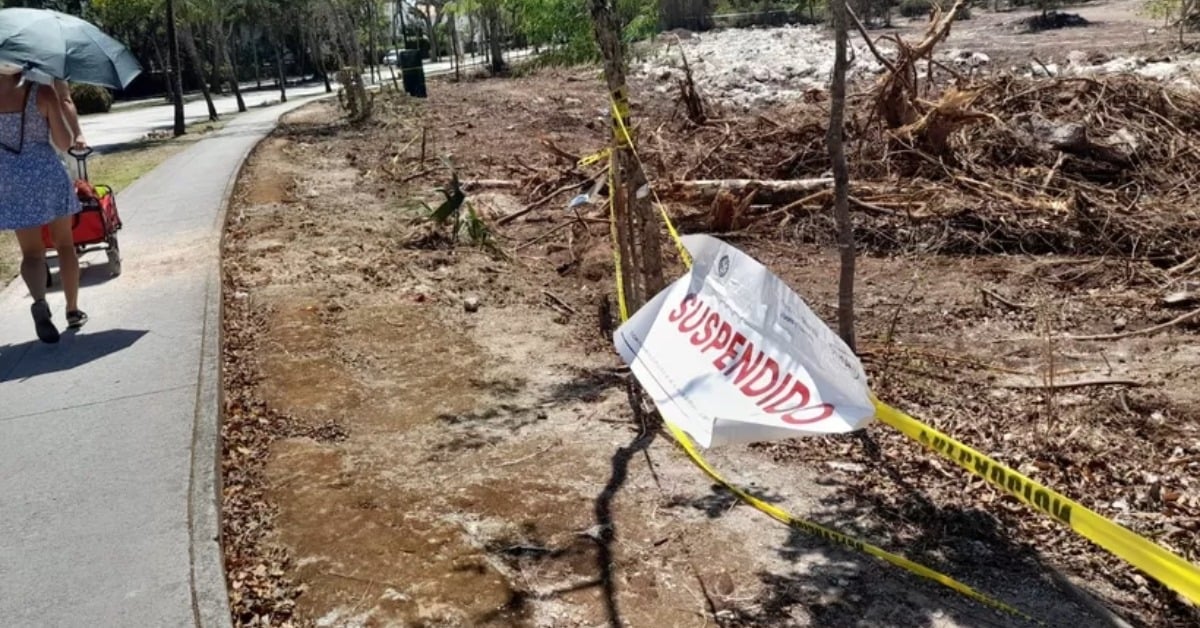
The Playacar project halted this week is not a routine stop-work. It follows months of complaints from residents, inspections by federal and state authorities, and a decision by Quintana Roo’s environmental agency to revoke the project’s authorization after wildlife was killed. What happens next—possible removal of unlawful works and habitat restoration—will test how far local and federal enforcement can go in one of Mexico’s hottest real-estate markets.
Playacar project halted
Neighbors in Playacar woke up to a different kind of construction noise this week: the sound of a project grinding to a legal halt. State regulators say the Legacy by AWA build failed to comply with wildlife protection measures inside the gated development’s Phase 2, where residents had documented deer wandering through denuded lots and along streets. The Secretariat of Ecology and Environment (SEMA) announced it has revoked the project’s environmental authorization after three white-tailed deer, including a fawn, were killed.
SIPSE first framed the moment bluntly—“they bring down the project”—reporting local authorities would not grant the permits the developer sought after ecological damage was confirmed. That phrasing reflects more than public anger. Under municipal and federal rules, when a project proceeds in breach of its conditions, officials can order works removed and the site restored.
What authorities actually did—and why it matters
SEMA’s decision is the pivot. The agency says the project ignored required fauna-rescue and relocation measures and exceeded clearing limits. Those failures, documented by residents since May, culminated in the deer deaths and fueled neighborhood protests. With the authorization revoked, the project has no legal basis to continue. It also opens the door to penalties and to orders that the site be restored.
This was not a bolt from the blue. As early as mid-May, federal inspectors from PROFEPA—Mexico’s environmental enforcer—sealed a Playacar site after habitat destruction complaints, citing change-of-land-use and mitigation failures. That action foreshadowed stricter state scrutiny and set up the clash between rapid development and biodiversity inside private resorts.
What “demolition” means in practice
SIPSE’s report about demolition captures a likely next step rather than a wrecking ball on day one. In Solidaridad, the construction code empowers the municipality to order and execute demolitions of works that violate regulations or lack proper authorization, after due process. If inspectors find structures built outside the revoked terms, the city hall can compel their removal and charge the owner for the work. Separately, PROFEPA can order environmental restoration, which often includes dismantling unlawful works and replanting native vegetation.
In other Riviera Maya cases this year—most notably in Tulum—judges and PROFEPA have moved from suspensions to removal orders when projects lacked valid impact assessments or damaged sensitive ecosystems. That recent enforcement arc is the backdrop for what could unfold in Playacar.
Who is behind the project—and who is affected
Legacy by AWA is a marketed condo development in Playacar, heavily promoted in sales listings and social media since 2024, with hundreds of planned units and delivery dates running through 2026. Marketing continued even as neighbors documented habitat clearing and wildlife on denuded lots. Buyers and brokers now face a period of uncertainty while the legal process plays out.
For residents, the case is a stress test of Riviera Maya’s shift toward stricter enforcement. Regulators have promised “zero tolerance” when growth comes at the expense of wildlife. The question now is whether sanctions and site-level remedies will match that rhetoric.
What comes next for Playacar and the coast
Expect two parallel tracks. The municipality can audit building and land-use permits tied to the site, and—if it finds unauthorized works—order their removal under the construction code. At the same time, PROFEPA will decide whether to impose fines and require restoration, up to reforestation and habitat repair plans. Those decisions will be shaped by the record already assembled by residents, inspectors, and SEMA since May.
Beyond one parcel, conservationists say the outcome will signal whether resort neighborhoods with private security and golf courses can be held to the same standards as public beachfronts and mangroves. Enforcement has tightened across the coast this year, and the Playacar project halt has become the new test case for Quintana Roo’s promise to put biodiversity first.