Cancún is bracing for a weekend where PokéStops meet the Caribbean breeze. Pokémon City Safari Cancún will turn beaches, parks, and malls into a mapped playground on September 27–28, with Niantic confirming a citywide format, nine dedicated regions, and even free Wi-Fi at select hubs. Local officials say they’re ready for a crowd of five figures and the accompanying surge in spending. Tickets are limited, add-ons sweeten the grind, and a Turibus route links the action. Here’s what visitors—and locals—should actually expect.
Pokémon City Safari Cancún
Cancún is about to test whether augmented reality can serve as a viable economic reality. Pokémon City Safari Cancún runs September 27–28, 10 a.m. to 6 p.m., and stretches gameplay across the city rather than fencing fans into a park. Niantic lists one-day tickets at MX$190 and confirms the citywide format with dedicated meeting areas, research, and spawns tied to the destination. Expect Eevee in an explorer hat, stamp rally tasks, and optional add-ons that work both days.
Local officials are leaning in. The Benito Juárez tourism secretary says Cancún’s selection puts the city “on the global map for entertainment tourism,” with more than 10,000 players anticipated to roam beyond the hotel zone into emblematic sites. That expected turnout would put real weight behind a late-September lull, when the city needs visitors between summer and winter peaks.
Why this matters for Cancún
The footprint is wide—and deliberate. Niantic lists nine regions co-planned with Cancún’s Tourism Board: Langosta Beach, La Isla Mall, Palapas Park, the ADO bus terminal, Marina Puerto Cancún, Delfines Beach, Kabah Park, Tajamar Pier, and Forum Beach. Connectivity is part of the pitch: select hubs will have free Wi-Fi via GigNet, a nod to the fact that a mobile event lives or dies on signal. A dedicated Turibus route will connect those areas, offering an unusual blend of sightseeing infrastructure and live-ops game design.
If hotelier math is your thing, note the soft incentives: at least one participating resort is offering discounted rates for trainers over the event window. It’s a small detail, but it signals coordination between tourism operators and the publisher. Together with transit links and meeting hubs, the weekend is engineered to move people—and pesos—through more than just the beach.
Pokémon City Safari Cancún
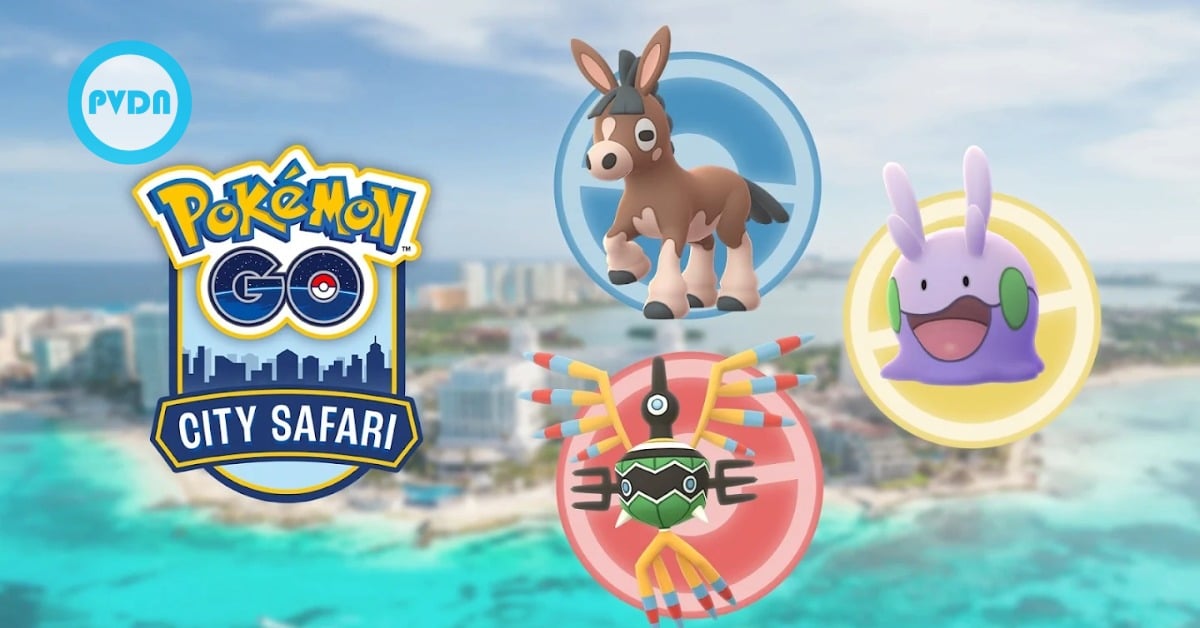
For players, the draw is a city adventure with real-world texture. The stamp rally swaps pure screen time for movement across mapped zones. Spawns include regionals and beach-adjacent species; Mudbray headlines City Safari 2025 events, with Eevee’s evolutions in explorer hats as a collectible flex for screenshots. Turibus, for its part, is selling a hop-on-hop-off circuit with stops at Palapas Park, Tajamar, Playa Langosta, La Isla, Delfines, Puerto Cancún, and the ADO terminal—essentially mirroring the meeting-area spine.
Context helps. City Safari is Niantic’s roaming format, a successor of sorts to park-locked events. Mexico has already proven it can host this playbook—Mexico City’s 2023 edition drew international visitors—so the blueprint is tested. Local media in Quintana Roo have been ramping up coverage for weeks, framing the weekend as both a tourism push and a scavenger hunt from downtown to the beach. It also coincides with World Tourism Day, a convenient hook that cities use to spotlight new attractions.
The unknowns are the usual live-event variables: weather, network strain outside the official hubs, and whether late add-ons justify their price for casuals. But the fundamentals look well-planned. You’ve got mapped regions, transit integration, Wi-Fi at pinch points, and a clear promise that gameplay covers “anywhere in Cancún” during ticket hours. If the 10,000-plus expectation holds, the crowd should be visible from Palapas to Delfines. The question isn’t whether people will come; it’s how evenly the city absorbs them.