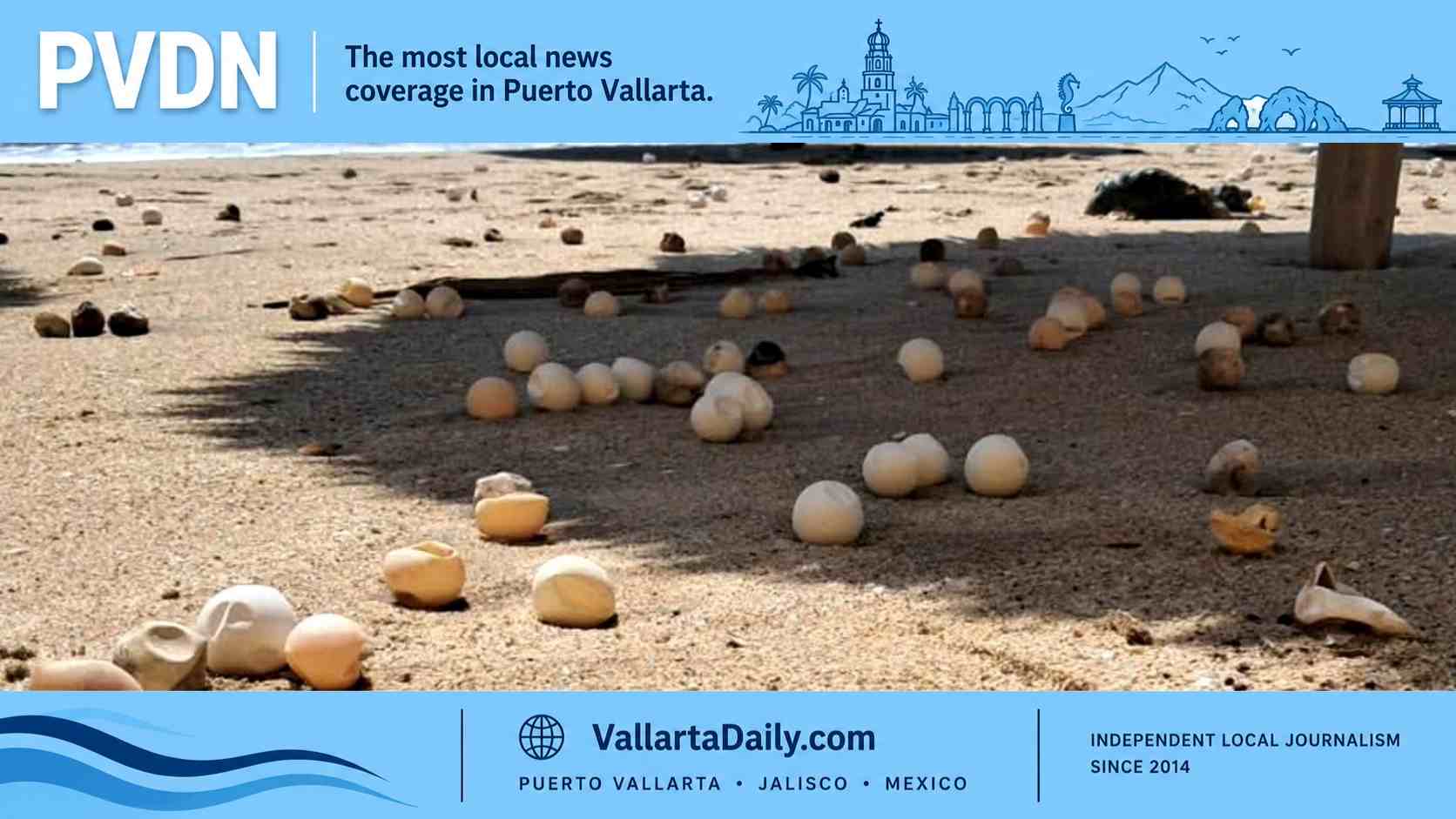
Puerto Vallarta, Jalisco, Sept. 29, 2026 — Puerto Vallarta environmental officials said Monday that Polo-driven surf exposed sea turtle nests on city beaches, leaving eggs uncovered after days of erosion.
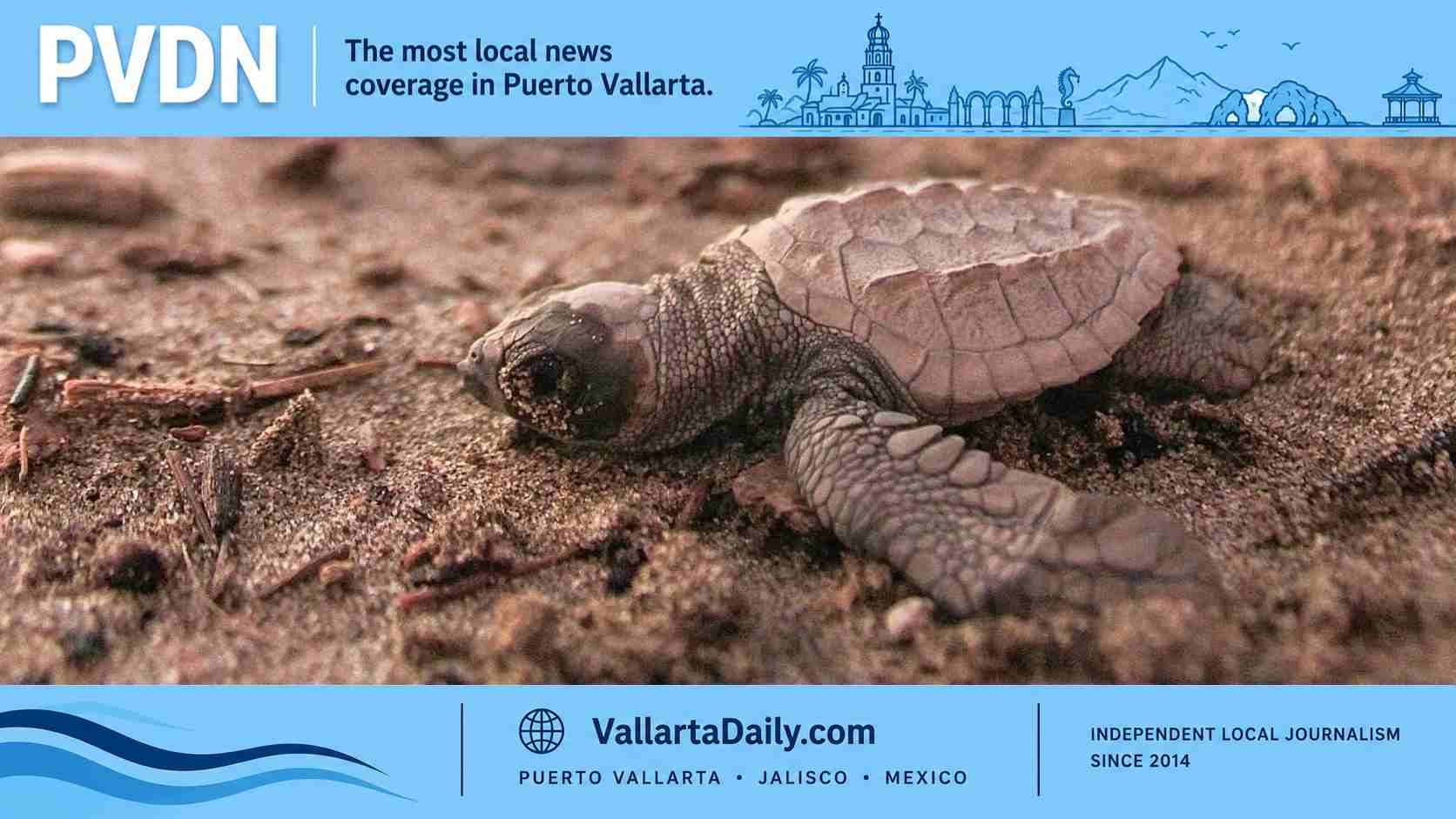
The city’s environmental department urged residents and visitors not to handle exposed eggs or hatchlings. Officials said trained personnel should evaluate each affected nest before attempting any intervention.
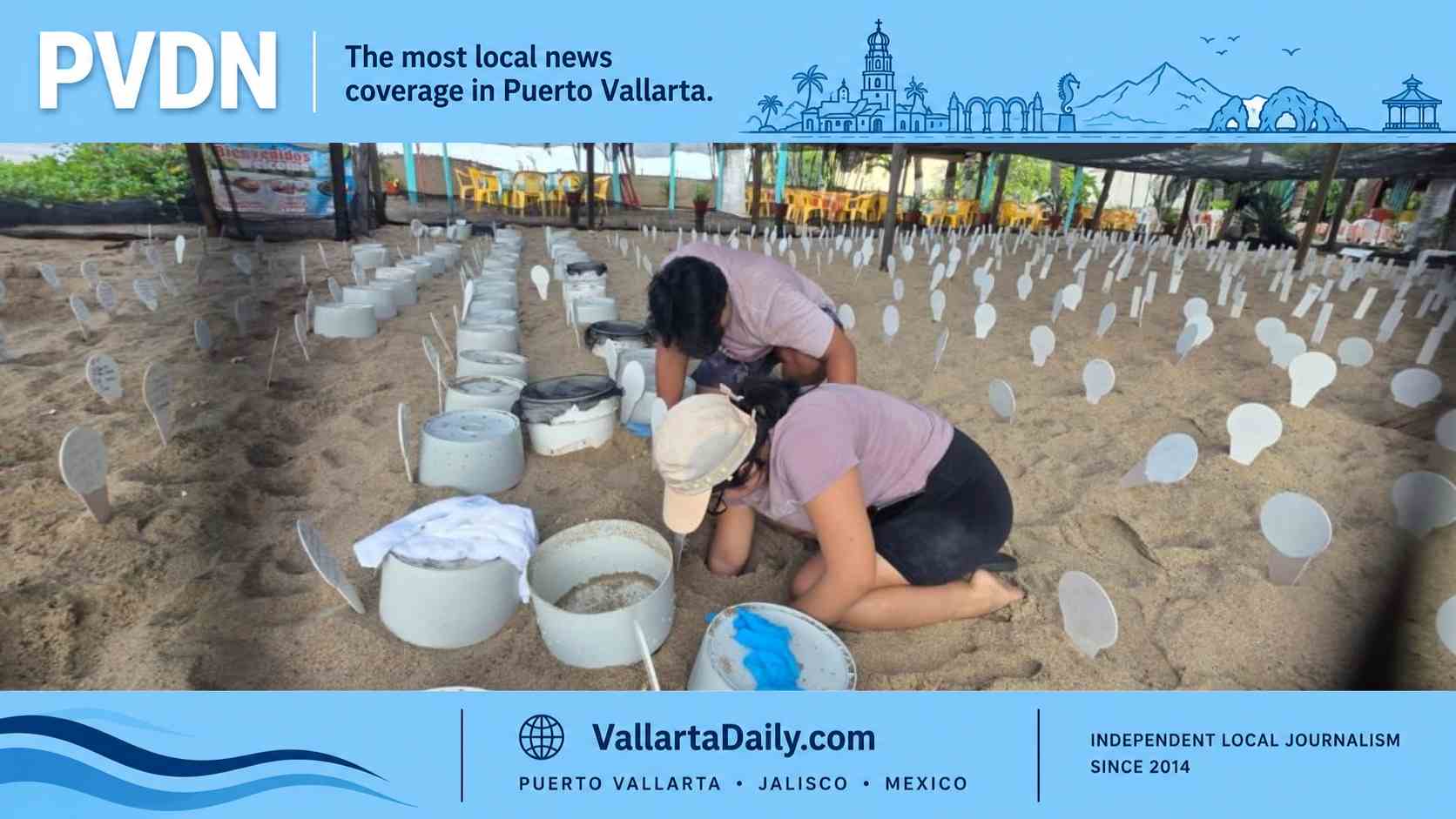
At Playa Holi, however, the municipal incubation corral that held 574 nests before the storm suffered only minor effects, according to the department. Crews had reinforced the site before the largest waves arrived.
Beach erosion reached nests buried outside protected corrals
Puerto Vallarta’s Dirección de Sostenibilidad Ambiental said elevated surf altered sections of the coastline through erosion and flooding. That sand movement uncovered nests that had been incubating naturally beneath the beach.
Images circulated locally showing exposed eggs and dead hatchlings. The environmental department said the conditions resulted from the storm’s impact on the beach, not evidence that the city had abandoned its turtle-protection work.
Officials also said nests were at different stages of incubation when the surf arrived. That distinction affects what conservation personnel can do once eggs are exposed.
“Protecting also means understanding natural processes and acting on evidence, not speculation,” the department said in a Spanish-language statement translated by VallartaDaily.
The agency also addressed images of birds feeding on hatchlings. It said natural predation is part of the coastal ecosystem, while its responsibility is to reduce human-caused threats and apply authorized protection measures.
Why exposed turtle eggs cannot automatically be moved
Our review of Mexico’s federal sea turtle rules provides additional context for the city’s response.
Under Mexico’s NOM-162-SEMARNAT-2012 sea turtle protection standard, natural incubation on the beach is the preferred method. Moving a clutch to a protected corral is an exception used for threats such as uncontrolled flooding, predation, or poaching.
The federal standard places strict limits on relocating eggs after they have been laid. When personnel locate a nest after the female has left, they may collect eggs for relocation only when workers are certain the clutch is less than two hours old.
Otherwise, the federal rule says the nest should remain in place. Extraordinary weather emergencies are handled through contingency measures established in the authorized management plan.
That requirement is significant after a storm. Eggs that have already spent days or weeks developing cannot simply be dug up and transferred because erosion has exposed them.
The city made the same point in its post-Polo explanation. Officials said indiscriminate handling or relocation can affect embryonic development.
Playa Holi defenses protected more than 55,000 eggs
The storm also tested the precautions taken before the surf reached its highest levels.
On Sept. 23, municipal environmental director Roberto Ornelas said the city was protecting 574 nests containing more than 55,000 eggs at its Playa Holi incubation corral.
Crews installed a sandbag barrier around the site to reduce direct wave impact. VallartaDaily reported on those efforts to shield the 574 Playa Holi nests before Polo’s strongest surf arrived.
After the high surf, the environmental department said damage inside that managed corral was minimal.
The contrast is important. A protected corral allows workers to select and manage a specific incubation area. Other nests remain in their natural locations along the coastline and are exposed to changes in sand levels, tides and storm erosion.
Federal rules require authorized corrals to be positioned away from flood-prone areas, river mouths and estuaries where possible. They also must sit above the highest recorded tide level.
Residents face both wildlife and surf restrictions
Turtle-nest damage comes as Puerto Vallarta’s beaches remain under broader restrictions caused by the same prolonged surf.
As of Tuesday, Sept. 29, municipal Civil Protection continued red flags across Puerto Vallarta’s beaches for a fourth consecutive day because of dangerous ocean conditions. VallartaDaily had previously documented the continuing high-surf restrictions along the city’s coastline.
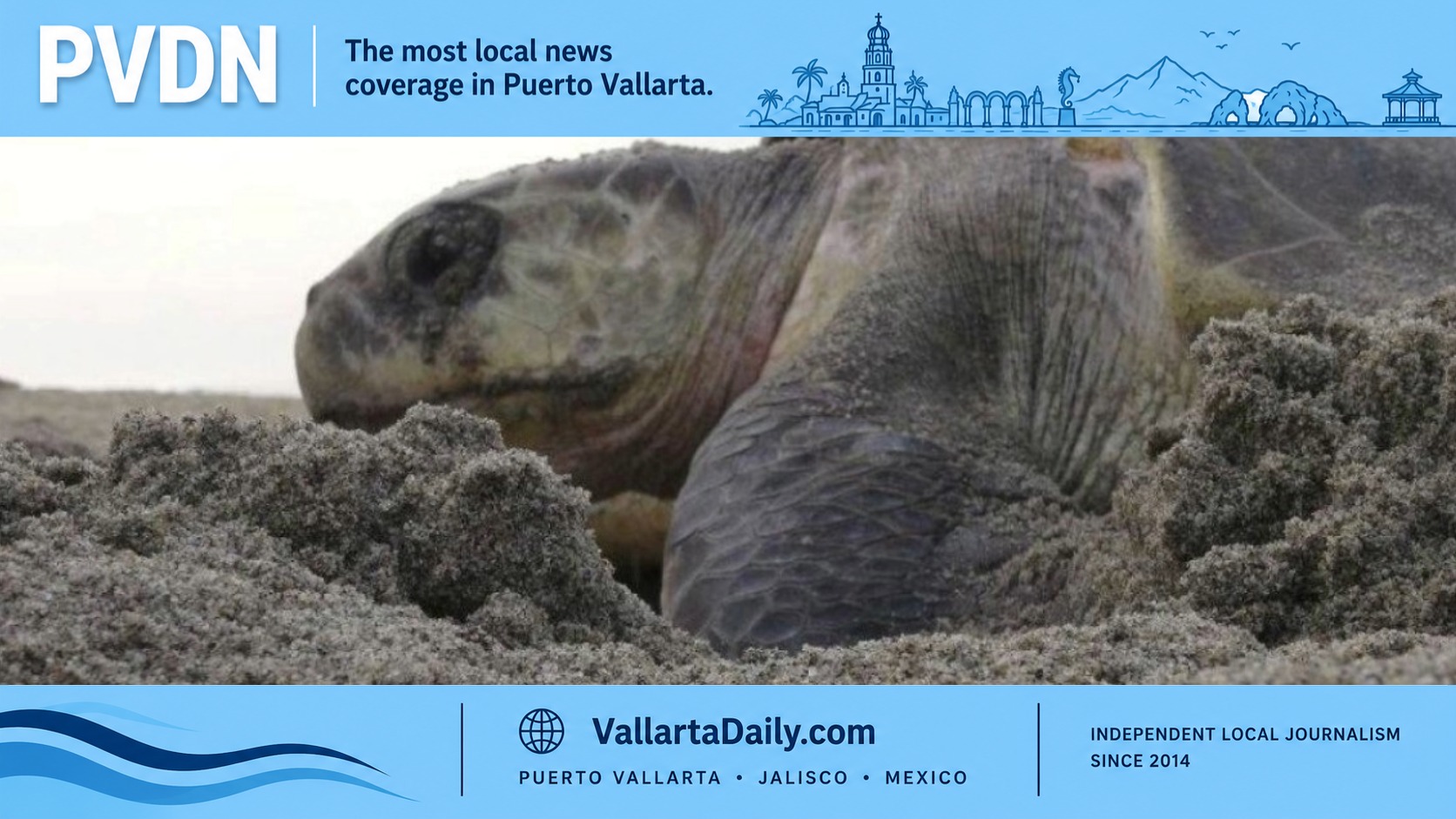
For residents walking beaches during the recovery period, federal turtle-protection rules also restrict vehicles and animals that could disturb nesting females, eggs or hatchlings. Lighting directed toward nesting beaches should be reduced or redirected away from the sand.
Municipal environmental officials asked anyone who encounters exposed eggs, a damaged nest, or hatchlings to leave them in place and report the location. Personnel trained and authorized to handle protected wildlife can then determine whether intervention is appropriate.