Mexico’s environmental watchdog says it detected several impacts inside Sian Ka’an, one of the country’s most important protected areas, and now plans more detailed inspections. The first report mainly points to land-use changes, but officials have not publicly detailed the full scope of the damage or the sites under review. That leaves the central questions open: how serious are the alterations, what happens next, and why does this reserve matter far beyond Quintana Roo’s tourism corridor?
What authorities say they found
Federal environmental authorities say they detected various impacts inside the Sian Ka’an Biosphere Reserve in Quintana Roo and that the main issue appears to be land-use changes. For now, that matters as much for what it confirms as for what it does not. The report indicates that officials have identified enough irregularities to move toward more detailed inspections, but it does not yet lay out a full site-by-site account of the damage.
That distinction is important. At this stage, the public case is still in the verification phase. Authorities have not yet presented a final legal finding for each affected property or activity within the reserve. Instead, they are signaling that preliminary fieldwork turned up signs of environmental pressure serious enough to warrant a closer review. In practical terms, that means the next phase will likely determine whether the changes involve unauthorized clearing, construction, altered access roads, or other modifications that conflict with rules for a protected natural area.
The finding in Quintana Roo came to light as part of a broader joint operation by Profepa and Conanp in protected areas across the country. Nationally, the operation produced closures, seizures, and removals in several states. But in Sian Ka’an, the public message so far is narrower. The issue there is that authorities say they found evidence of impacts, gathered information, and are now preparing inspections with greater depth.
Why Sian Ka’an matters so much
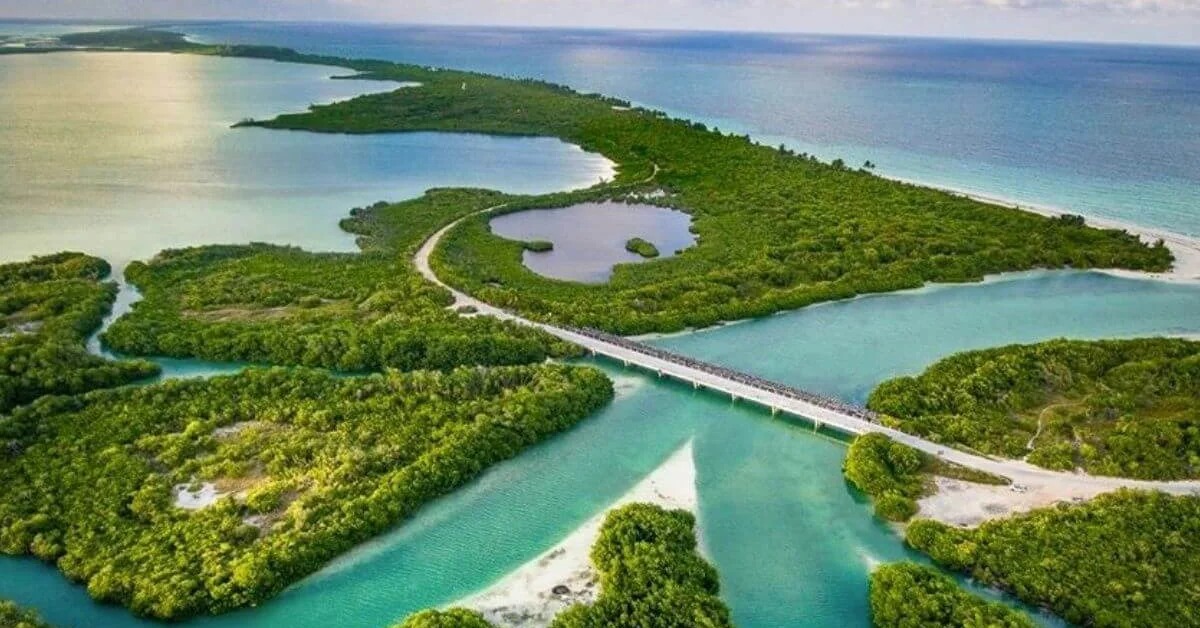
For readers outside Mexico, Sian Ka’an is not just another reserve on a map. It is one of the country’s most important protected landscapes and one of the most sensitive ecological areas in the Mexican Caribbean. The reserve combines marine, coastal, and terrestrial ecosystems in a single protected zone. That includes wetlands, mangroves, lagoons, tropical forests, dunes, and reef areas that are part of the wider Mesoamerican Barrier Reef system.
Its legal and environmental status also raises the stakes. Sian Ka’an is protected under Mexican federal law, and it also holds international recognition as a UNESCO World Heritage site and as part of a Ramsar wetland complex. Those designations do not automatically prevent damage, but they underscore the value of the area and the expectation that it will be managed with a high level of care.
The reserve also lies near one of the most development-sensitive regions in Mexico. Quintana Roo remains under constant pressure from tourism growth, road access, land speculation, and the spread of services and infrastructure. That does not mean all activity near the reserve is illegal or harmful. But it does mean that when authorities mention land-use changes inside a protected area, the concern is immediate. In a place like Sian Ka’an, relatively small alterations can affect water flow, wetlands, wildlife corridors, coastal stability, and habitat quality.
Why land-use change is a red flag
The phrase land-use change can sound technical, but the idea is simple. It usually refers to altering land from one condition to another in ways that can damage ecosystems or require environmental authorization. In protected areas, this may involve clearing vegetation, opening paths or access points, changing forested land into built space, or introducing uses that were not allowed under the reserve’s management rules.
In a reserve like Sian Ka’an, those changes can have consequences beyond the exact place where the work happened. Wetlands and mangroves function as connected systems. They help regulate water, support biodiversity, and reduce vulnerability along the coast. When those systems are cut, filled, drained, or fragmented, the effects can spread outward. That is one reason environmental enforcement in protected coastal zones often becomes a bigger story than a single plot of land.
There is also a legal issue behind the environmental one. Protected areas operate under management plans, zoning rules, and federal environmental law. A change that might already face scrutiny elsewhere can become more serious inside a biosphere reserve. That is why the next step announced by the authorities matters. A deeper inspection is where a preliminary warning turns into a formal administrative or legal case, or where the agency decides the available evidence does not support further action.
What happens next
The next stage will be crucial because it should answer the questions the first report leaves open. Authorities will need to define where the impacts were found, what activities caused them, and whether they were carried out with the required permits or in violation of protected-area rules. That process could lead to closures, sanctions, restoration orders, or referrals if officials conclude that environmental law was broken.
For residents, investors, tourism operators, and frequent visitors to Quintana Roo, this is the story’s real significance. The immediate issue is not only that damage was detected. It is that federal authorities have publicly placed Sian Ka’an under a more focused enforcement lens. That can affect future projects, access decisions, oversight in nearby zones, and the broader debate over how development and conservation are supposed to coexist in the state.
The story is also a reminder that protected status does not make a place immune from pressure. Sian Ka’an has long been presented as a model of biodiversity and low-impact tourism. But those protections depend on active monitoring and enforcement, not just designations on paper. The coming inspections will show whether the latest warning becomes a contained enforcement action or part of a larger pattern of strain inside one of Mexico’s most important natural reserves.