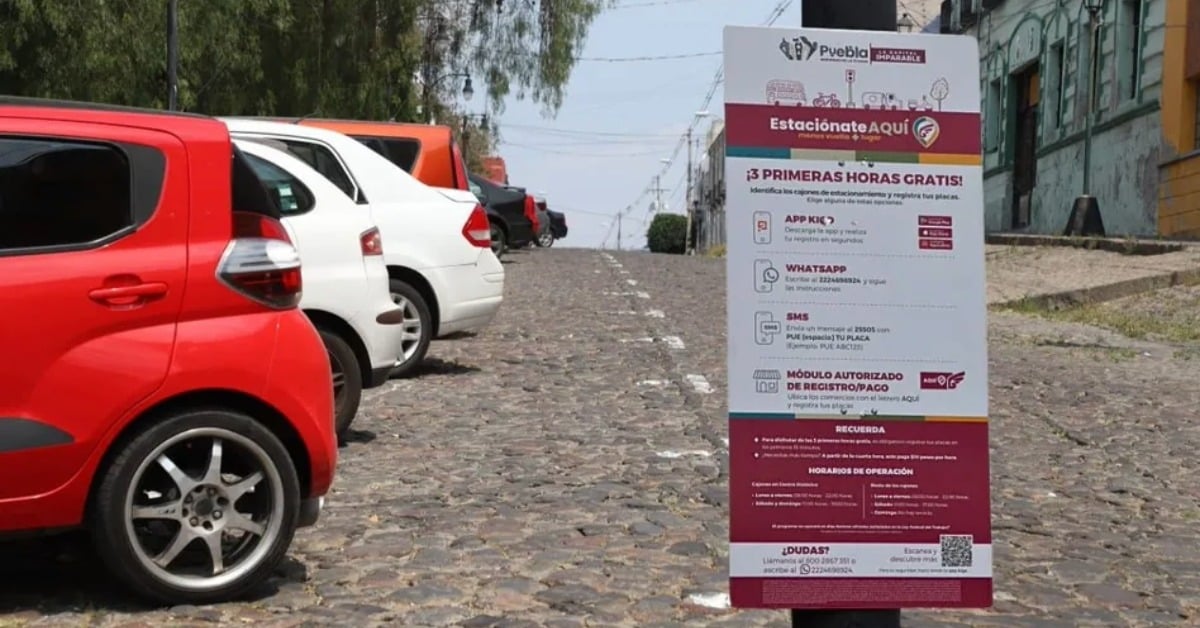
Puebla reports that its new parking meter scheme generated 12 million pesos from May to July, with most of the revenue coming from tickets. The program offers three free hours but requires drivers to register. Those who skip the rules—or overstay—pay the price. City data and independent tallies suggest fines contribute the bulk of revenue, while early-payment discounts reduce the net cash that actually lands in the treasury. With a hospital corridor set to join the map in October, enforcement is expected to increase.
Puebla parking meter fines
Puebla’s parking meters generated 12 million pesos in their first three months of operation, according to the city’s account shared with local media. Officials say more than half came from fines, primarily for overstaying posted limits—some cases ran as long as 14 hours, they noted.
Separate outlets that reviewed the monthly reports put the May–July total closer to 11.0 million pesos, a gap that likely reflects the difference between gross tickets issued and net collections after legally mandated discounts. In July alone, the city logged 4.25 million pesos, with 64.4% attributed to fines.
The program, called Estaciónate Aquí, runs across central corridors with more than 9,000 curbside spaces. The first three hours are free; from the fourth hour, the charge is 10 pesos per hour. Registration is required through the Parkimovil system, either via SMS or app.
How the system actually works for drivers
City hall’s pitch is simple: short trips remain free, and meters keep spaces turning over in busy streets. The early data backs that up: most users park one to three hours, then move on. The city also deploys a cadre of mobility supervisors to check plates and compliance on foot.
Where drivers get into trouble is with registration and time management. Tickets are standard when cars sit past the free window, skip sign-up altogether, or occupy bays that are not marked correctly. In May, the program raised 3.2 million pesos, 59.3% of which came from fines, before many residents had even adjusted to the rules.
Why fines dominate the totals
Fines are structured to deter rule-breaking. Published schedules show penalties ranging roughly from 450 to 3,300 pesos, depending on the infraction—like not registering, removing plates, blocking disabled bays, or hogging multiple spaces. Those figures are consistent across several city documents and local reports.
There’s also a built-in 50% discount for people who pay within five business days. That policy encourages a quick resolution, but also means that gross fines reported in press briefings will be higher than the net revenue that hits the ledger. Officials spelled out this difference while briefing council committees in July.
What changes next
The council recently approved a new hospital-area corridor, known as San Alejandro–Ortopedia, which covers 12 streets. The city says sanctions there start October 1, conditional on the hospital’s status. Beyond that, officials have signaled no further expansions in 2025, giving them time to evaluate how the program is working.
City materials indicate that the move followed a formal committee vote and public requests related to traffic near IMSS facilities. The corridor will adhere to existing rules regarding free hours, paid extensions, and enforcement.
What the numbers tell us
Taken together, the first quarter of data suggests that the meters are a mobility tool that also raises money—but it’s enforcement, not hourly fees, that does the heavy lifting. In May and June, local datasets indicate that approximately 60% of the take came from fines. July trends point the same way.
At the same time, the 12-million-peso headline rests on how the city classifies and reports collections. A close review of council briefings and city dashboards reveals the need to distinguish between tickets issued and cash collected after discounts. That nuance helps explain why some outlets land at ~11 million for the same three-month window.
The bottom line for residents
If you use these corridors for quick errands, the program is effectively free—three hours without charge is generous by national standards. The risk lies in skipping registration or losing track of time. That’s where the fines mount, and that’s what is fueling most of the revenue story so far.
As Puebla adds the San Alejandro–Ortopedia zone, enforcement will extend to a key hospital area. The city frames this as order and availability, not a cash grab; however, the revenue mix shows that tickets remain the main lever behind the totals.