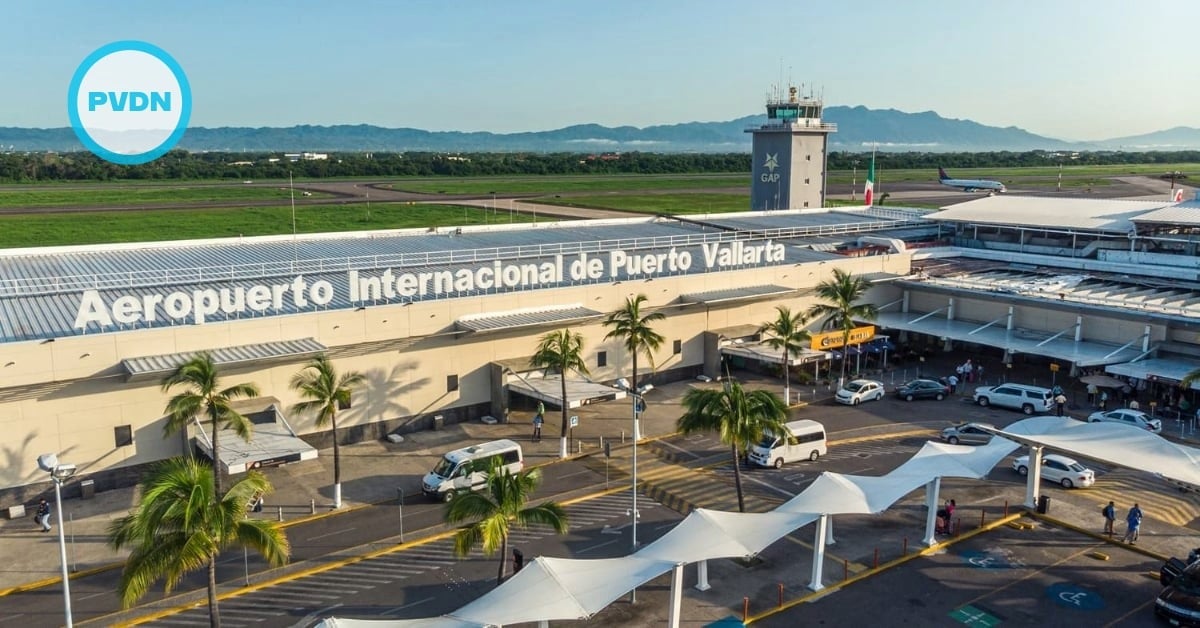
If you’re flying through Puerto Vallarta tonight, don’t be surprised if you spot flashing lights on the tarmac after hours. The Puerto Vallarta airport drill starts at 11:00 p.m. on Tuesday, November 11. It will play out entirely on the airside—out of passenger areas—with ambulances, emergency units, and outside agencies joining the airport’s own crews. Airport officials say operations and passenger services will continue as usual throughout the exercise.
In a notice shared today, the airport asked travelers and nearby residents to be patient if they see unusual activity around the field. Because the action stays on the operational side of the fence, departures and arrivals aren’t expected to move or delay. The point is practice, not disruption: stress-testing communication, command, and response in a controlled setting so that real-world incidents are handled faster and cleaner when seconds count.
This isn’t an isolated drill tossed on the calendar and forgotten. Puerto Vallarta’s operator, Grupo Aeroportuario del Pacífico (GAP), runs regular simulations across its network, and local responders treat the airport like a living classroom. Earlier this fall, crews rehearsed a daytime scenario; tonight’s late-night run is designed to stretch different muscles—night visibility, shift coordination, and inter-agency handoffs while most of the city sleeps. The airport’s message is simple: practice builds muscle memory, and muscle memory saves time.
Why airports train at night
Airports train for the conditions they fly in. Night operations change everything—lighting, sightlines, even how sirens echo across concrete. At 11:00 p.m., the terminal is quieter, which makes it easier to move equipment, stage vehicles, and coordinate without crowding passengers. It also lets controllers, firefighters, medics, and ground teams rehearse together when they can take up space and make noise without fraying the day’s schedule. That coordination is the point. In a real emergency, minutes shrink; the only way to gain them back is through repetition.
There’s also a rulebook behind the drill. International standards call for full-scale aerodrome emergency exercises at least every two years, with smaller tests in between. That cadence isn’t busywork—it’s how airports validate plans, fix gaps, and prove that improvements actually work under pressure. Puerto Vallarta’s exercise fits that model: a full-scale, multi-agency run that checks not just equipment, but people, timing, and communication across the field.
For passengers, the practical takeaway is straightforward. Your flight should run as scheduled, security lanes stay open, and check-in works as usual. If you’re near windows with a runway view late tonight, you may see vehicles you don’t normally see and hear radio chatter that’s more animated than usual. That’s the drill doing its job. If any last-minute gate changes do crop up, they’re more likely to be normal airline operations than the exercise itself.
Puerto Vallarta’s broader safety culture has been visible beyond the fence line this month. City and state agencies staged coastal readiness exercises and evacuation practices, reminding residents how to move to higher ground and how alerts sound in real life. The airport’s night drill rides the same wave of preparedness, focusing on aviation-specific scenarios while reinforcing a shared idea: the best time to learn is before something happens.
What tonight means for travelers and the community
For travelers, tonight is mostly a non-event—by design. But it’s still meaningful. The scene on the ramp is a rehearsal for the kind of unlikely, high-stakes moments aviation plans for and rarely faces. When those moments do come, what you want is a team that has already met in the dark, run the playbook, and adjusted it where needed.
For airport staff and first responders, the value is immediate. They’ll test alarms and notifications, confirm who calls whom and when, and practice moving equipment in tight spaces. They’ll also watch the little things: how fast a gate opens, how quickly a hydrant couples, and whether a radio channel gets crowded under stress. Those “boring” details are the difference between smooth and chaotic.
And for the region, it’s a small but tangible sign that tourism lifelines are being protected with more than good intentions. GAP’s network spent early November spotlighting safety programs and training across its airports; Puerto Vallarta’s late-night drill caps that focus with a high-energy run where it matters most—on the pavement.
If you’re connecting tonight, keep your routine: arrive on time, keep an eye on your boarding pass, and don’t mistake staged activity for an emergency. Airport teams will be out there, so you don’t have to notice anything at all. With luck, the only sign you’ll see is a short stream of blue lights tracing the edge of a runway while your flight boards as planned.