Puerto Vallarta’s latest council session did not make much noise, but it could change how people move through the city. In a plenary vote this week, councilors approved a permanent program to repair and maintain the city’s bike lanes, a move framed as a push for safer streets, cleaner air, and healthier neighbors. At the same time, they agreed to study a second plan to overhaul aging municipal running tracks, including those at the Agustín Flores Contreras Sports Unit, long a hub for local athletes.
The initiative came from councilwoman Erika Yesenia García Rubio, who has spent the year pushing mobility and sports projects through city hall. According to a joint opinion from the commissions on Recreation and Sports, City Planning, Public Works and Territorial Planning, Public Safety and Municipal Transit, and Quality of Life and Social Development, the new program will aim to keep bike paths in safe, functional shape instead of waiting for complaints or accidents to trigger repairs.
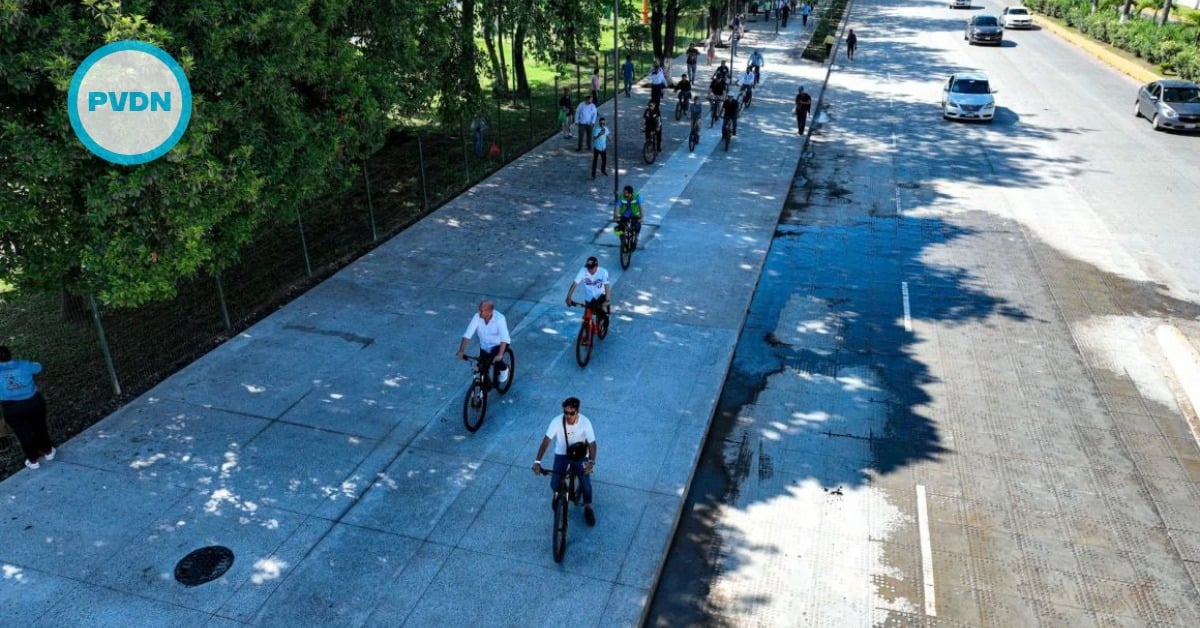
That distinction matters. Puerto Vallarta has invested heavily in new infrastructure in recent years, including a segregated bike lane along the boulevard Francisco Medina Ascencio and other corridors where tourism traffic mixes with daily commutes. But many older stretches are cracked, faded, or missing protective barriers, and cyclists have spent months calling out missing paint, broken bollards, and confusing signage. Local advocacy groups have warned that without steady maintenance, large parts of the network risk reverting to car space.
The new permanent program to maintain and repair bike lanes approved by the council responds to those complaints and formalizes the June 2025 agreement known as Acuerdo 200/2025, which already called for a long-term maintenance scheme geared toward safety and environmental goals.
Why Puerto Vallarta bike lanes matter right now
Cycling has moved from a niche hobby to a regular mode of transport in Puerto Vallarta, helped by a growing network of lanes and a recent push from Jalisco authorities, who inaugurated more than 5 kilometers of new ciclovía along Medina Ascencio with an investment of roughly 329 million pesos. Those upgrades brought smoother pavement, lighting, and safer crossings, but they also highlighted how rough other stretches had become. Earlier this year, one local collective estimated that over half of the city’s existing bike lanes were damaged or lacked key elements such as separators and clear signage.
That reality shows up on the street. Riders regularly share photos of lanes blocked by parked cars or motorcycles, and some of the most used corridors on Avenida México and Los Tules have long sections where protective dividers are broken or gone. For people who rely on a bike to get to work or school, a missing bollard is not a minor detail; it can be the difference between a calm commute and a close call with traffic.
The safety stakes go beyond one coastal city. Mexico recorded nearly 16,000 road deaths in 2022, according to international road safety monitors, and vulnerable users such as cyclists and pedestrians carry a heavy share of that burden. Researchers who study bike crashes in Mexican cities say that dedicated, well-marked lanes lower risks, especially when paired with lower speeds and stronger enforcement.
At the same time, public health experts keep pointing to the upside of getting more people onto bikes. Studies on the health impacts of urban bicycling in Mexico suggest that regular bike trips can reduce premature deaths by boosting physical activity, even when accounting for traffic exposure. They can cut air pollution and greenhouse gas emissions in dense urban corridors. The Ecobici bike-share program in Mexico City, for example, tracks avoided carbon dioxide emissions for each trip and has become a reference point for other cities looking to scale up cycling.
Those arguments sit behind García Rubio’s pitch. Keeping Puerto Vallarta bike lanes visible, smooth, and well protected is not only about a nicer ride for weekend cyclists; it is tied to cleaner air over the bay, fewer congestion headaches near hotel zones, and a basic promise that residents who choose an affordable, low-carbon way to move are not pushed into the gutter.
On paper, the new program tries to address that. The council opinion calls for regular inspections, clear maintenance schedules, and coordination between Public Works and Transit so that pothole repairs, repainting, new signage, and barrier replacement do not happen in isolation. The goal is to treat the cycling network as essential infrastructure, more like a water line than a cosmetic add-on.
The second initiative García Rubio brought to the same session aims at another piece of that puzzle: where residents can run, walk, and train once they get off the street. Her proposal asks the city to commit to a full rehabilitation of municipal athletic tracks, with priority given to the facilities within the Agustín Flores Contreras Sports Unit in the heart of town. Those tracks host school meets, amateur clubs, and casual evening walkers, but many sections now show worn surfaces, uneven patches, and poor lighting.
For now, the running-track proposal has been sent back to committees for detailed study. The idea is to fold it into the municipality’s broader sports infrastructure programs, which lay out priority projects and funding needs for each budget cycle. While that means no immediate ribbon-cutting, it does anchor the concept in the planning process that decides which sports spaces get fixed first.
From bike lanes to running tracks
Seen together, the twin initiatives signal a small but important shift. Instead of announcing only new projects, the city is starting to talk about how to care for the spaces it already has, from the concrete lanes beside busy avenues to the red track loops where kids practice after school. That may sound technical, yet it touches daily life: a faded center line on a ciclovía or a dark corner on a track can quietly push people back into cars or off the field.
Urban health researchers note that access to safe places for active transport and recreation predicts how often people move their bodies and how connected they feel to their neighborhoods. A family that can ride from Pitillal to the hotel zone without constant near misses, and then spend an hour walking laps on a well-lit track, is more likely to see biking and running as normal parts of life, not risky exceptions.
The coming months will show how much weight the new plan carries. A “permanent” program still depends on annual budgets, contractor performance, and political will, and Puerto Vallarta’s bike network stretches across federal, state, and municipal roads with uneven enforcement. Residents who ride daily will be watching whether cracked stretches on Avenida México, Los Poetas, and other hot spots see real crews and fresh paint, or just new promises.
For now, the council has taken a step that cycling groups have demanded for years: recognizing that lanes are not just a ribbon-cutting photo, but a living system that needs constant care. If the city hall follows through, the next progress report on Puerto Vallarta bike lanes and public tracks might be written not from a council chamber, but from a smoother, brighter path under the wheels and shoes of the people who use them every day.