Puerto Vallarta’s downtown woke to hoofbeats and bright skirts as more than 270 riders took the streets for National Charro Day. The parade traced the Malecón from Ignacio L. Vallarta Street to México Street, drawing cheers for a pint-size national champion and a show-stopping escaramuza routine. Why Sept. 14? And how did charrería land on UNESCO’s heritage list? We unpack the history, the route, and what locals and visitors can expect each year. Plus tips for catching the best views.
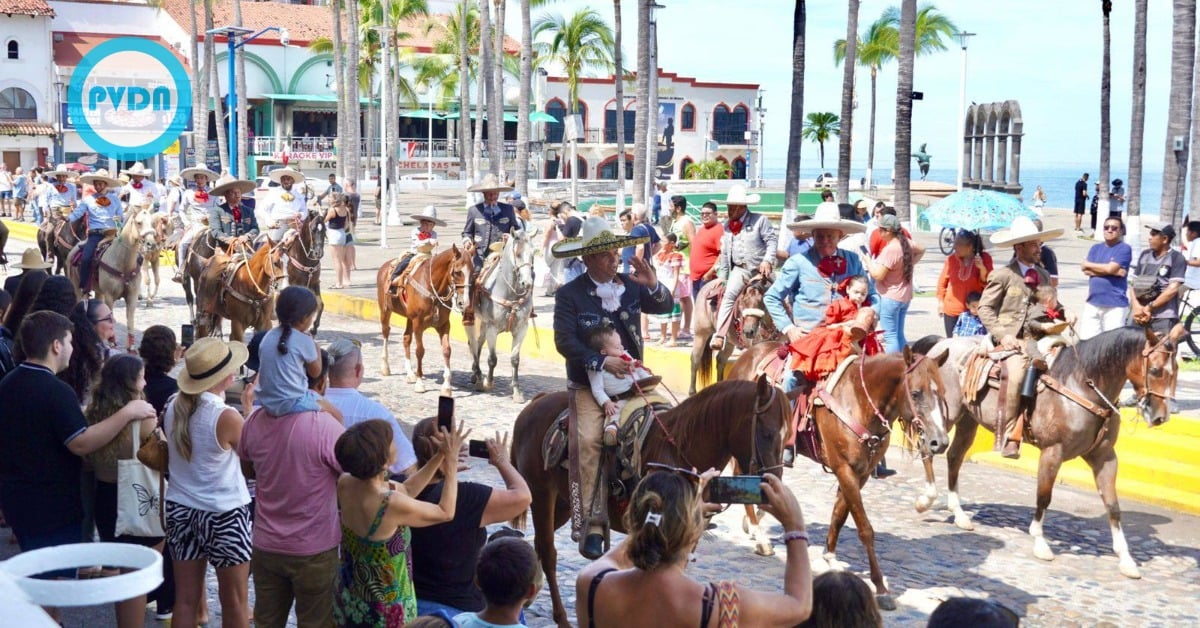
Sunday morning in Puerto Vallarta felt like a living postcard. Riders formed up near Ignacio L. Vallarta Street and moved into the heart of downtown, taking the seawall past City Hall before continuing toward México Street in the 5 de Diciembre neighborhood. Families drifted curbside with coffee in hand. Tourists leaned over railings on the Malecón for a better look. You didn’t need directions—the clip-clop and the smiles led the way.
The parade belonged to many generations at once. More than 270 riders showed careful seat and soft hands, some in crisply tailored traje de charro, others in working gear polished for the holiday. Escaramuzas rode with poise and speed, skirts fanning in tight patterns. The biggest roars came for the Charros de Vallarta when a local under-ten national champion trotted forward, and again when the Herradero escaramuza turned a wooden-horse routine into pure theater. Kids on the rail copied the moves, sombreros tilted just so.
Puerto Vallarta Charro Day
Why September 14? The date was set in the 1930s so charros could celebrate on the eve of Independence Day. For many in Jalisco, the tradition is not nostalgia—it’s identity. Charrería moved from ranch work into codified sport over the last century, and the culture around it—music, tailoring, horsemanship—still shapes how Mexico presents itself to the world.
In 2016, UNESCO recognized charrería on its Representative List of the Intangible Cultural Heritage of Humanity. That acknowledgment matters here. It validates the craft that goes into every reata throw and every stitch on a jacket, and it helps keep training schools and associations healthy. If you stood on the Malecón today, you would see that value carried in the reins by people of all ages.
Route, schedule, and crowds
The parade stepped off in late morning from Ignacio L. Vallarta in the Romantic Zone, then turned onto Morelos and Díaz Ordaz along the Malecón, continued on México Street, and wrapped up near its crossing with Uruguay. Police eased traffic on key cross-streets, and the flow downtown settled into a celebratory rhythm. If you watched from any bend near City Hall, you caught the best light, the sound of banda bouncing off stone, and the steady stream of riders framed by the bay.
This is not just a photo op. The morning gives locals a familiar ritual and visitors a way to understand Puerto Vallarta beyond the beach. It’s why families come early and stay through the last loop of rope: the show is skill, but the message is continuity.
Generations in the saddle
Charrería teaches patience, teamwork, and respect for animals—values that live well beyond a single parade. Many riders you saw today grew up in the lienzo, learning from parents and grandparents. That’s how a city tradition stays young. When the day ended, the plaza didn’t empty all at once. Folks lingered, trading congratulations and phone numbers, already talking about next year.