Puerto Vallarta, Jalisco, August 11, 2026 – Puerto Vallarta business leaders and the Jalisco government are preparing an events calendar designed to attract more Mexican travelers as demand from the United States weakens and the city enters its slower tourism months.
The Jalisco Entertainment Agency has begun assembling local representatives to develop the program, Coparmex Puerto Vallarta President Francisco Gabriel Vizcaíno Rendón said. The proposed working group would include hotel operators, restaurant owners, municipal tourism officials, and the state Tourism Secretariat.
Vizcaíno proposed scheduling at least one significant event each month, including concerts led by nationally recognized performers. The calendar could eventually cover Puerto Vallarta and Bahía de Banderas, allowing tourism businesses across the bay to promote the same dates and travel packages.
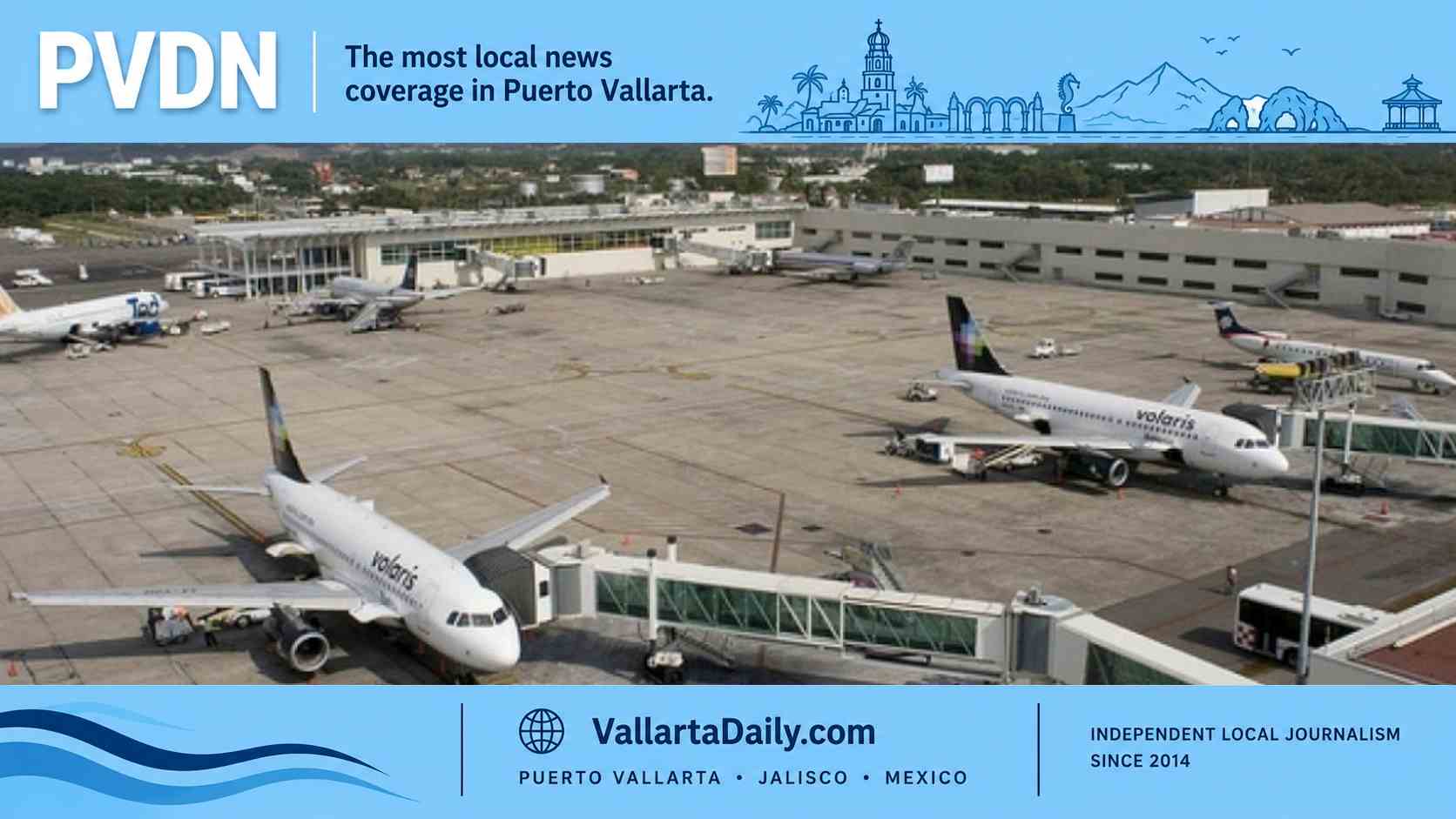
The shift toward Mexican travelers follows a sharp decline in Puerto Vallarta’s international market. The airport handled 484,200 passengers in July, down 12.1 percent from July 2025, according to Grupo Aeroportuario del Pacífico’s latest traffic report.
International traffic fell 29.8 percent during the month, dropping from 229,100 passengers last July to 160,900 this year. Domestic traffic increased 0.6 percent to 323,300 passengers.
The weakness extends beyond one month. From January through July, Puerto Vallarta Airport processed 3.81 million passengers, 550,000 fewer than during the same period last year. International traffic accounted for nearly 492,000 of that loss.
Federal immigration data also show fewer Americans flying into Mexico. Air entries by U.S. nationals fell 9.1 percent during the first five months of 2026 compared with the same period last year. The May decline reached 12.4 percent, according to Mexico’s Tourism Secretariat.
Puerto Vallarta recorded an even steeper decline among all foreign air arrivals. The destination received 792,519 foreign passengers between January and May, down 17.8 percent from the same period in 2025. May arrivals fell 29.1 percent.
U.S. airlines have responded to that weaker market by removing flights and seats they no longer expect to fill. Puerto Vallarta registered the largest proportional reduction among Mexico’s major beach destinations this summer, losing nearly 30 percent of its scheduled capacity from the United States, according to OAG airline schedule data.
Across the U.S.–Mexico market, airlines removed about one million summer seats. American Airlines reduced its Mexico capacity by approximately 170,000 seats, while Alaska Airlines cut about 240,000 seats, or 38 percent of its previous capacity.
Another American Airlines reduction was reported this week. The carrier will end its daily Phoenix–Monterey route after December 1, following service that averaged a passenger load factor near 60 percent during 2026. Airlines generally target load factors closer to 80 percent, making the cancellation a response to insufficient demand.
The same relationship applies to Puerto Vallarta. Fewer scheduled seats are a result of airlines adjusting to weaker bookings and route performance. They do not explain why American travel declined in the first place.
GAP has identified the February security crisis in Jalisco as one factor affecting travel demand. The airport operator said the violence temporarily disrupted mobility and contributed to lower traffic at the Puerto Vallarta and Guadalajara airports in its first-quarter financial report.
The relative stability of domestic traffic makes the proposed events strategy more viable in the market. While international passenger volume fell by nearly one-third in July, national traffic remained slightly above last year.
Puerto Vallarta already has a free cultural calendar running through December, including mariachi performances, Día de Muertos programming and Christmas events. The new proposal would expand that approach into a coordinated tourism campaign built around larger monthly attractions and advance promotion within Mexico.