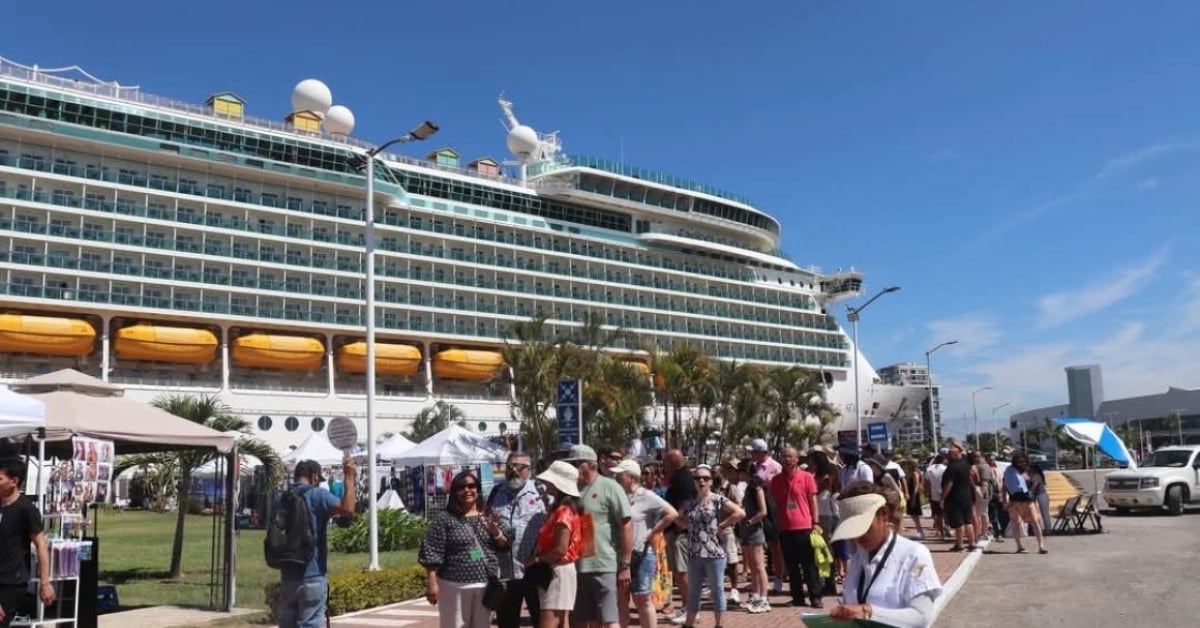
Puerto Vallarta’s cruise business cooled in 2025. Arrivals in the first eight months fell 7.7% and passenger counts slipped 5.5% compared with last year, according to federal port data. Nationally, Mexico posted gains, putting Vallarta out of step with the broader trend. The drop is sharpest in the off-season months, suggesting a scheduling problem more than a demand collapse. Local officials will need to decide whether to chase more summer calls, double down on winter peaks, or rework the port’s value proposition for lines planning 2026 itineraries.
Puerto Vallarta cruise arrivals
Puerto Vallarta logged 96 cruise calls from January through August 2025. That is eight fewer than the same period in 2024, a 7.7% decline, based on Navy-sourced port statistics. Passenger counts moved in the same direction: 309,868 visitors arrived on international ships, down 5.5% year over year.
Seasonality magnified the slide. January saw 20 calls versus 30 a year earlier. Only three ships called in June and three in August, deepening the off-season trough. The port had projected 107 calls and 313,825 passengers for the period, but the final tallies missed both targets.
ASIPONA Puerto Vallarta’s own data portal shows the cruise-movement reports updated through early September, reflecting figures current to August. Those pages track both ship calls and passenger totals and identify the port operations unit responsible for the statistics.
Mexico’s cruise boom skips Puerto Vallarta
The local dip contrasts with the national picture. Mexico handled 5.6 million cruise passengers and 1,639 ship arrivals in the first half of 2025, up 8.4% and 7.8% respectively compared with 2024, according to federal tourism authorities. Cozumel and Mahahual led the country, followed by Ensenada and Cabo San Lucas; Puerto Vallarta ranked fifth by midyear with 89 calls and 278,871 passengers.
That ranking matters for itineraries on the Mexican Pacific. Cabo San Lucas and Ensenada are reporting record or near-record flows this year, capturing capacity as lines fine-tune schedules. If those trends hold, Puerto Vallarta risks ceding share during months when it once competed head-to-head.
The off-season slip shows up in the numbers
Puerto Vallarta cleared the half-million passenger mark in 2024, finishing with 548,146 cruise visitors even as ship calls eased to 167 that year. This year’s January–August trajectory makes another 500,000-plus finish harder, unless the fall and winter schedule overperforms.
Summer softness is not new on the Pacific coast, but this year’s three-call months underline the gap between winter peaks and the off-season. The port’s monthly calendars confirm sparse summer traffic and a heavier lineup from October onward, consistent with past patterns.
What could turn the tide
Two forces will shape the rest of 2025. First, itinerary planning: lines assign ships 12–18 months ahead, and small shifts—adding Cabo over Vallarta on certain loops, for example—compound quickly. Second, national policy and market signals: Mexico postponed a proposed head tax on large cruise ships earlier this year to support the sector, removing a possible deterrent as lines locked in late-2025 deployments. Neither factor guarantees a rebound for Vallarta, but both help explain why Mexico can grow while one port lags.
Local stakeholders still have levers. Better summer programming tied to families and short-haul markets could make Vallarta more attractive during school holidays. Coordinated shore-excursion offers and streamlined operations—points cruise lines care about—can also influence schedule planners at the margins. Those steps will not rewrite 2025, yet they can position the city for 2026 itineraries now being finalized.
Bottom line: Puerto Vallarta cruise arrivals fell in the first eight months even as Mexico’s cruise sector grew. The gap is primarily a scheduling story, not a collapse in demand for Mexico. Closing it will require a more straightforward off-season strategy and tighter coordination with lines planning the next cycle.