Before sunrise, the malecón outside Puerto Vallarta’s Hotel Rosita was already buzzing. Crews hauled coolers and rods down to the docks, families snapped last photos from the boardwalk, and the War Band of the Mexican Navy’s Eighth Naval Zone tuned up for the national anthem. A few minutes after seven, fireworks cracked over the bay and nearly forty boats pushed their throttles forward, marking the official start of the 69th Puerto Vallarta International Marlin and Tuna Fishing Tournament.
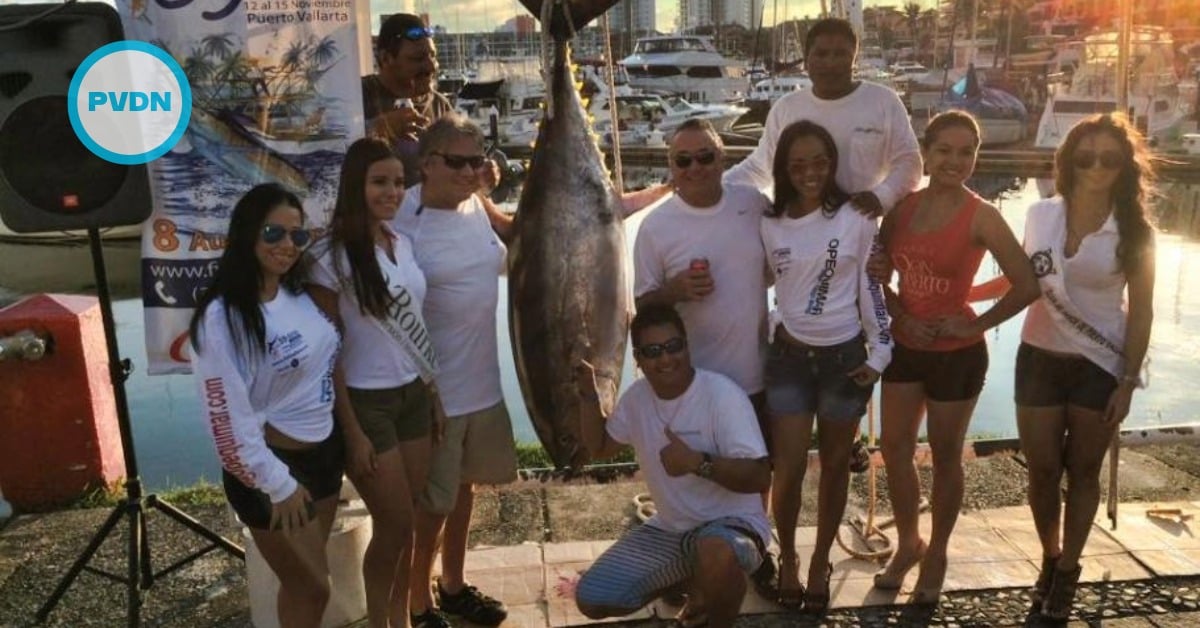
For three days, those crews will fan out across Banderas Bay in search of the heaviest marlin, tuna, and dorado they can find. Their catches will be weighed each afternoon on the Marina Vallarta malecón, next to the Marina del Rey condominiums, where locals and tourists gather to watch huge fish swing from the scales and listen for the day’s unofficial bragging rights.
Puerto Vallarta fishing tournament
Organized by the Puerto Vallarta Fishing Club, the tournament has grown into one of the city’s flagship sporting events and one of the most important sportfishing competitions on Mexico’s Pacific coast. The 2025 edition runs from November 12 to 15, with Marina Vallarta as the home base and stage for evening ceremonies, music, and awards. Anglers compete not only for trophies but also for a prize pool that, in recent years, has topped one million pesos in cash and gear, spread across the marlin, tuna, dorado, and best crew categories.
For local anglers, the event is part competition and part homecoming. Leaders of the Fishing Club describe how proud they feel, as Vallarta natives, to host visiting teams from across Mexico, the United States, Canada, and beyond, many of whom have been returning to the bay for years. That sense of continuity is what turns a fishing contest into a tradition: teams book the same boats, stay in the same condos, and gather with the same friends on the dock every November.
The daily rhythm is intense but familiar. Boats leave from the city’s waterfront just after dawn, following strict departure times, and race toward offshore banks and canyons where blue and black marlin, yellowfin tuna, and big dorado are known to feed. Lines must be out of the water at a set hour, and any fish that will be weighed has to reach the dock before the scales close. A late arrival can mean the difference between a record-setting fish and a story told with empty hands.
Behind the scenes, tournament officials and inspectors enforce Mexico’s federal sportfishing rules. Those regulations limit recreational anglers to 10 fish per day, with no more than 5 of a single species, and allow only one billfish, such as marlin, per angler or per boat each day, counting toward that limit. The Puerto Vallarta event’s own rulebook echoes those quotas, tying the competition to national conservation standards that are meant to keep iconic billfish on sport lines rather than in commercial nets.
Tradition, tourism and the future
Events like this are also a quiet economic engine for Puerto Vallarta. Studies of sportfishing in northwestern Mexico have estimated that visiting anglers spend well over $1,000 per trip on charters, hotels, food, and gear, making them among the highest-value visitors in coastal destinations. Research in places such as Los Cabos shows that marlin-focused fishing tourism can generate hundreds of millions of dollars in yearly economic impact, with every dollar spent by anglers rippling through local businesses and tax revenues.
Puerto Vallarta does not publish a widely cited, standalone economic report for its marlin and tuna tournament, but the effect is easy to feel on the ground. Marina Vallarta’s restaurants fill with teams comparing tactics over dinner. Mechanics and shipyard crews put in long days beforehand, making sure engines, electronics, and safety gear pass inspection. Tackle shops empty their racks of lures, lines, and gaffs in the week leading up to the start, and waterfront hotels see a bump in occupancy even as the traditional beach season begins to slow.
For the city’s tourism board and local businesses, the timing matters. A mid-November tournament stretches the high season and keeps the bay on the radar of visitors who might otherwise wait until Christmas to fly south. For many anglers, this is their first introduction to Puerto Vallarta beyond the all-inclusive image on a brochure. A successful trip often brings them back later with partners and families to explore neighborhoods, beaches, and mountains they first saw only as a backdrop from the water.
At the center of it all are the people who make the event feel less like a high-stakes contest and more like a community gathering. Volunteers check wristbands and weigh tickets, navy personnel present the flag and anthem, and elders of the Fishing Club greet newcomers with the kind of easy warmth that has long defined Vallarta. When the final horn sounds and the last fish is weighed, the big winners will walk away with trophies and checks, but most participants will remember something simpler: three days on the bay, shared stories on the dock, and an open invitation to come back next year.