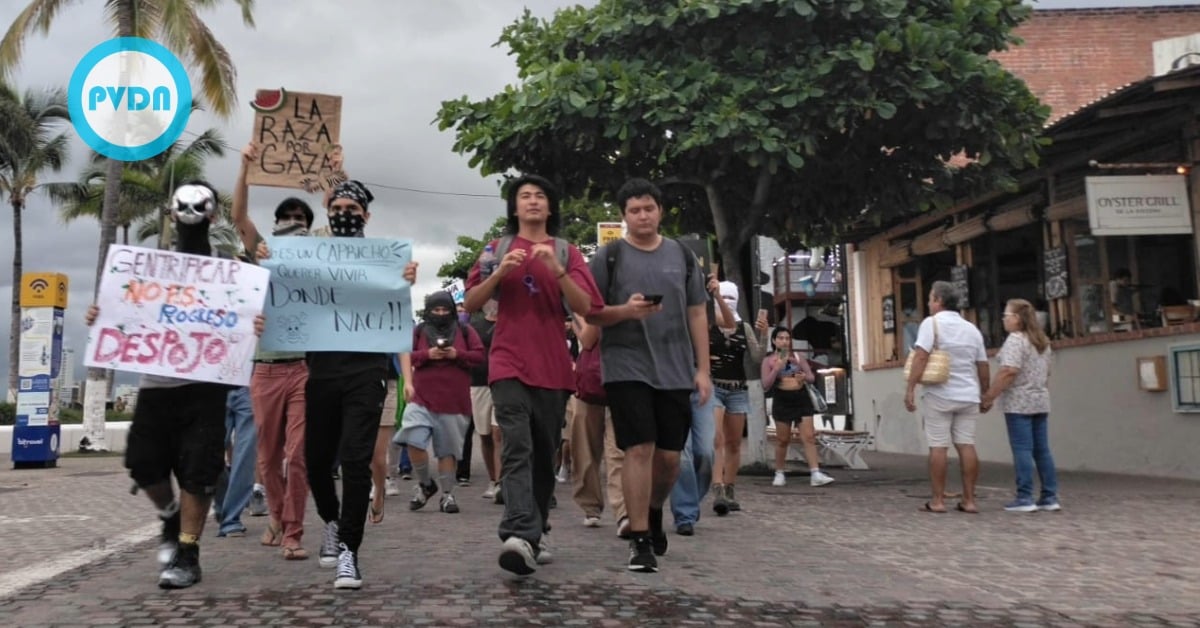
On September 15, a small, determined group of mostly university-age residents walked from the Agustín Flores Contreras sports complex to the Malecón Archesin protest of Puerto Vallarta gentrification. Their message was blunt: life in Puerto Vallarta is becoming unaffordable for locals, and they fear being pushed out. They blamed luxury projects, short-term rentals, and a transit system that still lags behind daily needs. Organizers say this is only the start, and they will return with more people. What’s driving their anger, and what might actually change?
Puerto Vallarta gentrification
About thirty young people marched in Puerto Vallarta on Sunday, September 15. They carried handmade signs, some with faces covered. The route ran along Francisco Medina Asencio, Avenida México, and the Malecón, ending at Los Arcos.
Local outlets described it as the first protest of its kind here. The core complaint was simple: rapid development brings profit and visitors, but many locals cannot keep pace with rising costs. The group says they will keep organizing, using social media and QR codes to grow numbers.
What protesters say
Participants named four pressure points. Real estate projects aimed at wealthier buyers. Displacement of local families to distant suburbs. A transit system that still falls short in terms of frequency and reliability. And day-to-day costs that outstrip local wages.
They want affordable housing policies, better buses that actually show up, and a city plan that balances neighborhood life with visitor demand. They also flagged new attractions and parking schemes as symptoms of a model that treats residents as an afterthought.
Housing costs and foreign demand
The concerns sit in a broader, measurable trend. Nationwide home prices rose this year above the pace of inflation, and coastal destinations like Jalisco’s bay cities continue to attract premium investment. Sales of high-end homes have climbed in major beach markets, even as workforce housing lags in supply.
Locally, brokers report a bigger menu of listings and steady demand from buyers with dollar-linked budgets. Renters feel the squeeze first. Neighborhoods near the beach and the Malecón see vacation rentals and premium units move fast, while long-term leases push deeper inland. For young Vallartenses living, studying, and working in town, that shift hits home.
Transport and services frustrations
Protesters also focused on daily mobility. Riders in Puerto Vallarta have dealt with inconsistent headways, breakdowns, and delayed fleet upgrades. Officials have promised fixes, and some new units have arrived in past cycles, but reliability remains the measure residents use. When buses bunch or skip routes, commutes swallow time and money.
In the same breath, people point to basic services. When trash piles up or street works drag on, it feeds a sense that growth is happening for someone else. That sentiment powered Sunday’s march as much as housing costs did.
Organizers say they will return to the streets in the coming weeks and aim to grow beyond a few dozen voices. Policy debates will follow them: whether and how to regulate short-term rentals, where to zone height and density, and how to fund frequent, dependable transit.
This is not only a Vallarta story. Young people in Mexico’s big cities have raised similar alarms about rising rents and displacement. If Puerto Vallarta’s leaders act early—on housing, on buses, on the everyday basics—they can lower the temperature and keep locals at the center of a city built by their parents and grandparents. The stakes are personal, and Sunday’s march made that plain.