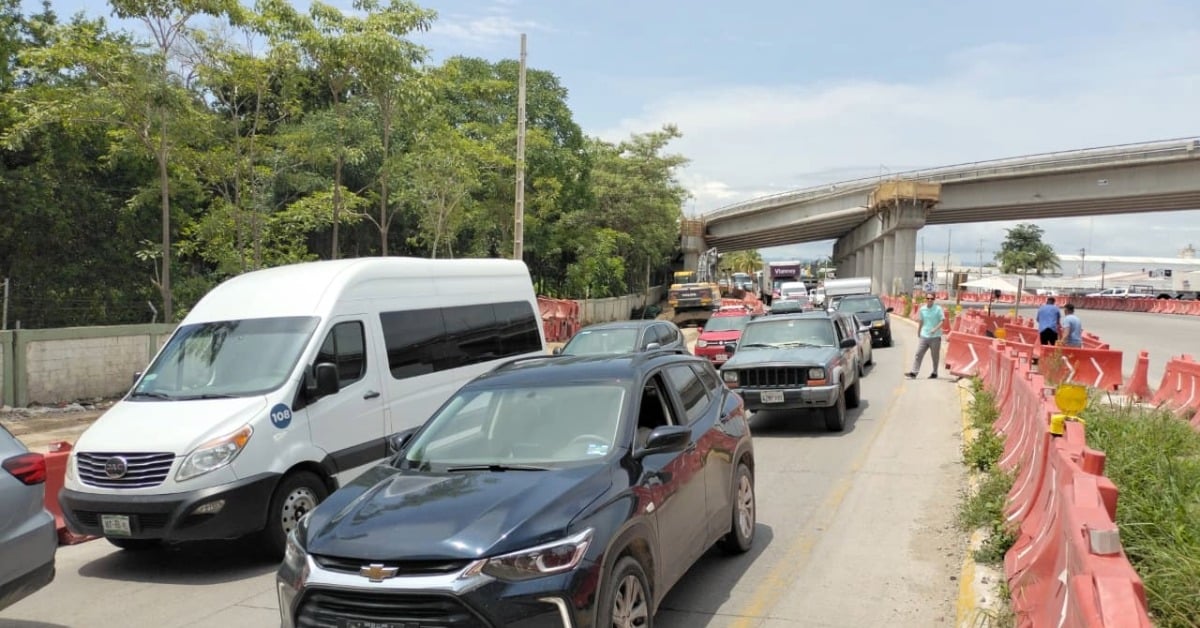
Shortly after 1:10 p.m. on Monday, September 1, traffic on Federal Highway 200 ground to a halt at the northern entrance to Puerto Vallarta. A group of demonstrators moved from the outer lanes into the center lanes near the Vehicle Verification Center, and by 1:30 p.m., both directions were blocked. Drivers abandoned buses and cars in the heat and walked along the shoulder to reach flights, work, and appointments. Authorities and motorists could not say how long the shutdown would last.
Puerto Vallarta Highway 200 protest
Witnesses on the scene counted roughly 40 people blocking all four lanes. Their demands ranged from ending Jalisco’s emissions vehicle verification program in Puerto Vallarta to basic city services, including street repairs and reliable drinking water. Some also called for a recall of Mayor Luis Munguía González. The blockade sits at the chokepoint for the airport and bus station, magnifying the disruption across the metro area.
The protest followed days of warnings on local outlets and social pages that a 1 p.m. action was planned at the verification site, with organizers urging a full closure of the city’s main artery. Officials had cautioned that even a partial shutdown would ripple into access to Gustavo Díaz Ordaz International Airport and long-haul bus schedules. Today’s scene matched those alerts almost to the minute.
What protesters are demanding
Demonstrators linked the blockade to three frustrations: the roll-out of Jalisco’s emissions test in Vallarta, chronic water shortages in multiple neighborhoods, and a City Hall push to enable paid street parking (parquímetros) next year. Tribuna de la Bahía reported that opposition to vehicle verification and parquímetros fueled the action, while other outlets highlighted water access and billing as core grievances.
The water issue is not new. Residents held sit-ins and lane closures late last week in the historic center, citing dry taps and brown water in some homes. Quadratin Jalisco and other local media documented those protests and subsequent talks with city managers and SEAPAL, the municipal water utility.
Why this location matters
The blockade is located at the entrance corridor, where Highway 200 meets Av. Francisco Medina Ascencio. It is the lifeline for airport traffic, intercity buses, hotel zones, and commuters from Bahía de Banderas. Pre-event advisories specifically warned that a closure here could leave tourists, workers, and residents walking to make connections—a scene that has unfolded today.
The Vehicle Verification Center itself sits on Av. Francisco Medina Ascencio #4774-A, at the corner with Av. Las Palmas in Colonia Guadalupe Victoria—only meters from today’s protest site.
The verification program in brief
Jalisco’s Verificación Responsable is an emissions test required on a calendar tied to license plate numbers. State guidance this year emphasizes voluntary compliance while the network expands. Drivers who fail have a second try at the exact center. The program aims to achieve cleaner air; however, the rollout in Puerto Vallarta has drawn pushback over concerns regarding cost, scheduling, and access.
Parquímetros and politics
Separately, a city proposal to enable parquímetros—paid curbside parking—advanced in late August as part of next year’s revenue framework. A regional outlet reported a preliminary charge of 12 pesos per hour, pending state approval. That plan has become a lightning rod in downtown neighborhoods already strained by tourism traffic and water cuts, and it surfaced again in today’s chants. realidadgdl.com
What we know so far
Local newsrooms on the ground report that the blockade began around 1 p.m. and expanded quickly to all lanes. Coverage identifies participants from Resistencia Civil Pacífica and allied neighbors. The city had not announced a negotiated reopening window at the time of this press release. If you have a flight or a long-distance bus today, expect added delays reaching the terminals.