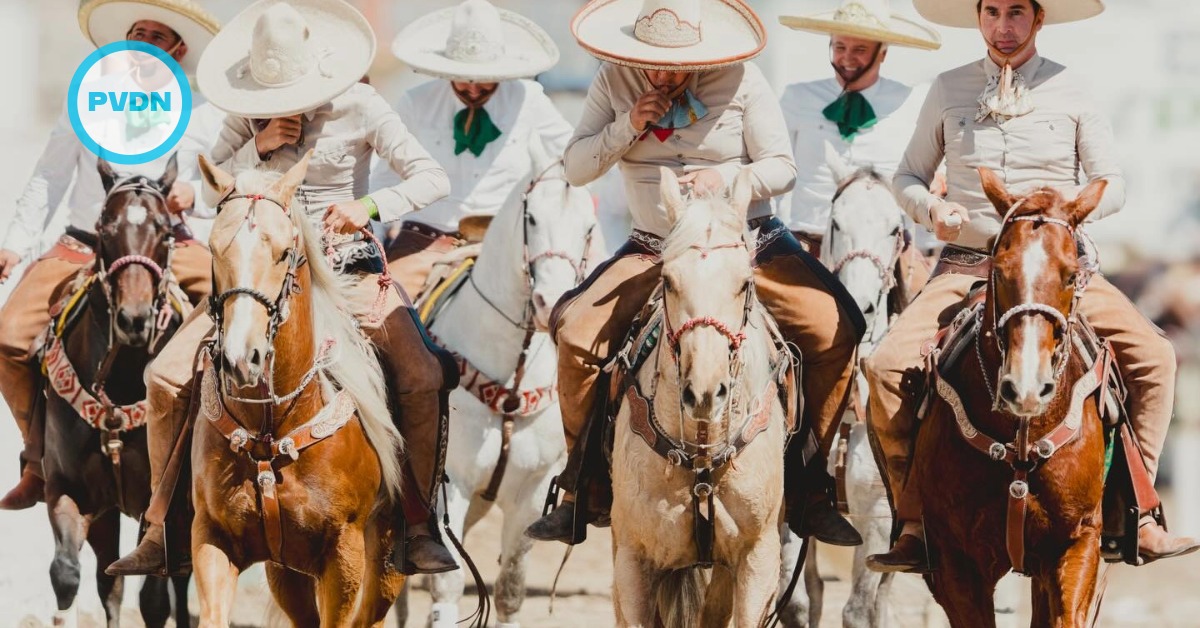
Horses, silk skirts, and silver spurs are about to take over Puerto Vallarta. Starting Thursday, the city’s charro arena becomes a rare meeting place for elite riders from Mexico and the United States. The action stays inside the ring, but the celebration spills into town with a parade along the Malecón and nightly music. If you’ve never seen charrería up close, this is one of the easiest places to start—just don’t expect it to feel like a tourist show.
Puerto Vallarta’s beachside take on Mexico’s national sport
Puerto Vallarta is about to trade beach vibes for brimmed sombreros and polished saddles. From Thursday, January 29, to Sunday, February 1, the city hosts the International Charro Championship again. The action returns to the Miguel “Prieto” Ibarría lienzo charro, the arena built for this sport. The arena sits in the Villa Las Flores area, a short ride from downtown. Organizers describe it as the only international charro tournament staged in a beach destination. That detail matters because most big meets happen far inland. Charrería is Mexico’s national sport. It mixes horsemanship, ropework, and old-ranch skills.
Teams are coming from Mexico and the United States, with many top names confirmed. Expect powerhouse outfits like Rancho El Soyate, Charros de RG2, and Charros de Jalisco. Escaramuzas will also compete, turning the ring into a moving pattern of skirts and horses. For expats, it’s a chance to see charrería without needing a road trip. It’s close, family-friendly, and easy to follow once it starts.
What to expect from charros and escaramuzas
Inside the arena, the championship is scored like a sport, not a show. A charro team works through set suertes, with judges tracking points and penalties. You’ll see rope throws, controlled spins, and horses stopping on a dime. Listen for the announcer calling each move, because it guides first-timers. When a team nails a catch, the crowd reacts instantly.
Escaramuzas bring a different kind of suspense. They ride sidesaddle in synchronized patterns, often at a full gallop. One small mistake is visible from the stands. Organizers expect about 30 charro teams and more than 20 escaramuza squads this year. The event also runs on a big stable operation. More than 100 animals are on hand for the different routines.
Coastal weather adds its own twist. Many riders train in drier, higher-altitude arenas. In Vallarta, humidity and heat can change pacing and stamina. If you arrive early, you can catch warm-ups and see the gear up close. For spectators, that makes the clean runs feel even more earned.
The Maleconeada parade and the after-hours energy
The championship doesn’t stay confined to the arena. On Friday, riders are expected to join the Maleconeada, a parade along the Malecón at dusk. It’s loud, photo-friendly, and hard to miss once it starts. Back at the lienzo, live banda and mariachi are set to keep the mood high each day. Saturday night adds a crowd-pleaser: a “dancing horses” show that leans into training and flair.
Across four days, organizers expect crowds in the thousands. That can mean slower traffic near the arena and busier dinners afterward. If you want better seats, arriving early helps, especially on Saturday.
Even if you don’t follow every score, these moments explain the pull of charrería. The outfits are part of the scene, from embroidered suits to ribboned dresses and wide-brim hats. For expats, it can feel like a shortcut into local life. You’re not watching from a distance; you’re sharing space with Vallarta families. Arrive with curiosity, and you’ll leave knowing why the sport travels with so much pride.
A weekend that gives back locally
There’s also a local angle beyond tourism. Organizers say a percentage of ticket sales will support schools and Fundación Andrea 321. The Puerto Vallarta nonprofit funds therapy scholarships for people with Down syndrome and other disabilities.
Tickets are sold at the arena box office, and popular sessions can fill up. Schedules can shift, so checking official updates before you go is wise. It’s a reminder that charrería clubs are often community institutions, not just sports teams.
In many towns, the lienzo is where fundraisers, family celebrations, and civic pride meet. For newcomers, that context helps. It’s easy to file charrería under “traditional entertainment” and move on. But the sport still plays a daily role.
UNESCO added charrería to its Intangible Cultural Heritage list in 2016. If you go, treat it like any hometown championship. Cheer, take photos, and enjoy the music. Remember that for many in the stands, this isn’t a performance. It’s identity, competition, and a weekend that gives back.