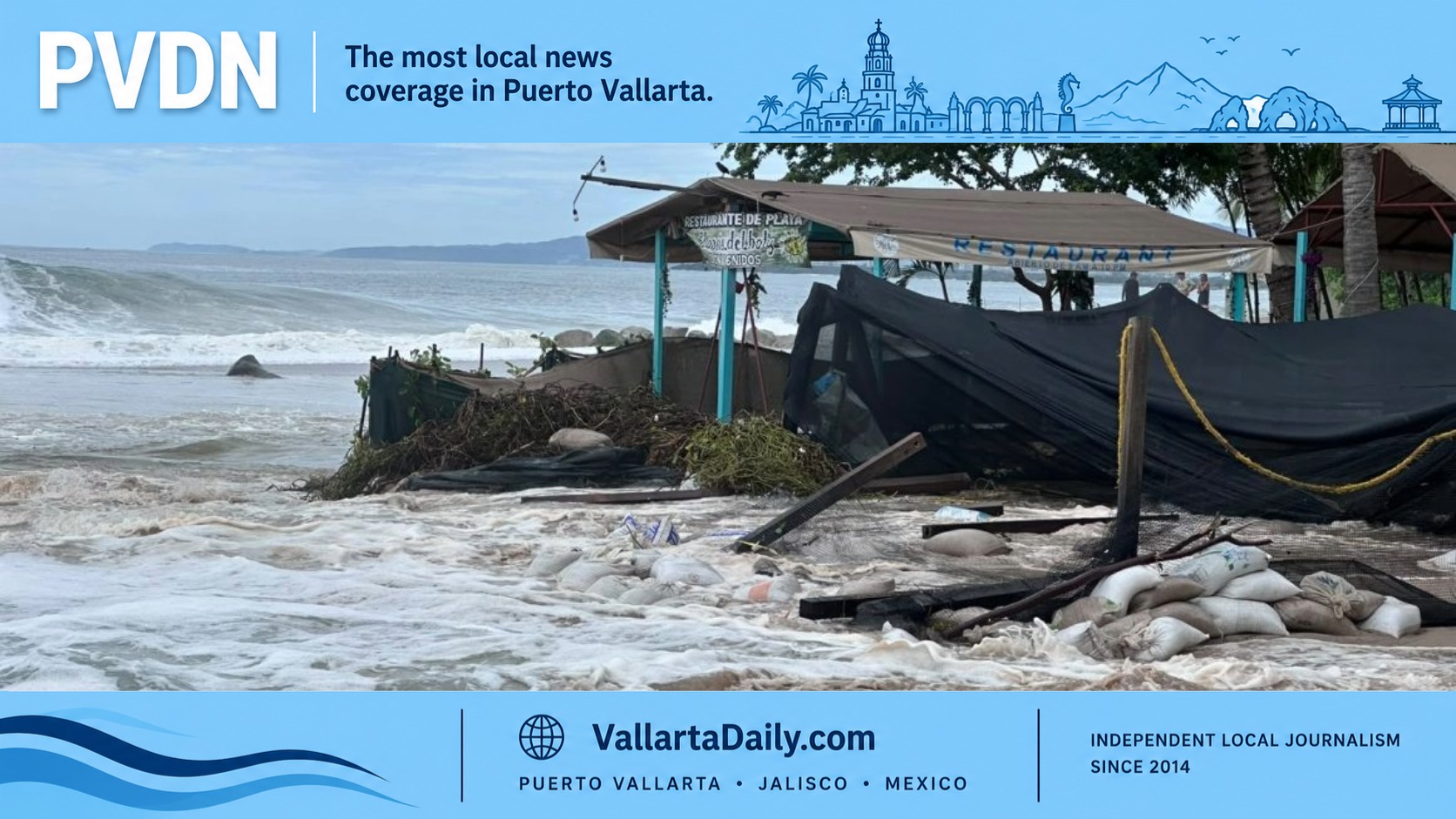

Puerto Vallarta, Jalisco, October 15, 2026 — Tourists and merchants have accused a hotel of discharging wastewater into the sea in the northern Hotel Zone, according to a report published Thursday.
The complainants said the releases began around Hurricane Polo and continued after Hurricane Simon. They called for a federal inspection and sanctions if an illegal discharge is confirmed.
The report does not name the hotel or pinpoint the beach. It includes no water-test results and says no information was available about an official inspection or the establishment’s response.
For anyone deciding where to swim, that leaves a practical question: is the water near the reported discharge safe for contact?
Mexico’s beach-monitoring program helps address that concern. Cofepris, the federal health regulator, uses enterococci measurements to evaluate seawater quality, with a sanitary risk threshold of 200 per 100 milliliters. Those laboratory results help authorities assess conditions where people swim.
A separate investigation would be needed to establish where the reported wastewater originates. Testing the seawater and tracing a discharge serve different purposes: one assesses conditions for beach users, while the other helps establish responsibility.
The health concern extends beyond swimming. In an October 2 interview, Jaime Álvarez Zayas, director of Jalisco’s Eighth Health Region, warned about contact with untreated wastewater during the drainage problems affecting Versalles.
“It can cause conjunctivitis, dermatitis and diarrhea,” he said in Spanish, describing illnesses associated with exposure to untreated water. He recommended avoiding contact where possible and said the problem had been referred to Coprisjal, Jalisco’s sanitary-risk agency.
That concern has already affected ordinary journeys through the hotel corridor. Earlier reports described video showing hotel employees walking through accumulated water in Las Glorias and a tourist bus crossing a flooded roadway to reach a hotel.
Those street-level problems form part of a wider drainage crisis. Vallarta Daily reported September 30 that SEAPAL lacked funding for a sewer overhaul as overflows affected Versalles, Díaz Ordaz and Las Glorias.
Before Thursday’s hotel complaint, the utility had described work to improve the public sewer network. In its October 7 operational update, SEAPAL said rain associated with Polo and Rachel had damaged pumping equipment and complicated wastewater operations.
The utility installed additional pumping equipment at the Norte I wastewater treatment plant to move more sewage toward treatment. It said the work had lowered sewer levels and reduced overflow risks, particularly in Versalles. Crews also washed affected streets and applied sodium hypochlorite, a disinfectant.
Those repairs address how wastewater moves through the city. Answering the beach-safety question requires evidence from the shoreline itself.
Cofepris’s beach-surveillance guidance emphasizes both bacterial levels and when those levels were measured so people can make informed decisions about entering the water.
For this complaint, the sampling location and collection date would be essential. A result taken before Polo would describe conditions before the reported releases began; beach users need a measurement from the affected stretch of water after the alleged discharge.