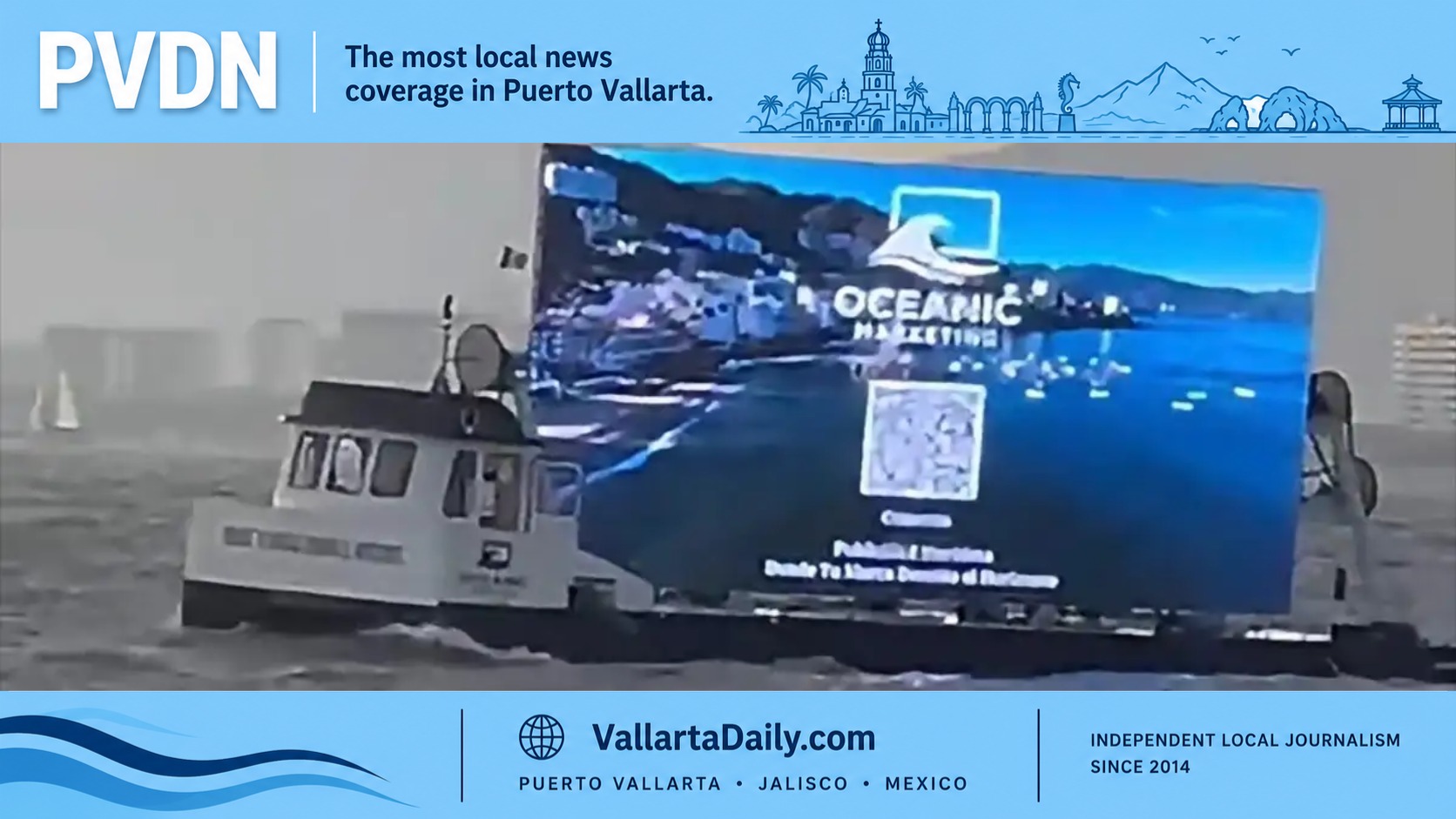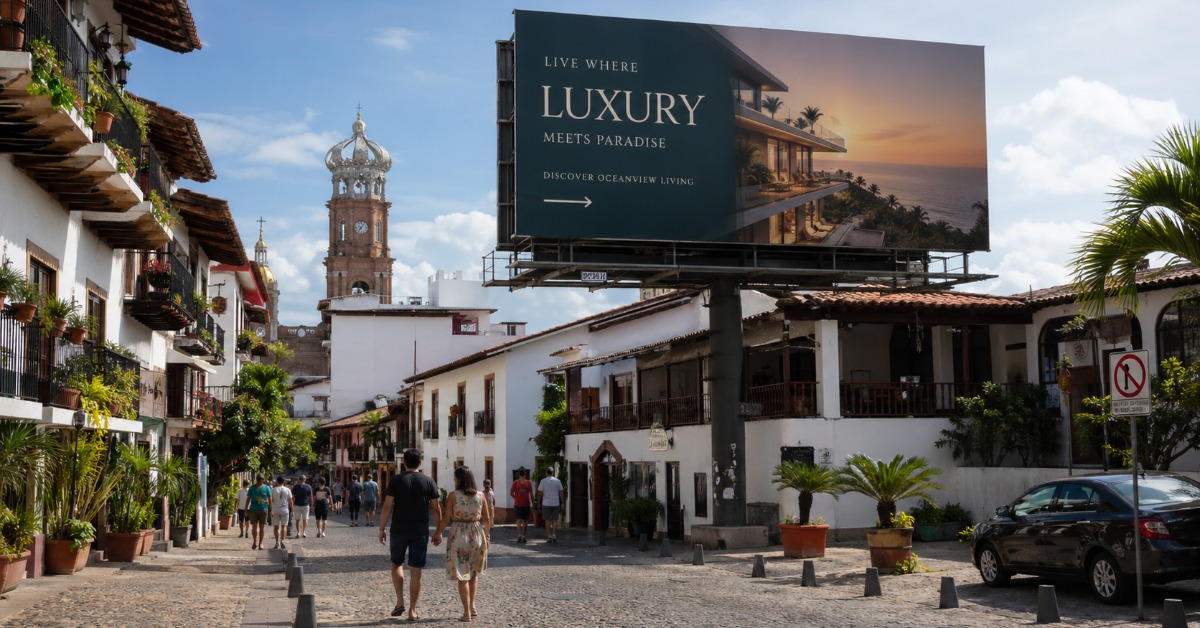
Puerto Vallarta will remain free of billboard-style advertising structures, according to Jalisco Governor Pablo Lemus Navarro and Mayor Luis Ernesto Munguía González.
The statement came after questions over whether the city could reopen the door to large outdoor advertising. Both officials said the municipality would continue to protect its urban image and avoid the spread of visual pollution in public spaces.
For many residents, the issue is familiar. Puerto Vallarta has long sold itself as a destination shaped by its bay, mountains, beaches, Malecón, and older neighborhoods. Large commercial structures along major roads could quickly change that view.
Lemus called the decision positive for the city and said Puerto Vallarta should remain an example of visual order. Munguía said municipal supervision would continue to make sure current rules are followed.
The message was not a new construction project or a new tourism campaign. It was a public reassurance that the city’s rules on large-scale advertising will remain part of how Vallarta manages growth.
What officials mean by espectaculares
In Mexico, espectaculares usually refer to large outdoor advertising structures. They are the big signs often seen along highways, main avenues, rooftops, and commercial corridors in many cities.
They are different from normal business signs, storefront names, public notices, or small directional signs. The concern is not whether businesses can identify themselves. The concern is whether large advertising structures can dominate streets, block views, or turn public space into a commercial corridor.
In a tourism city, that distinction matters. Visitors and residents often experience a place first through its streets, beaches, walkways, and public views. A city can invest in parks, facades, lighting, and walkability, but that work can be weakened if large signs become the most visible part of the urban landscape.
That is why billboard policy often becomes more than a permitting issue. It becomes a question about what kind of city Puerto Vallarta wants to be.
Why this matters to residents and foreigners
For foreigners living in Puerto Vallarta, this may seem like a small local-government story. It is not. Rules on outdoor advertising, street appearance, public space, and development pressure shape daily life in a city that depends heavily on tourism.
Puerto Vallarta is growing. That growth brings more businesses, more construction, more traffic, and more pressure to monetize visible spaces. Billboards can become part of that pressure because they turn busy roads and public views into advertising inventory.
The city’s decision to keep them out supports a broader idea: Vallarta’s value is tied to what people see and feel when they move through it. That includes clean streets, open views, preserved neighborhoods, and a sense that the city has not surrendered every corner to commercial use.
For expats and long-term foreign residents, this connects to livability. A city that protects its visual character is also protecting part of what made people choose it in the first place.
The tourism angle is hard to ignore
Puerto Vallarta competes with beach destinations across Mexico and abroad. Its appeal is not only hotel inventory or flight access. It is also the city’s image as a coastal community with a recognizable local identity.
That image can be fragile. A destination may still receive visitors while losing the visual qualities that made it feel different. Over time, too much visual clutter can make one tourism corridor look like any other.
Officials framed the billboard position around cleanliness, order, and image. Those words matter in a city where the tourism economy depends on public perception. Streets, signs, garbage collection, facades, beach conditions, and mobility all feed into the same impression.
This is also why the billboard issue belongs in the same conversation as urban planning, public works, trash collection, and downtown improvements. They are separate policies, but they all shape the same visitor and resident experience.
The enforcement question remains
The clearest promise from officials is that Puerto Vallarta will not authorize a return of billboard-style advertising. The more difficult question is enforcement.
Municipal rules only matter when they are applied. That means inspections, permit reviews, removal of unauthorized structures, and consistent standards across neighborhoods. It also means resisting political or business pressure when visible advertising space becomes valuable.
The mayor said supervision would continue under the current rules. That will be the point to watch. Residents may want to see whether the city responds quickly to illegal structures, temporary workarounds, or attempts to reclassify large signs under another name.
For business owners, the message is clear as well. Normal promotion and storefront signage are part of commerce. But large structures that alter the city’s public image remain politically sensitive and, according to officials, outside the direction Vallarta intends to take.
A small decision with a larger signal
The announcement does not solve Puerto Vallarta’s larger growth questions. It does not address housing costs, traffic, water pressure, public works, or the strain of rapid development.
Still, it sends a signal about limits. City leaders say not every form of commercial growth fits Puerto Vallarta’s identity.
That matters because tourist cities often face slow visual change. It starts with one exception, then another, then a corridor that looks different five years later. Once public space is filled with large advertising, it can be difficult and costly to reverse.
For now, Puerto Vallarta’s position is simple: the city wants to remain free of espectaculares. The real test will be whether that promise holds as development pressure continues.