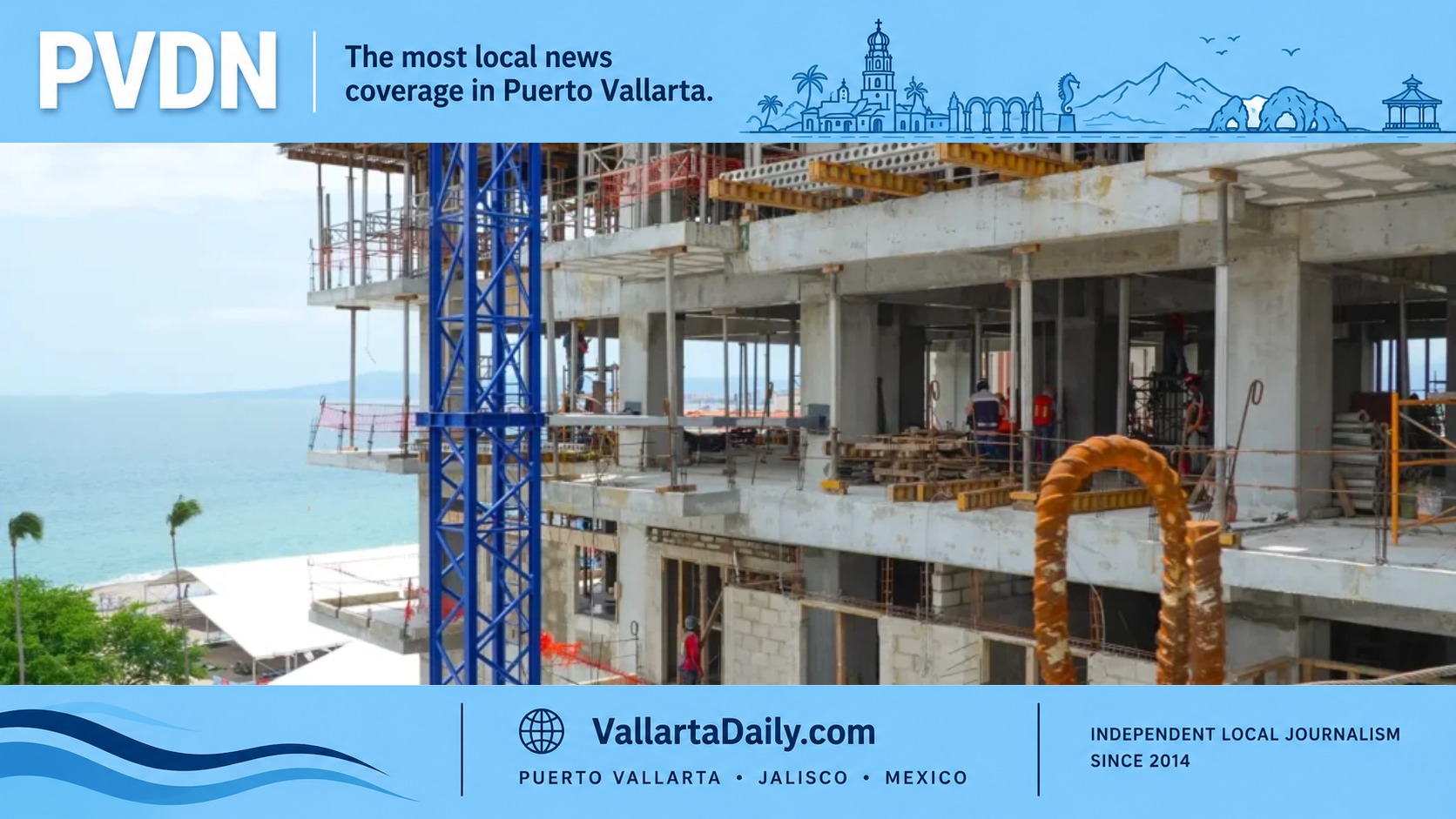
On Monday afternoon, residents and taxi drivers parked across Avenida México, halting the first day of work on a plan to extend the Malecón north. City Hall says the project will refresh lighting and sidewalks before the holiday rush, but neighbors call it rushed and imposed. They want a slower rollout and real consultation. What exactly is in the plan, who pays for it, and how long would it last—and what happens now that the street is blocked?
The project to widen and spruce up Puerto Vallarta’s oceanside walkway hit a wall made of parked taxis and angry neighbors. Midday Monday, residents and drivers blocked Avenida México—right where crews were set to start—forcing a pause on work they describe as rushed and imposed. Videos shared locally show a row of vehicles used as a barricade and heated arguments in the street. City authorities had not issued a detailed response by late afternoon.
City Hall had announced the start of “rehabilitation” work the same morning, budgeting a little over 18 million pesos for new lighting, resurfacing, sidewalks, and other fixes along Avenida México. Officials signaled traffic would keep moving with temporary access changes and an 80-day timeline to finish ahead of the holidays. The protest upended that plan within hours.
At the heart of the fight is the Puerto Vallarta malecón expansion—a plan to push the pedestrian promenade farther north from Calle 31 de Octubre to Calle Argentina, effectively connecting the walkway to Parque Hidalgo and the 5 de Diciembre neighborhood. Materials released last week show renderings of a cleaner, brighter corridor with benches, planters, and upgraded utilities, and note Federal Maritime Land Zone (ZOFEMAT) funding behind the work. The stated goal is to finish by December.
Puerto Vallarta malecón expansion
Tension has been building for days. On October 10, residents and business owners met with the city manager to express concerns about access, deliveries, and sales during construction; they left without reaching an agreement and called for a weekend protest. Some neighbors say they never felt genuinely consulted; City Hall points to a three-week public survey. The split hardened over how much disruption the next three months would bring and whether support would reach affected shops.
There’s also a timing problem nobody disputes. Work would unfold as Vallarta heads into high season, when the Malecón carries the city’s pulse. Taxi drivers fear detours will scatter fares; merchants worry foot traffic will dip while sidewalks are torn up. City officials argue the upgrade is needed and overdue. Residents counter that “overdue” is not the same as “do it now,” especially after a bruising storm week that already tested the waterfront.
The clash lands against a broader backdrop: local debates over who the city is built for, and how fast significant changes should move. Recent coverage highlights the Malecón as a proxy for debates over cars on the seafront, the city’s 2030 goals, and the influence of public input on final decisions. City Hall announced on October 9 that the results of the Malecón consultation would be available within 15 days. Monday’s blockade suggests residents didn’t want to wait that long.
What changes now for the project
Practically, the pause means crews and contractors can’t proceed until authorities lower the temperature. Options are on the table: phasing the expansion one block at a time, night-work near storefronts, more generous detours, or direct financial support for businesses stuck behind cones. Those ideas surfaced in last week’s meeting, but didn’t become commitments. To meet the December finish, City Hall must either compress the schedule or push the deadline, both of which come with costs.
There’s still agreement on the basics. The Malecón is the city’s front porch. It needs care after heavy surf and years of patchwork fixes. Residents aren’t rejecting improvements outright; they’re demanding a say in how the work happens and when. Until City Hall returns with a concrete plan—and a visible way to share pain and benefits—the subsequent blockade could arrive faster than any backhoe.