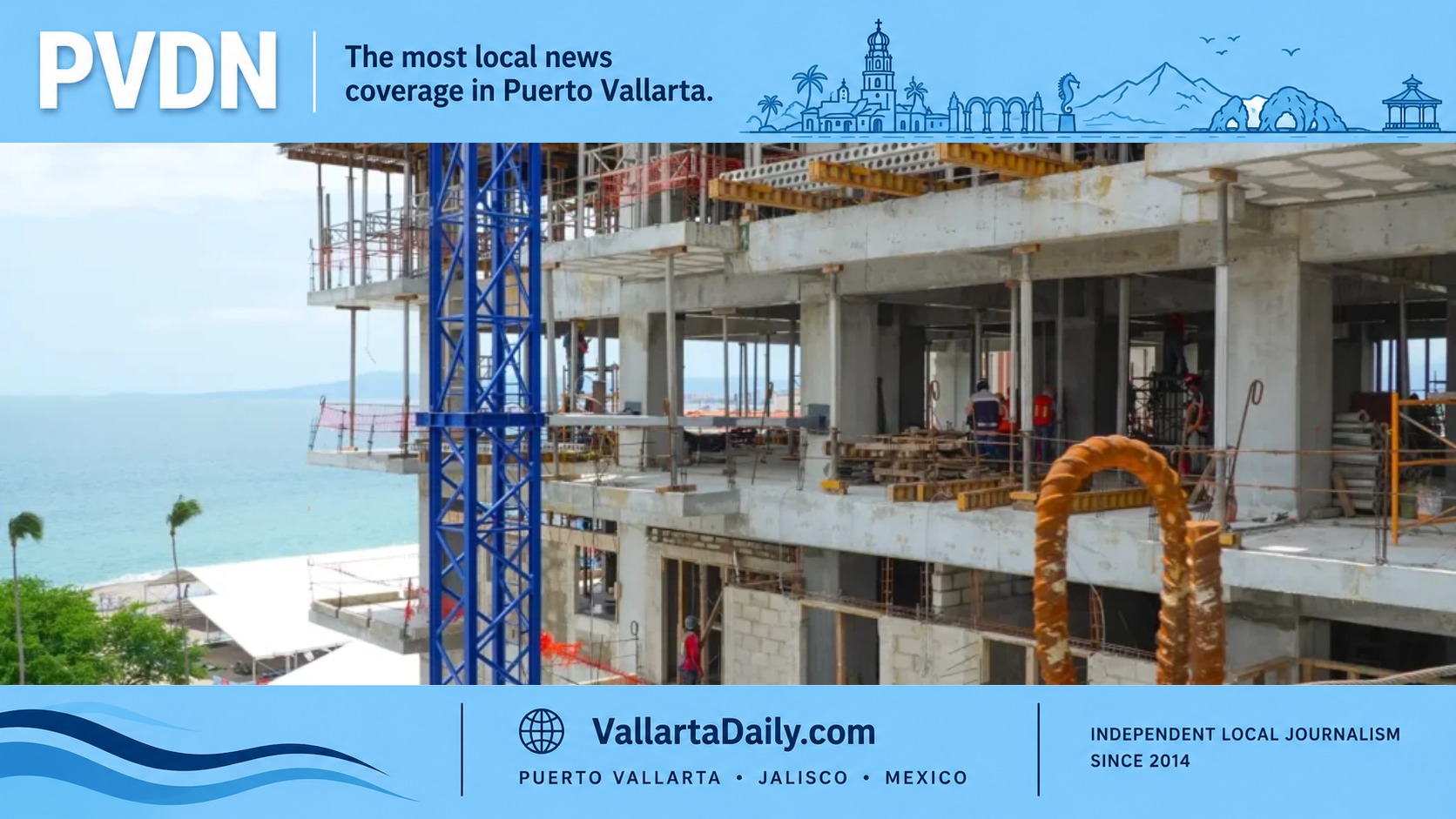
A downtown street crew tore up cobblestones at dawn—and ran straight into a human barricade. By nightfall, neighbors and shopkeepers were camped out, vowing to stop the Puerto Vallarta Malecón works, which they claim arrived without proper consultation. City officials insist it’s not a pedestrianization plan, just drainage fixes and matching Malecón finishes. So why the fury, and why now, days after the mayor’s high-profile government report? We walked the site, spoke with protesters, and reviewed city claims to separate rumor from reality. The standoff isn’t cooling.
Residents and shopkeepers in Puerto Vallarta spent the night on a curbside vigil, holding a construction zone that never truly started. The pushback began Monday, October 13, when crews moved into Avenida México, near Parque Hidalgo, to begin the next stage of work tied to the Malecón. Protesters forced a halt, and by Tuesday morning, the camp remained in place.
The first clash was as physical as it was political. Backhoes lifted sections of the old stone surface—locals slammed the brakes. The stoppage is centered at the intersection of Avenida México, 31 de Octubre, and Argentina, a junction that directs traffic along the edge of the tourist strip and the historic core. The line between the construction zone and the neighborhood drew itself in minutes.
Puerto Vallarta Malecón works
City hall says the project has been badly misunderstood. Officials insist the intervention won’t close the road to cars and isn’t a stealth pedestrianization. They describe work to improve stormwater capture with new drains, relevel surfaces, and “homologate” finishes to match the Malecón—porphyry stone, washed-finish concrete, and wixárika motifs set in dark aggregate—plus new bollards. In short: drainage, elevation, and aesthetics, not a traffic ban. Puerto Vallarta Malecón works are part of the city’s framework, focusing on maintenance and a facelift.
Mayor Luis Munguía has also placed the street-level job inside a bigger nautical pitch. He’s argued these downtown upgrades are preparatory steps toward a state-backed maritime infrastructure push slated to begin in early 2026—framing the street disruption today as groundwork for tomorrow’s tourism economy. That tie-in has sharpened skepticism among protesters who see a top-down plan with little buy-in from the blocks it affects.
Project briefs vary in their public details, but city-friendly descriptions say the work would extend the promenade character along Avenida México for two additional blocks, roughly from 31 de Octubre toward Venezuela and Argentina, with an estimated budget of 18.5 million pesos under the historic-center program. City media and local outlets say the timetable is measured in months, not seasons. For now, work is paused.
On the street, the fight is simpler: livelihoods and mobility. Monday’s blockade by neighbors, merchants, and a contingent of taxi drivers froze traffic downtown and spilled into adjacent streets. Commuters fumed; protesters said disruption was the point—there’s no ignoring a ripped-up artery two weeks before high season ramps. The taxi sector has demanded full project details and a guarantee that circulation won’t be squeezed.
What changes and why now
The city counters that merchants primarily support the plan and that confusion has been fueled by rumor. Officials are pitching the drainage upgrade as a fix for chronic ponding and as a way to give the gateway to Parque Hidalgo the same finish as the Malecón. Even so, a tense public meeting last week highlighted the gap: the city manager argued that a slow tourism year necessitates sharper promotion and better infrastructure. At the same time, residents questioned why consultation had lagged behind construction. That credibility gap is driving the vigil.
As of Tuesday, authorities had suspended activity at the site while continuing to say the project will proceed once tempers cool and communication improves. A sit-down with taxi drivers was scheduled to walk through the details, suggesting the next move will happen at a conference table, not behind caution tape. Whether the camp dissolves depends on what’s offered—and whether those promises survive the first jackhammer.