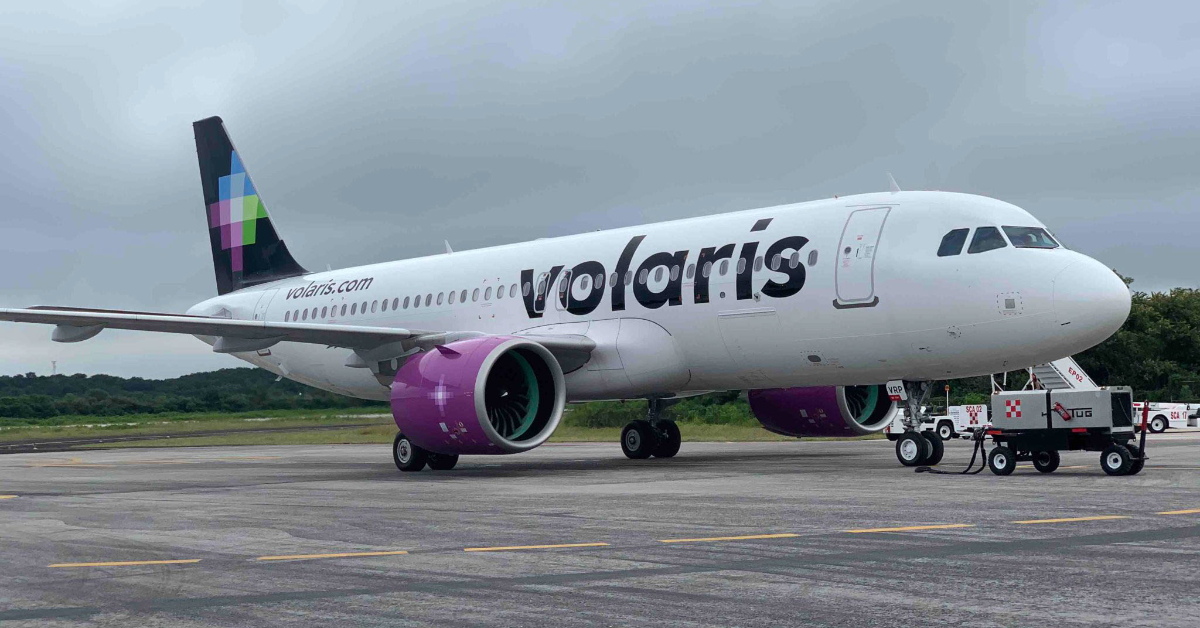
Puerto Vallarta is adding another domestic air link just as airport traffic shows signs of strain. Volaris will start flying between Aguascalientes and Puerto Vallarta on June 2, with three weekly round-trip flights and an early schedule built for quick beach travel. The launch gives Vallarta a new inland market connection, but the route arrives after a sharp April traffic decline at the airport, making the first few weeks a test of whether new seats can translate into steady demand.
A June 2 launch with early times
Puerto Vallarta will get a new direct flight to Aguascalientes on Tuesday, June 2, when Volaris begins service between the two airports three days a week.
The schedule gives the route an early morning pattern. The Aguascalientes to Puerto Vallarta flight, Y4651, is listed to leave at 8:13 a.m. and arrive at 9:09 a.m., while the return flight, Y4650, is listed to leave Puerto Vallarta at 9:50 a.m. and arrive in Aguascalientes at 10:47 a.m.
The service is scheduled for Tuesdays, Thursdays, and Sundays. The Aguascalientes government confirmed the route in its latest list of June air-service additions, which also includes a Volaris route to Puebla and Viva Aerobus routes to AIFA, Cancún, and Monterrey.
A February route announcement listed the same departures but showed arrival times that differed by one minute in each direction. The newer May schedule lists departures at 9:09 a.m. to Puerto Vallarta and 10:47 a.m. to Aguascalientes, so travelers should still check their ticketed itinerary, as airline schedules can shift near launch.
New seats arrive after a weaker spring
The new flight launches as Puerto Vallarta airport tries to rebuild air momentum after a weaker spring. Grupo Aeroportuario del Pacífico, which operates the Puerto Vallarta and Aguascalientes airports, reported that total passenger traffic at Puerto Vallarta fell 17 percent in April compared with April 2025. Domestic traffic at Puerto Vallarta fell 8.4 percent, while international traffic fell 23.5 percent.
Aguascalientes moved in the other direction for the month. GAP reported total traffic there rose 4.9 percent in April, with domestic traffic up 3.5 percent and international traffic up 7.5 percent. That does not prove the new Vallarta route will hold demand, but it gives Volaris a launch city that was not showing the same April weakness.
The Aguascalientes route is part of a broader Volaris push into Puerto Vallarta. Jalisco’s tourism portal previously listed three new routes to Puerto Vallarta from Puebla, Aguascalientes, and San Luis Potosí. Vallarta Daily also reported earlier this year on the three new domestic routes to Vallarta scheduled to begin on June 2.
At the February presentation, Enrique Beltranena, Volaris president and chief executive, said the added routes would “fortalecerán la conectividad nacional e internacional del estado.” He also framed the expansion around tourism, business, and family travel, though the route now faces a demand test as it moves from announcement to actual seats.
The Aguascalientes government used similar language when it announced the June routes, saying the additions would “fortalecen el desarrollo económico y turístico de Aguascalientes.” That is the official case for the service, but the market test begins when passengers start filling the early flights.
What the schedule allows
For Puerto Vallarta, the useful part of the route is its timing. A morning arrival gives travelers nearly a full first day in town, while the return leaves before late morning, leaving little margin for delays, hotel checkout, or ground transportation from the south side of the bay.
Volaris lists the direct flight from Aguascalientes to Puerto Vallarta at about 1 hour and 3 minutes. The scheduled block time on the June launch schedule is slightly shorter in one direction and slightly under an hour on the other, with actual times depending on weather, operations, and the final filed flight plan.
The route also gives Puerto Vallarta another inland market connection at a time when the airport has been leaning on new domestic links to offset softer numbers, a trend noted in recent coverage of Puerto Vallarta airport traffic. Whether three weekly flights are enough to change the broader traffic picture will depend on sustained bookings after the first launch period.