After several years off the calendar, Urban Downhill is returning to Puerto Vallarta. The comeback is more than a race. It turns the Historic Center into a live course of stairs, alleys, ramps, and steep streets. It also gives the city another visible sports tourism event. Organizers are promising free public access and recognition for riders. The bigger question is whether the event can recover its old attention and what that says about Vallarta’s 2026 strategy.
Puerto Vallarta puts urban downhill back on the calendar
Puerto Vallarta is bringing back Urban Downhill this May. The event once turned the city’s steep streets into a sports stage before a multiyear pause.
The 2026 edition is being promoted as a return of international downhill and freestyle riding to the Historic Center. Organizers say practice and course familiarization begin on May 1. The main race and Best Trick program are scheduled for May 2. Jalisco’s tourism calendar lists the event from May 1 to 3.
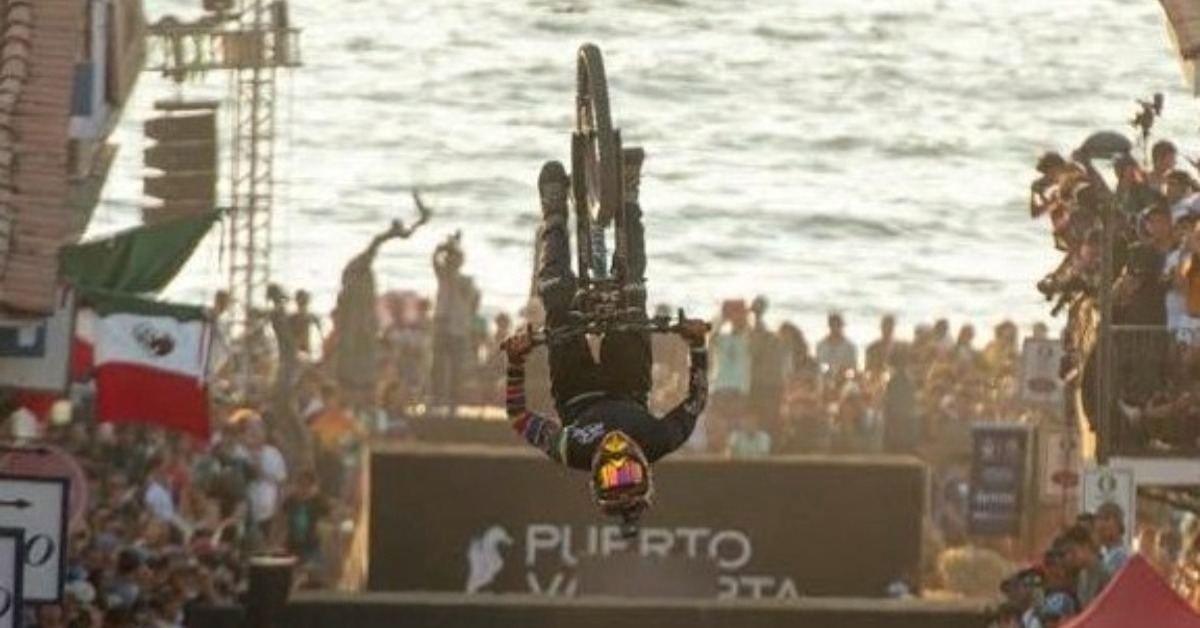
For readers unfamiliar with the format, this is not mountain biking on a forest trail. Urban downhill takes the logic of downhill racing and drops it into a city. Riders descend through stairways, alleys, sharp turns, ramps, and narrow streets. Speed matters, but control matters just as much. In Vallarta, the format fits the terrain. The city center climbs quickly from the waterfront into hillside streets.
Why the city suits the race
That terrain is part of the reason the race gained attention in earlier editions. Official tourism material from past years described courses running from Cerro de la Cruz down toward the Malecón. The slope, stairs, and tight urban layout were part of the challenge. Older destination promotions show the event was held in 2017, 2018, and 2019. Those editions drew international riders and large crowds before the pause.
That pause matters. The return is not the launch of something new. It is the revival of an event that had already proven Puerto Vallarta could host a niche sport. Earlier editions blended competition with exhibition riding. That helps explain the appeal beyond cycling fans. Even casual spectators can read the action. A rider drops down a staircase, hits a ramp, and threads through a tight corner above the bay.
This year’s promotional material again leans on that mix of racing and spectacle. Expected participants include Rémy Métailler, Kilian Bron, Jhony Salido, and Bienvenido Aguado. The state’s tourism promotion also frames the event as free to attend in the downtown area. That matters in a city where many tourism events feel separate from daily local life.
A tourism strategy on two wheels
The return of Urban Downhill also fits a broader tourism strategy. Jalisco officials are presenting the event as part of the state’s push into adventure tourism and international sports programming. That makes sense for Puerto Vallarta. The city is already known abroad for beaches, nightlife, and seasonal festivals. Officials want it seen as a place for major sports events too.
For readers outside Mexico, the return says something about how Puerto Vallarta markets itself. The city is not only marketing sun and sand. It is also a marketing terrain, a walkable urban landscape, and a waterfront downtown that can double as a live-event backdrop. A downhill race can travel well on screens because the setting is easy to understand. Viewers do not need much explanation to grasp the contrast between a bicycle, a staircase, and the ocean below.
There is also a local economic angle. Sports events like this tend to spread foot traffic through the Historic Center, especially around the Malecón and adjacent streets. Hotels, restaurants, bars, and transport services all benefit when an event brings in riders, support crews, media, and spectators. Officials and organizers have stressed that point. They are presenting the competition as both a sports showcase and a tourism driver.
What to watch this year
The biggest question now is whether the 2026 edition can recapture the attention of the earlier races. Official tourism material from Puerto Vallarta says the first edition drew more than 25,000 spectators. Current organizers are again projecting a crowd large enough to pack the downtown route. That kind of turnout would help confirm that the event still has value after the break.
Readers should also watch how much of the city the event uses. In Vallarta, location is the story. A downhill course works here because the Historic Center is not flat, polished, or uniform. It is steep, irregular, and visually dense. Those are the same qualities that make it memorable on foot. They also make it useful for a race built on gravity, risk management, and line choice.
For international readers, this return is a reminder that Puerto Vallarta’s appeal is not limited to the beach. Few other coastal destinations in Mexico could stage this kind of event in the same way. That does not make the race a mass-market event. It shows how Vallarta continues to seek ways to stay visible amid a crowded tourism calendar.