Iberia’s new Madrid–Monterrey route gives Mexico another direct link to Europe, but Puerto Vallarta’s role is indirect. The new service adds three weekly flights into northern Mexico and uses Viva’s network to move passengers onward to beach and regional destinations. For Puerto Vallarta, the value depends on whether travelers will accept a Monterrey connection at a time when the destination is fighting weaker air-arrival numbers and stronger competition from other Mexican gateways for international visitors this summer.
Iberia opens a second Mexico gateway
Iberia has launched its new Madrid–Monterey route, giving Mexico a second direct Iberia gateway and adding a new one-stop path between Europe and Puerto Vallarta via Viva’s domestic network.
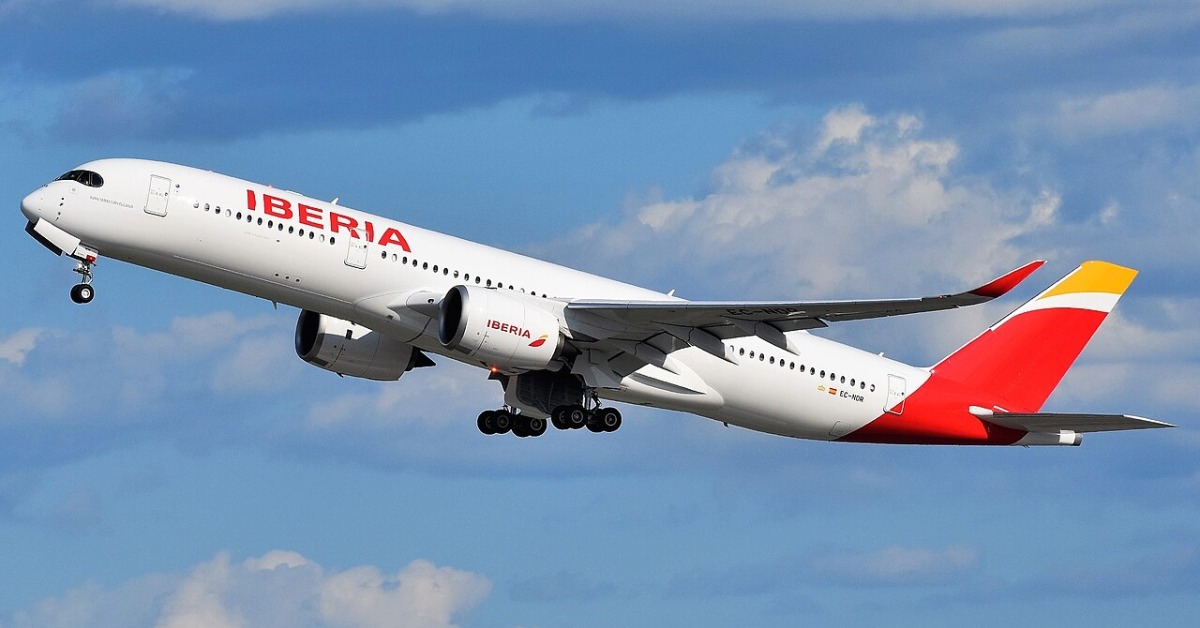
The first flights began on June 2 with three weekly frequencies on Tuesdays, Fridays, and Saturdays. Iberia’s launch materials state that the route uses an Airbus A330-200 with 288 seats across Business and Economy cabins. The scheduled flight leaves Madrid at 1.10 p.m. and reaches Monterrey at 5.05 p.m. The return leaves Monterrey at 6.35 p.m. and arrives in Madrid at 1.05 p.m. the following day.
The Puerto Vallarta link runs through Monterrey
For Puerto Vallarta, the new service is not a nonstop flight to Europe. The connection depends on Iberia’s agreement with Viva, which allows travelers to book onward domestic legs from Monterrey in the same reservation and check baggage through to the final destination.
Iberia lists Puerto Vallarta among 32 Mexican destinations available through the Monterrey connection. The same network also includes Cancún, Cozumel, Guadalajara, Mérida, Oaxaca, Puerto Escondido, San José del Cabo, Tulum, and several northern and central Mexico cities.
That makes Monterrey a possible Europe-facing transfer point for Puerto Vallarta, though it does not remove the need for a domestic connection. It adds an alternative to Mexico City, where Iberia already operates three daily flights to Madrid.
A route built around Monterrey’s growing airport role
The Monterrey airport operator said the route adds more than 50,000 seats in 2026 and follows investment aimed at handling long-haul aircraft. OMA said the airport had 65 active routes and more than 3.5 million passengers in the first quarter of 2026.
Iberia framed the route as part of its Plan de Vuelo 2030, the airline’s strategy to reinforce its Latin America and Europe network. The airline said Madrid and Monterrey flights will account for about 53,000 seats this year, while Iberia’s total Mexico-Spain capacity will exceed 820,000 seats.
María Jesús López Solás, Iberia’s commercial, network development, and alliances director, called the launch “a milestone in our history” and said Mexico is now the Latin American market where Iberia has its largest capacity.
Ricardo Dueñas, chief executive of OMA, called the route “a clear manifestation” of the airport group’s strategy to strengthen Nuevo León’s connectivity and said the launch supports investments made at the Monterrey airport.
What it changes for Puerto Vallarta
The route arrives as Puerto Vallarta tries to protect air access after a weaker spring. Recent Puerto Vallarta airport traffic figures have shown pressure on both domestic and international movement, even as airlines add selected new routes.
The Madrid–Monterrey service gives Puerto Vallarta another booking path from Spain and Europe, but the benefit will depend on price, schedule timing, and how well Viva’s domestic leg lines up with Iberia’s long-haul arrival. A one-reservation itinerary and checked baggage to the final destination reduce friction, but they do not make the trip direct.
The larger signal is competitive. Mexico’s airports are fighting for long-haul links and domestic feed at the same time. Monterrey now has a fresh transatlantic route. Puerto Vallarta gains access to that route through Viva, without gaining a nonstop Madrid flight of its own.