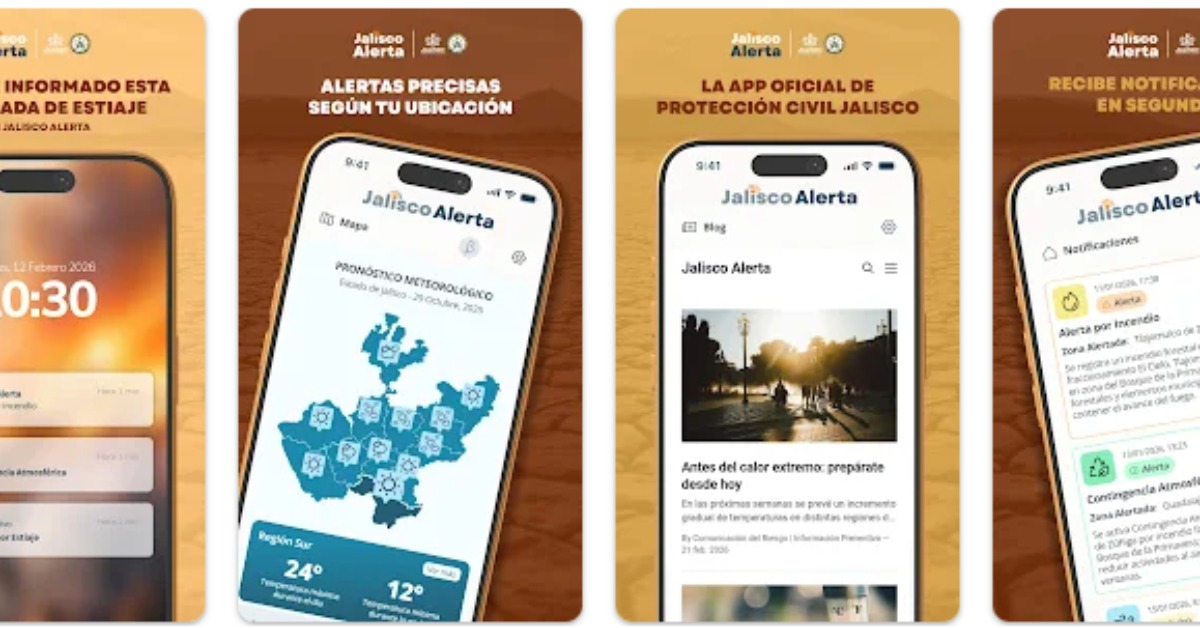
Jalisco is moving into the 2026 rainy and cyclone season with a stronger emergency alert system. The next stage of Jalisco Alerta is intended to provide residents with more targeted warnings, better risk information, and faster official updates when conditions change. For people living in Puerto Vallarta and other coastal communities, the app is more than another government tool. It is part of a larger shift toward faster, location-based emergency communication.
Jalisco strengthens emergency alert app
Jalisco Civil Protection has presented the next stage of Jalisco Alerta, the state’s mobile emergency alert app, as authorities prepare for the 2026 rainy and cyclone season.
The update was outlined during the first ordinary session of the 2026 State Civil Protection Council, held in San Juan de los Lagos. State officials said the app will add stronger early-warning, risk-geolocation, and emergency-management tools.
The second stage is expected to move forward over the next six months. It includes new monitoring equipment and instruments in strategic points across the state. The goal is to improve detection, response, and coordination before emergencies affect the public.
For residents of Puerto Vallarta, the timing matters. The Eastern Pacific hurricane season begins May 15 and runs through November 30. Jalisco’s coast is not hit directly every year, but storms can still bring flooding, landslides, high surf, road closures, and power outages.
Google Play
https://play.google.com/store/apps/details?hl=es_MX&id=mx.erlia.jal.android
Apple App Store
https://apps.apple.com/us/app/jalisco-alerta/id6748151640
What Jalisco Alerta is designed to do
Jalisco Alerta is described as an official and free early-warning app from the Government of Jalisco and the State Civil Protection and Firefighters Unit.
The app is designed to send official warnings about major risks in the state. These include heavy rain, flooding, hurricanes, forest fires, atmospheric contingencies, and other emergencies.
One of the main ideas is location-based alerting. Instead of sending every warning to every user, the app is meant to deliver notices tied to a user’s area. App descriptions say users can configure their postal code to receive alerts that are relevant to their zone.
That is important in a state as varied as Jalisco. A storm warning for the coast may not apply to Guadalajara. A forest fire alert in the mountains may not affect Puerto Vallarta. A more targeted system can help reduce confusion and alert fatigue.
The app also says its highest-risk notifications are designed to sound even when a phone is in silent mode or “Do Not Disturb.” That feature can matter during overnight storms, earthquake alerts, or sudden flooding.
Why the upgrade comes before storm season
Jalisco officials said the 2026 rainy and cyclone season could bring intense rainfall, storms, sudden flooding, landslides, and rising rivers. They also warned of possible canícula periods, which are stretches of hot, drier weather during the rainy season.
The state said it will strengthen monitoring and coordination with municipalities. That coordination is especially important in areas where local conditions can change quickly.
Puerto Vallarta has several risk factors during heavy rain. The city sits between the bay and steep terrain. Water can move quickly from the hills into streets, arroyos, and low-lying areas. Roads can flood even when the storm center stays offshore.
For foreign residents, the challenge is often information. Many alerts are issued first in Spanish. Some residents do not follow official emergency accounts. Others rely on social media groups, which can spread useful updates but also rumors.
A state-run app does not solve every communication problem. But it gives residents another direct channel for official alerts.
The app fits into a wider emergency plan
The app update was not presented as a standalone project. It was part of a broader Civil Protection meeting focused on risk management, technology, and operational planning.
During the session, state officials also approved the State Civil Protection Program. That program sets strategic lines for integrated risk management, with an emphasis on technology, resources, and better public attention.
The council also discussed preparations for the 2026 rainy and cyclone season. Officials said monitoring and municipal coordination will be reinforced before the peak of the season.
That matters because emergency response depends on several levels of government. State Civil Protection may monitor hazards and issue warnings. Municipal teams handle many first-response tasks, including road closures, evacuations, shelter management, and rescue support.
When warnings are delayed or unclear, residents lose time. When agencies share the same information quickly, people can make better decisions before conditions worsen.
What residents should understand about alerts
An emergency alert is not the same as a full safety plan. It is a signal to pay attention and take the next step.
For weather events, the next step may be to check the latest official forecast, move a vehicle out of a flood-prone area, or avoid river crossings. Coastal hazards, it may mean staying out of the water even when the sky looks calm.
People in condominiums or rental buildings should prepare by knowing who manages shutters, pumps, backup power, elevators, and rooftop access. A phone alert can warn of danger, but building procedures still matter.
For older residents, medication, mobility, and communication should be planned before the season becomes active. If a person depends on electricity for medical equipment, they should know their backup options before a storm approaches.
Pet owners also need a plan. Shelters and hotels may have rules about animals. Documents, carriers, food, and medication should be ready before an emergency.
Why Puerto Vallarta still needs to prepare
Puerto Vallarta is sometimes described as protected by Banderas Bay and the surrounding mountains. That geography can reduce some direct wind exposure, but it does not eliminate risk.
Many storm impacts in the region come from rain, runoff, surf, and infrastructure disruption. A tropical system does not need to make landfall in Puerto Vallarta to cause problems.
Heavy rain can flood streets, push debris into drains, raise rivers, and cut access to neighborhoods. Storm surf can close beaches and ports. Lightning, falling trees, and power interruptions can affect daily life even during storms that never become hurricanes.
The same applies to nearby communities in Cabo Corrientes and Bahía de Banderas. Tourism corridors, hillside roads, and coastal developments can be vulnerable when rain arrives faster than drainage systems can handle.
This is why early warning tools matter. They give people time to act before the worst conditions arrive.
What the app cannot replace
Jalisco Alerta should be treated as one part of a wider emergency routine.
Phones can lose battery. Mobile service can fail. Data connections can slow down during widespread emergencies. Some people may not grant notification permissions correctly. Others may not update the app.
Residents should still follow Civil Protection, municipal authorities, the National Meteorological Service, and the National Hurricane Center as storms develop. Local instructions remain essential during evacuations, road closures, and shelter operations.
The app also depends on users paying attention before an emergency. People should download it, allow notifications, and check that their location settings or postal-code settings are correct.
For expats, it is also useful to learn basic Spanish emergency terms. Words such as inundación, deslave, evacuación, refugio temporal, oleaje elevado and zona de riesgo can appear in alerts.
A stronger warning system for a changing season
The 2026 Pacific season is drawing attention because Mexico expects above-average activity in the basin. National forecasts call for 18 to 21 named systems in the Pacific, including several hurricanes and possible major hurricanes.
A seasonal forecast does not predict where storms will go. Most systems never hit Jalisco directly. But an active basin increases the need for steady monitoring, especially along the Pacific coast.
Jalisco’s decision to strengthen Jalisco Alerta reflects a broader shift in emergency management. Authorities are moving from general warnings toward more specific, faster, and location-based information.
For residents, the message is simple. The app is useful, but it should be set up before the first major storm. Once heavy rain is falling, roads are flooding, or the power goes out, preparation becomes harder.