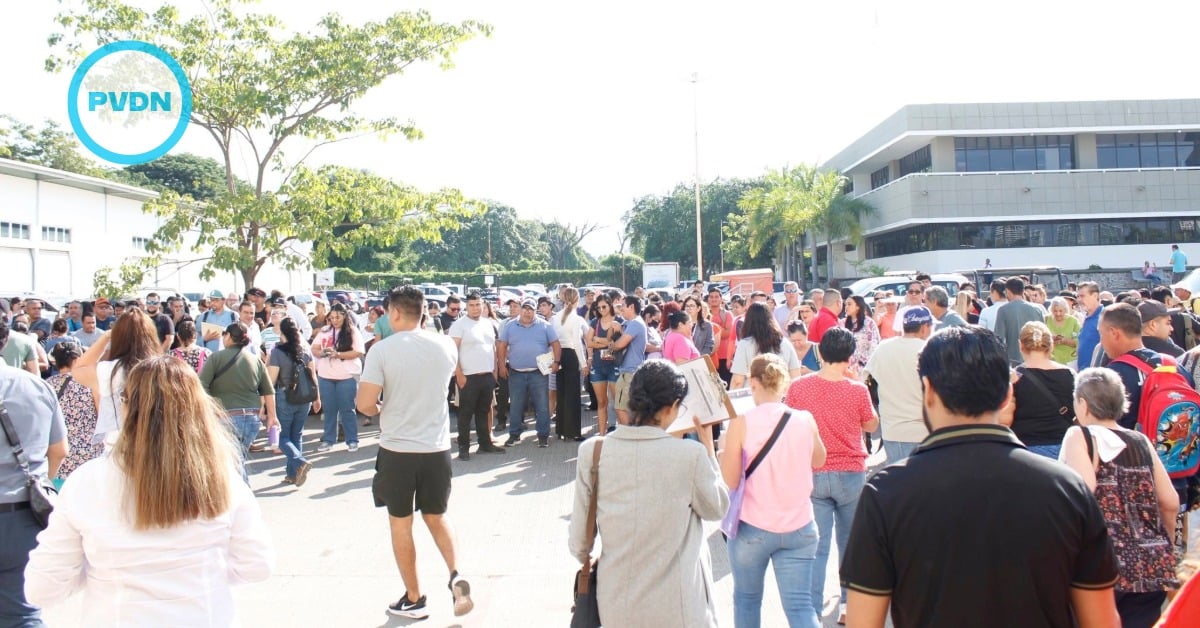
The Puerto Vallarta tsunami drill broke the morning calm with four distinct tones and a clear message: move. Sirens echoed from the malecón to the hills. City workers emptied the Municipal Presidency. Tourists in the main square hesitated, then followed locals and officials toward marked safe zones. For 25 minutes, the city rehearsed its worst day. The test showed what works—the sirens are audible—and what still needs attention, from confusing signage to slow crowd flow in the most touristed blocks. The next one should run smoother.
Puerto Vallarta tsunami drill
At 10:00 a.m. on Tuesday, November 4, Puerto Vallarta joined a regional exercise that pulsed through Jalisco’s coast. The scenario was simple: a tsunami risk requiring people near the shoreline to move uphill or to predetermined meeting points. For 25 minutes, alarms and instructions guided the pace.
The state’s coastal warning network—27 speakers from Puerto Vallarta to Barra de Navidad—sounded four times in a fixed sequence: a drill notice, then earthquake, then tsunami, then a final cancellation tone. The Puerto Vallarta tsunami drill also pushed the same cadence through the Alerta Jalisco mobile app, mirroring the loudspeakers so anyone indoors saw the messages even if they missed the sound outside. State authorities had previewed the plan and the four-tone sequence last week, noting that seven of the sirens are located in Puerto Vallarta’s urban core and hotel zone.
Downtown offered the clearest read on how people actually move. City Hall staff left the Municipal Presidency on cue. In the Plaza de Armas, visitors looked around, scanned the signs, and—after a beat—joined the flow toward safer ground. Flyers helped. So did uniformed brigades steering people off the waterfront. What slowed movement was old pain: inconsistent or faded signage in a few blocks, and a natural hesitation among tourists unsure whether the blaring tones meant “practice” or “now.”
This drill was a statewide policy put into practice on the streets. The Unidad Estatal de Protección Civil y Bomberos de Jalisco (UEPCBJ) framed today’s test as a tool to measure two essentials: audibility and clarity. Could people hear the sirens over traffic and plaza noise? Could they understand the sequence and act without second-guessing? The state’s drill portal outlined the timing, the municipalities involved, and the expectation that residents would move toward pre-mapped safe areas in the hills above the central neighborhoods.
What worked, and what didn’t
Audibility scored well. The tones carried across the bayfront, cutting through the rumble of buses and the calls of vendors. The app messages landed quickly. That redundancy matters. Puerto Vallarta mixes dense tourism with tight streets, music, and construction—exactly the kind of place where a single channel can get lost in the noise.
Clarity still needs polish. The four-part sequence is logical once you know it; first-timers in the plaza required a moment to decode it. That’s a communication issue, not a technology failure. The fix is familiar: bolder wayfinding, more temporary marshals in the first minutes, and outreach in English and Spanish that repeats the rules of the road before the next exercise.
Hardware age is the lingering question. Jalisco installed parts of this network nearly two decades ago. Officials acknowledged ahead of the exercise that modernization is due, and drills like this help them decide what to replace first and where to add new units along the busiest corridors. Local reporting in recent days flagged limits in signage and gaps where fewer speakers are active—precisely the kind of details a live test surfaces before an emergency.
Context matters beyond one morning. Mexico’s Pacific coast has received real tsunami advisories this year, including a basin-wide alert in late July triggered by a major quake near Russia’s Kamchatka Peninsula. That event produced only modest sea-level changes here, but it showed how quickly a far-field disturbance can ripple into local ports and beaches, and why drills are not box-checking exercises.
If today’s 25 minutes felt disruptive, that’s the point. Drills build reflexes. They also expose friction—signs that need replacing, pinch points where the crowd stalls, and neighborhoods that hear the sirens less clearly. The measure of success isn’t a flawless run; it’s whether the next one is faster, calmer, and easier to follow.