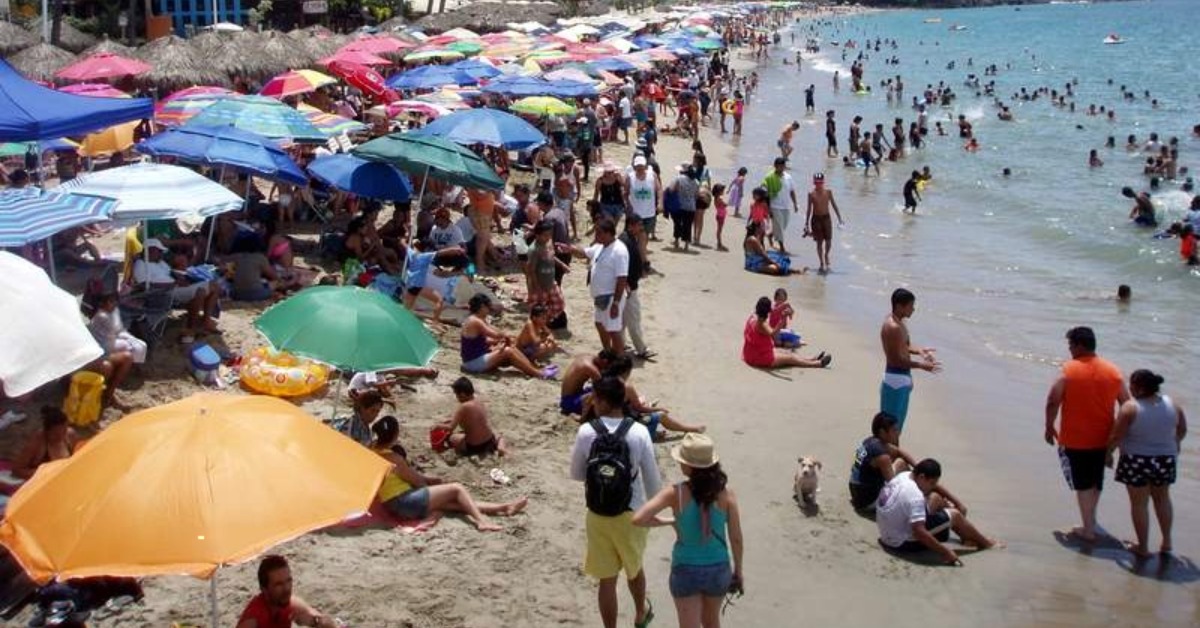
Jalisco says it is ready for one of its busiest travel periods of the year, with officials expecting more than three million visitors across the state during Holy Week and Easter. In Puerto Vallarta, local and state agencies are already lining up beach patrols, road monitoring, and emergency coverage. For international readers, the bigger story is not just the size of the crowds. It is what this season means in Mexico, why destinations are strained so quickly, and what authorities are trying to prevent before the rush peaks.
Jalisco says its State Civil Protection and Fire Department, known by its Spanish initials UEPCBJ, is ready for the Holy Week and Easter operation as the state braces for more than 3 million visitors. Officials said the response will run across tourist zones and roads, with about 250 state officers in the field. On the North Coast, where Puerto Vallarta sits, the state plans roughly 50 extra personnel on the busiest days. Beach and marine surveillance will include boats and jet skis.
Puerto Vallarta is also moving ahead with its own local plan. Municipal civil protection officials have already coordinated with agencies from all three levels of government. The local focus is clear: beaches, rivers, and camping areas, where crowding and water-related emergencies can escalate fast. Local officials have also signaled strong demand, with hotel occupancy expected to top 80 percent during Holy Week and remain high in the following week.
Why this period matters so much in Mexico
In Mexico, Holy Week is both a religious season and a major travel period. In 2026, the liturgical week runs from March 29 to April 5. But for tourism authorities, the phrase “Semana Santa y Pascua” usually refers to a broader vacation window. The public-school calendar pauses from March 30 to April 10, which spreads travel over nearly two weeks instead of one.
That distinction matters to readers outside Mexico. The Federal Labor Law does not list Holy Thursday or Good Friday as mandatory paid rest days. Even so, beaches, highways, and religious destinations often fill up because schools are closed and many families plan trips around the season. That helps explain why civil protection agencies prepare for a surge that can feel larger than the formal holiday calendar suggests.
For foreign residents and visitors, this is one of those moments when daily life in Mexico changes quickly. Roads get heavier. Beaches get fuller. Emergency services shift into a more visible mode. A destination like Puerto Vallarta does not only deal with hotel guests during this stretch. It also absorbs regional road traffic, day visitors, family groups, and travelers who move without much advance planning.
Puerto Vallarta faces the heaviest pressure
For Jalisco, Puerto Vallarta is the pressure point that international readers will recognize first. It is the state’s best-known beach destination, drawing domestic travelers, regional traffic, and foreign visitors. That mix changes the safety challenge. Authorities are not only watching the shoreline. They are also preparing for traffic congestion, water rescues, and the knock-on effects of large crowds moving through a compact tourist city.
State officials say they have already coordinated with health, tourism, security, and the Navy. That matters because beach safety in Vallarta is not just about lifeguards on the sand. It also depends on marine response, emergency transport, and clear command during peak days. The local plan mirrors that approach. It emphasizes prevention, surveillance, and response capacity rather than a last-minute reaction.
The city’s own operation is aimed at high-concentration zones. That means the most obvious locations, such as beaches, but also rivers and campgrounds, where behavior can be harder to control, and accidents can unfold fast. In practical terms, the busiest points are not always the places with the most infrastructure. A crowded riverbank or informal recreation area can demand just as much attention as a beachfront hotel zone.
Road safety is another reason the operation matters. State officials warned that recent holiday travel has already resulted in fatal crashes on roads in Jalisco. Their message was direct. Drivers should avoid rushing, avoid driving under stress, respect travel times, and follow official instructions after incidents. In a state where beach traffic, freight movement, and long intercity drives often overlap, road disorder can become a public safety problem long before anyone reaches the water.
Readiness helps, but behavior still decides the outcome
The larger story is that Jalisco is trying to manage a tourism success without letting it become a safety failure. More than 3 million visitors is an economic opportunity for hotels, restaurants, transport operators, and small businesses. It is also a stress test for public services. Every full beach, backed-up highway, and crowded riverbank creates a new point of risk. The operation is meant to lower those risks before they become rescues, closures, or headlines.
For residents, expats, and returning visitors, the practical takeaway is simple. Expect a more visible emergency presence, heavier movement on access roads, and closer monitoring at high-risk recreation spots. In Puerto Vallarta, that means the busiest beaches will not be the only places under watch. Rivers, campgrounds, and routes into the city will matter too. Authorities are preparing for volume, but volume is never fully predictable once the holiday begins.
A readiness announcement is not proof that the season will go smoothly. That judgment comes later, when the first heavy travel wave hits and response times are tested. Still, the signal from Jalisco is clear. Officials know the holiday period is approaching fast, they expect a major influx, and they are treating Puerto Vallarta and the wider North Coast as one of the most sensitive areas in the state. For a destination that depends on tourism, that is both a routine seasonal move and a reminder of how quickly vacation traffic can turn into a public safety issue.
With information from SEP Calendario Escolar 2025-2026, Cámara de Diputados, Ley Federal del Trabajo