Puerto Vallarta News

The most local news coverage in Puerto Vallarta

Jalisco tightens beach safety in Puerto Vallarta for Easter

Jalisco tightens beach safety in Puerto Vallarta for Easter

Puerto Vallarta is heading into one of its busiest travel stretches with a tighter beach safety plan already visible on the sand. Jalisco has begun reinforcing lifeguard coverage, warning flags, and marked swim areas as Semana Santa and Pascua approach. The move is straightforward, but it also explains how beach safety works here: conditions are checked daily, flags can change fast, and one part of a beach may be riskier than another. For many international readers, that context matters as much as the announcement itself.

More lifeguards as crowds rise

Jalisco has activated a reinforced beach safety operation as Puerto Vallarta and other coastal destinations approach Semana Santa and Pascua. State civil protection teams say lifeguards will stay on watch, warning flags will stay visible, and swim zones will be marked. The goal is to reduce accidents as visitor numbers rise.

The timing matters. This holiday stretch is one of the busiest travel periods of the year. State officials say they expect more than 3 million visitors across Jalisco. The deployment includes about 250 state officers and about 50 extra personnel on the North Coast. Rescue crews will also work from the water with boats and aquatic rescue craft.

What beachgoers will notice

For most beachgoers, the operation will appear in practical ways. Lifeguards will monitor the shoreline and deeper water. Authorities are marking swimmer-only areas where boats and other craft pass close to shore. They are also setting safer entry and exit points.

Those details matter in Puerto Vallarta. One part of a beach can look calm from the sand and still carry hidden risk. Local authorities are also coordinating their own holiday response with state and federal agencies. Local planning is meant to strengthen prevention, surveillance, and emergency response before crowds peak.

Officials moved ahead after a recent long weekend that already pushed hotel occupancy close to 70 percent. That matters because Easter travel in Puerto Vallarta is not only about tourists arriving by plane. It also means more day visitors, more families on public beaches, and more pressure on the same stretches of shoreline at the same time.

How Puerto Vallarta’s flag system works

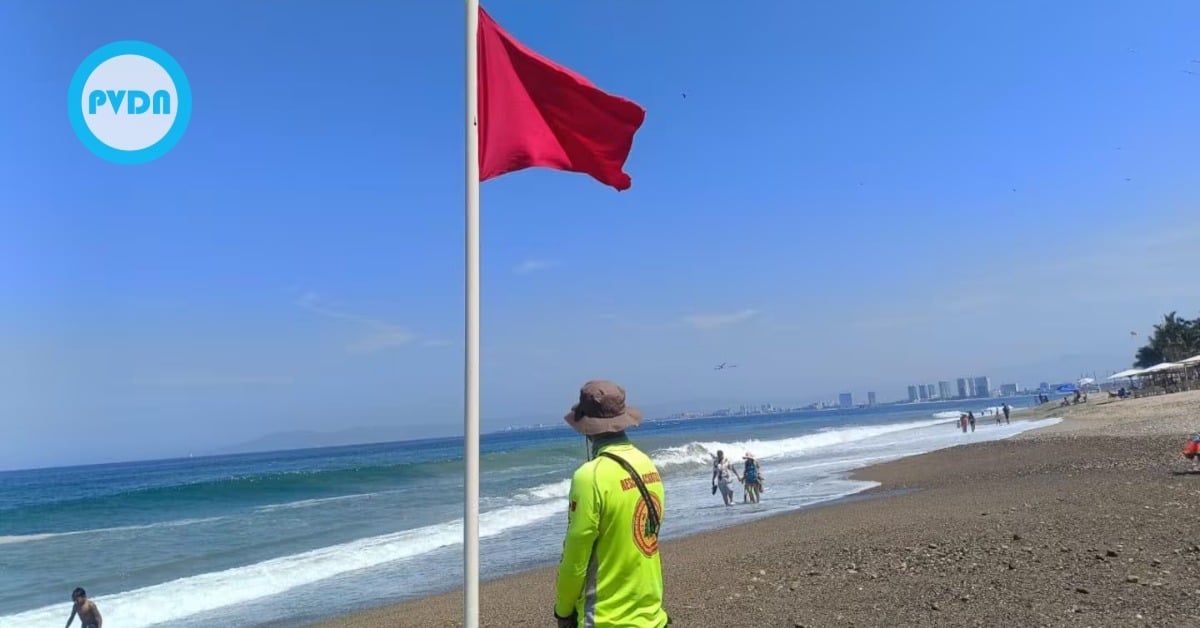
In Puerto Vallarta, the color of a flag can matter more than how the water looks. Officials use the system to communicate daily conditions after checking wind, surf, and other hazards. A green flag means normal swimming conditions. Yellow means caution. Red means do not enter the water. Purple warns of harmful marine life, and black means the beach is closed.

That system also helps explain why the new operation matters. The beach is not judged once for the season and left alone. Conditions are reviewed day by day. In some cases, they are judged section by section. That is why authorities are pairing the state operation with visible signage and marked areas rather than relying solely on patrols.

Why daily checks matter

The daily changes are already visible ahead of the main holiday rush. On Friday, municipal lifeguards reported a red flag at Playa del Holly. They also reported purple warnings at Holly and Playa de Tomates for harmful marine life. A day earlier, most monitored beaches were under yellow caution. The strongest restriction was limited to Holly’s river-mouth area.

That shift is a useful reminder for foreign residents and visitors. A beach trip in Puerto Vallarta is not just about choosing a popular spot and walking into the water. The safer habit is to check the flag first, stay inside marked swim areas, and follow lifeguard instructions. Even a seemingly calm beach can hide currents, marine life hazards, or nearby boat traffic.

What the operation means for visitors

For international readers, the larger point is simple. This operation does not mean Puerto Vallarta’s beaches are broadly off-limits. It means authorities are managing a predictable holiday surge on a coastline where risks can change quickly.

It also shows how beach safety is handled in one of Mexico’s busiest coastal destinations. The most important tools are not dramatic. They are visible lifeguards, clear flags, marked swimming areas, and a quick response when conditions turn. For residents and visitors alike, that guidance is worth taking seriously during the holiday period.

Related Posts

vacant lot

Overgrown Lots Renew Safety Fears in Fluvial Vallarta

Fluvial Vallarta residents seek vacant-lot cleanup and patrols, citing harassment fears as city rules allow...
tunnel accident

Tunnel Crash Traps Driver and Disrupts Vallarta Traffic

Firefighters freed an Urvan driver after a crash with a CFE truck closed Puerto Vallarta’s...
rescue

Passenger Disappears After Fall at Puerto Vallarta Port

Navy and municipal rescue teams searched Puerto Vallarta's port after a tour-boat passenger fell into...
prison

Eighth Vallarta Prison Sweep Finds Blades and Tools

An eighth search recovered blades, tools and cable as Jalisco keeps federal forces inside Vallarta’s...