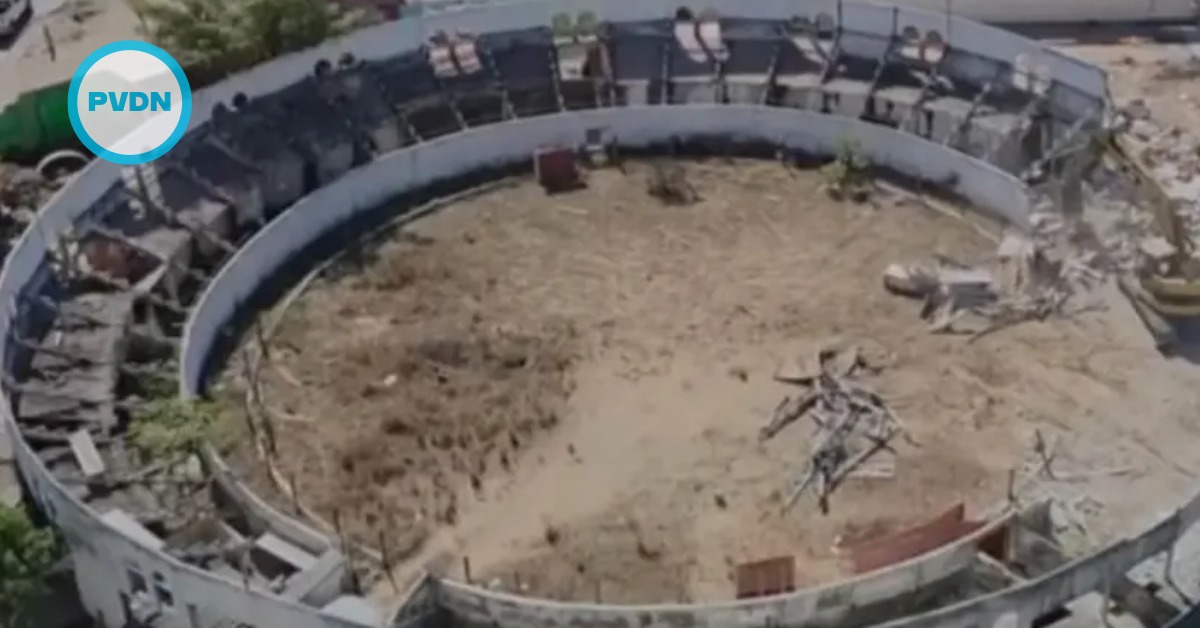
For decades, Puerto Vallarta’s La Paloma bullring bustled with cheering crowds and traditional bullfights. That era has passed, and now the once-proud arena is being reduced to rubble. Demolition crews are tearing down this iconic structure, marking the end of an era along the city’s marina. What led to La Paloma’s quiet final years? And what does its removal mean for Puerto Vallarta’s changing cityscape? The answers lie in the story of this historic venue, a reflection of shifting cultural tides.
Heavy machinery tears into Puerto Vallarta’s La Paloma bullring during demolition in January 2026. La Paloma Plaza de Toros, once a bustling hub of bullfighting and entertainment, has entered its final chapter. Demolition of the long-idle arena began on January 22, 2026, with backhoes and bulldozers clawing at the aging concrete stands. By afternoon, chunks of the circular structure were coming down, a poignant sight for those who remember its glory days. Some passersby stopped to watch from a distance, capturing images of the bullring’s final moments. For years, this venue had stood silent and fenced off, a fading reminder of a tradition that had long since ceased here. Its location—near the city’s marina and cruise ship terminal—made it a familiar landmark even when no events were held. Now, as the walls crumble, Puerto Vallarta is bidding farewell to a piece of its heritage and marking the end of an era at that site.
A Venue with a Storied Past
La Paloma was inaugurated in 1985, built to replace a smaller bullring known as “La Pandereta” that once stood by the Marina. The new plaza was the vision of bullfighter and cattle rancher Teófilo Gómez, who wanted Puerto Vallarta to have a proper arena for la fiesta brava (bullfighting spectacle). In its prime, this ring was a cultural touchstone. Wednesday evenings during winter high season often meant bullfight night, and crowds of locals and curious tourists would fill the stands. On opening day, spectators were treated to a mano-a-mano duel between two famed matadors: Miguel “Armillita Chico” and Ernesto Belmont, who faced bulls from a renowned ranch in a grand inaugural fight. Beyond the bullfights themselves, La Paloma also hosted other events over the years—concerts, rodeos, even lucha libre wrestling—turning the arena into a multi-use community venue. For a time, the roar of the crowd and the sounds of mariachi music inside La Paloma were as much a part of Puerto Vallarta’s atmosphere as the sunsets on the Malecón.
Bullfighting’s Decline and Final Years
The exterior of La Paloma bullring, long closed and awaiting its fate in a changing Puerto Vallarta. Over the years, the spectacle of bullfighting gradually lost its appeal in Puerto Vallarta. By the early 2000s, attendance was dwindling. Changing cultural attitudes—especially growing concern for animal welfare—made traditional corridas less palatable to many, including younger locals and international visitors. Critics began to view the bullfights as cruel rather than thrilling. By the 2010s, public opinion had shifted significantly across Mexico. Surveys indicated that a majority of Mexicans regarded bullfighting as animal cruelty rather than acceptable entertainment. Economic and social factors also played a role. A downturn in tourism in the late 2000s and occasional security concerns in the region led to fewer spectators and fewer events. La Paloma scaled back its schedule year by year, and the once-weekly bullfights became sporadic. Sometime around the mid-2010s, they stopped entirely. Since then, the arena sat largely unused. Its gates remained locked, and posters of past events slowly peeled from the walls. The only sounds inside came from the wind or the occasional stray critter. For nearly a decade, La Paloma stood frozen in time. It was a quiet monument to a bygone tradition as the city grew and changed around it.
A Changing Cityscape
The demolition of La Paloma is part of a broader evolution in Puerto Vallarta. In recent years, the city’s rapid growth has led to older landmarks being removed or repurposed to make way for new development. Vacant lots and aging structures have given way to modern condos, shopping centers, and high-rise hotels. La Paloma’s location on a prime corner near the marina makes it especially attractive for redevelopment. City officials have stated that any new project on the site must comply with current urban planning regulations and zoning. So far, however, no official plans for the property have been announced. Many locals and expats are wondering what will come next. Some assume a new condo tower or commercial complex could rise here, given development trends elsewhere in town. But for now, that remains only speculation. What is certain is that clearing the arena will open up space in a busy part of the city. It likely won’t stay empty for long. As Puerto Vallarta moves forward, the spot where matadors once dueled bulls may soon take on an entirely new life.
For many longtime residents and expats, watching La Paloma’s demolition is bittersweet. The bullring was a relic of a different era. Some remember its pageantry and excitement fondly, while others only recall the inherent cruelty of the spectacle. Now, the bulldozers have brought that era to a close. Puerto Vallarta today is not the same town it was in the 1980s. The disappearance of this once-prominent arena underlines just how much has changed since those days. While the building will soon be gone, the memories it held remain part of the city’s collective history. The adrenaline of the bullfights, the lively music, and the cheers and gasps of spectators won’t soon be forgotten. As the dust settles, Puerto Vallarta carries on — honoring its past even as it embraces whatever comes next.
With information from Tribuna de la Bahía, Líder Empresarial, Toros y Faenas, CAS International