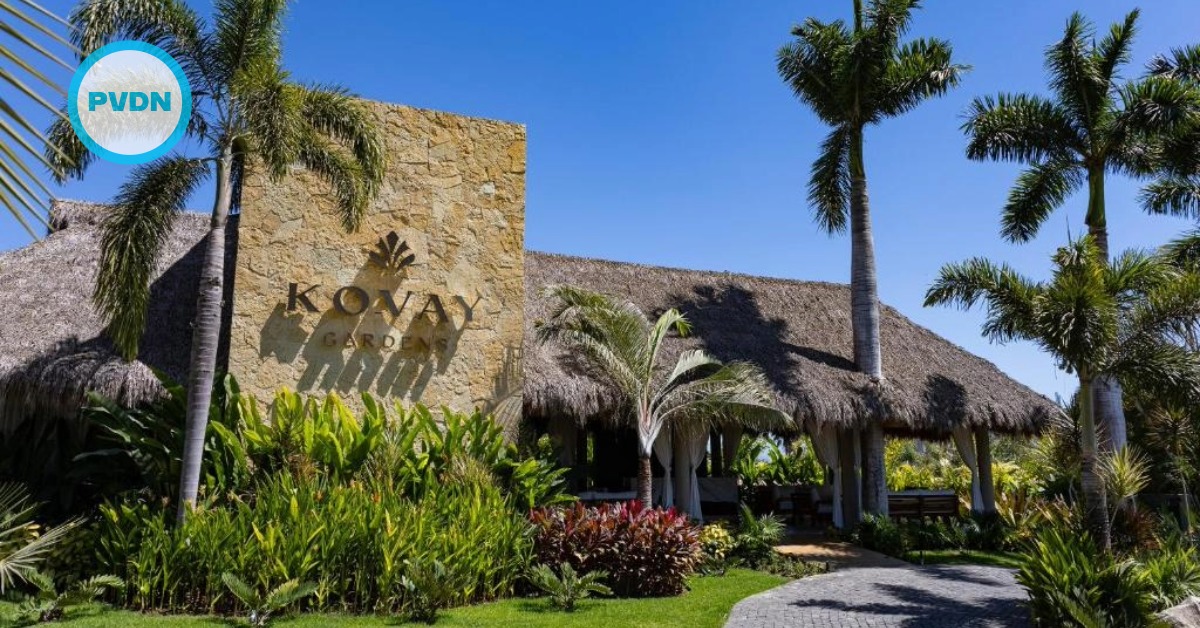
A quiet timeshare resort on Bahía de Banderas is suddenly in the spotlight. U.S. sanctions accuse Kovay Gardens of being part of a cartel-linked machine that turns vacation owners into repeat targets. Now Mexico’s top security official says federal prosecutors and the financial-intelligence unit are digging into the property and the money behind it. For expats in the Puerto Vallarta area, the story hits close to home: it mixes tourism, organized crime, and the uneasy idea that a “sales presentation” can be the first step in a long con.
A federal investigation after a U.S. move
Mexico’s federal prosecutor’s office and the country’s financial-intelligence unit are investigating Kovay Gardens, a timeshare resort marketed in the Puerto Vallarta tourism corridor, after the U.S. government sanctioned the property as part of an alleged timeshare-fraud network linked to the CJNG, the Jalisco New Generation Cartel.
The confirmation came Friday from Mexico’s security chief, Omar García Harfuch, who said the case is active but declined to share details while the inquiry is underway. He indicated the investigation was set in motion after the financial-intelligence unit filed a formal complaint outlining the alleged participants, and he suggested authorities are also looking into similar cases beyond Jalisco and Nayarit.
The timing matters. The U.S. announcement landed a day earlier, framing the resort not as a routine consumer-fraud story, but as an alleged revenue stream for an organization Washington now treats as both a drug-trafficking and terrorism-financing threat.
What U.S. officials allege happened
U.S. Treasury officials describe a playbook that starts with something familiar to many longtime residents and frequent visitors: the timeshare pitch. In their account, the CJNG has spent years exploiting Mexico-based call centers staffed by fluent English speakers to target U.S. victims—often older adults—with offers to sell, rent, exit, or “recover funds” tied to timeshare contracts.
The numbers cited by U.S. officials are stark. According to the FBI, roughly 6,000 U.S. victims reported losing nearly $300 million from 2019 through 2023 to Mexico-linked timeshare fraud schemes. Treasury also points to a surge of complaints in 2024, with the FBI’s Internet Crime Complaint Center receiving nearly 900 timeshare-fraud complaints tied to Mexico and reporting more than $50 million in losses.
Kovay Gardens sits at the center of the latest U.S. action. Treasury describes it as a timeshare resort on Bahía de Banderas, in La Cruz de Huanacaxtle, Nayarit, just northwest of Puerto Vallarta. The allegation is not simply that scammers used the resort’s name, but that the resort itself functioned as a feeder system: luring prospective buyers with robocalls and high-pressure presentations, promising owners they could earn income by renting out unused weeks, and allegedly overcharging credit cards. After that first stage, Treasury says, the resort shared its customer database with cartel-controlled call centers that ran resale, re-rental, and “re-victimization” frauds that could stretch for years.
U.S. authorities sanctioned the resort and a wider cluster of individuals and companies under executive orders tied to illicit drug trafficking and counterterrorism. Treasury says the action also included a general license allowing U.S. persons to conduct transactions ordinarily necessary to wind down dealings involving the resort—an acknowledgment that some consumers may already be financially entangled with the business.
Mexico follows the money trail
Mexico’s response is taking two tracks: criminal investigation and financial containment.
On the investigative side, the case sits with the FGR, with support from the UIF, Mexico’s financial-intelligence unit housed within the finance ministry. On the financial side, Mexico has signaled it is using its own tools to freeze and block assets tied to the alleged network, and to feed those findings into criminal complaints focused on suspected money laundering.
The coordination is significant because it mirrors the architecture of the alleged scheme. The U.S. picture is built around money movements—wire transfers, bank accounts, and layered corporate structures that can make a fraud ring look like a legitimate tourism-and-real-estate ecosystem. That is precisely the kind of terrain the UIF is designed to map: who owns what, where money flows, and which entities appear to be operating as fronts.
For residents in the Puerto Vallarta–Bahía de Banderas region, the geographic overlap is hard to miss. The area’s economy depends on foreign visitors, second-home owners, and retirees. That also makes it a magnet for scams that rely on trust, language comfort, and the assumption that a vacation purchase—however aggressive the sales pitch—still sits inside normal consumer boundaries.
Why this case hits close to home for expats
Expats in Mexico don’t need a briefing on timeshare culture. Many have been pitched, some have bought, and almost everyone knows someone who has received a suspicious follow-up call years after a trip. What makes this case different is the allegation that the “front end” of the experience—being courted as a buyer—was not separate from the “back end” scam, but part of the same machinery.
That distinction matters if you live here. It suggests the risk is not limited to tourists who can write off a bad vacation purchase and fly home. A fraud cycle that runs on repeat contact can follow people long after they have settled in Mexico, changed phone numbers, or shifted banks. And because the alleged scams often involve impersonation—phony brokers, fake law firms, even supposed government officials—victims can be pressured into paying “fees” or “taxes” quickly, before they have time to verify anything.
It also matters reputationally. Puerto Vallarta and the Riviera Nayarit brand themselves on safety, hospitality, and international comfort. Allegations that a resort’s customer data became a pipeline into cartel-run call centers threaten that image, even before any Mexican court has tested the evidence.
What to watch next
In the near term, the biggest question is how fast Mexico’s investigation moves from confirmation to visible action—asset freezes, court filings, or charges—especially if authorities believe the alleged fraud network spans multiple states, as Mexico’s security chief suggested.
A second question is what happens to existing owners and travelers. U.S. sanctions can complicate payments, reservations, and contracts for U.S. citizens and U.S.-linked financial institutions. Mexico’s own blocking measures can also freeze accounts and disrupt business operations inside the country. For consumers, that can create a confusing limbo: a resort may still appear online and still market itself, while financial rails around it tighten.
Finally, there is the broader enforcement signal. Treasury portrays this as the latest in a series of actions against CJNG-linked timeshare fraud, not a one-off. If Mexican authorities treat the Kovay Gardens case as a template—combining financial intelligence with criminal prosecution—the Puerto Vallarta region could see more scrutiny of call centers, intermediaries, and tourism-facing businesses that can be repurposed for fraud at scale.