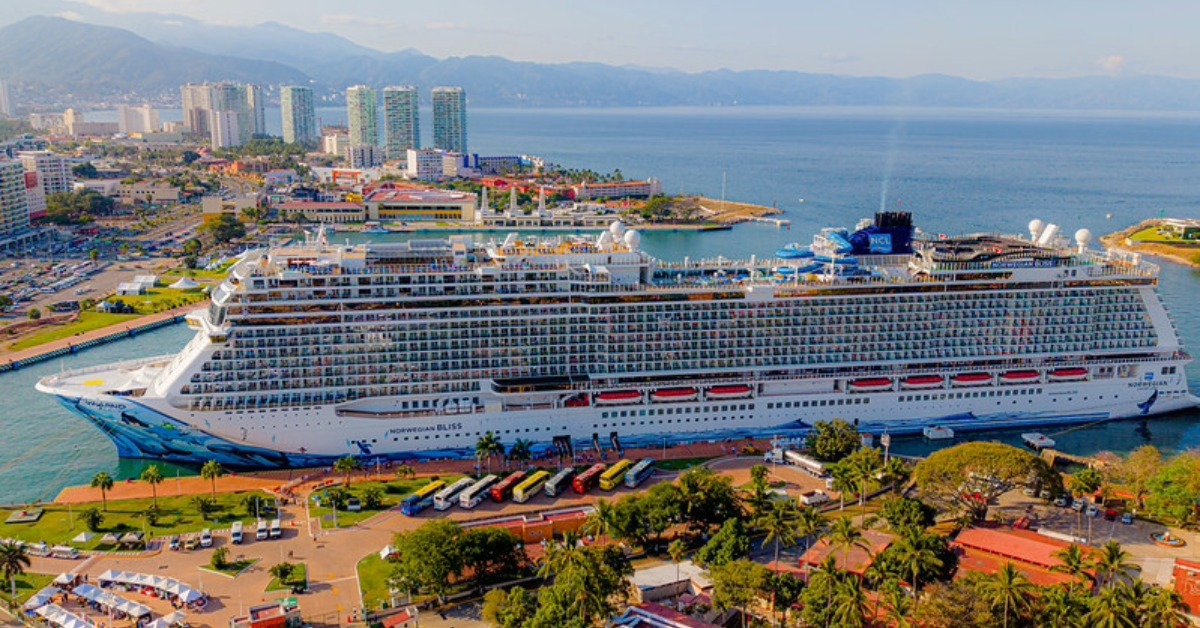
The arrival of the Norwegian Bliss brought another busy morning to Puerto Vallarta, where cruise traffic continues to support tours, transport, restaurants, and waterfront commerce. The ship’s call adds to the steady flow of visitors entering the city by sea, not only by air. For a destination built around tourism, even a single vessel of this size can have a visible impact within hours. The visit also underscores the continued role of cruise tourism in the local economy.
Norwegian Bliss adds another busy morning in Vallarta
The Norwegian Bliss docked in Puerto Vallarta on Wednesday morning, bringing thousands of visitors into one of Mexico’s best-known beach destinations. The arrival added fresh activity to the port area and nearby commercial zones, where cruise passengers often move quickly into restaurants, shops, transportation services, and organized tours. For local businesses, a ship call of this scale can turn an ordinary weekday into a stronger sales day, especially in areas that depend on short-stay visitor spending.
The visit also serves as another reminder of how important cruise arrivals remain for the city. While air travel often gets more attention, maritime tourism continues to deliver a steady stream of visitors directly into the heart of the destination. That matters in Puerto Vallarta, where tourism is not limited to hotels and long-stay travelers, but also includes day visitors who spend several hours moving through the local economy.
Cruise tourism still plays a visible role
A large cruise ship arrival does more than add foot traffic. It also supports a wider network tied to the tourism sector. Taxi drivers, tour operators, waterfront businesses, vendors, and restaurants can all benefit when a vessel carrying thousands of passengers comes into port. Even when those visitors stay only a few hours, the effect can be immediate and concentrated. That makes cruise traffic an important part of the city’s broader tourism mix.
For Puerto Vallarta, that mix has become one of its key strengths. The destination receives visitors through hotels, vacation rentals, air arrivals, domestic travel, and cruise calls. Each segment works differently, but together they help keep the local tourism machine active across seasons. The arrival of the Norwegian Bliss fits into that pattern, reinforcing the city’s position as a regular stop for major cruise traffic along Mexico’s Pacific coast.
A useful signal for the local economy
The significance of this arrival is not just about the ship itself. It is also about what the visit signals for the destination. Continued calls by major vessels suggest that Puerto Vallarta remains firmly on cruise itineraries and continues to draw interest from operators serving the region. That matters for a local economy where tourism remains one of the main drivers of business activity and employment.
For residents and business owners, these arrivals are often measured less by headlines and more by what they bring to the streets: more movement, more spending, and more visible commercial activity. The Norwegian Bliss arrival may be a one-day event, but it reflects a larger pattern. In a city built around visitors, every major ship call helps confirm that tourism activity remains strong and that the port continues to play a meaningful role in Vallarta’s economic life.