A new Army reinforcement in Puerto Vallarta comes as officials prepare for one of Mexico’s busiest travel periods. On its face, the move is about prevention. It also shows how much the city is still managing the effects of the February violence that rattled residents, businesses, and visitors. For international readers, the key question is not only why more troops are arriving now, but what that says about security, tourism, and daily life as Semana Santa approaches.
More troops before the holiday rush
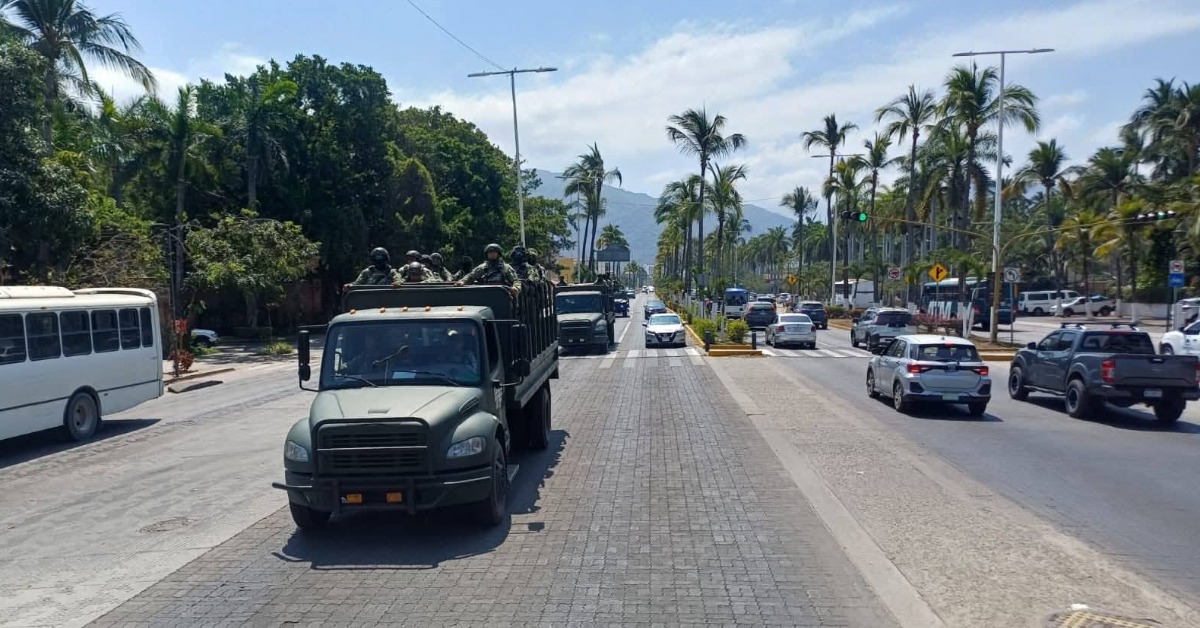
Local media on Sunday reported that more than 300 Army personnel had arrived in Puerto Vallarta. The stated goal was to reinforce security ahead of Semana Santa and Pascua. Municipal authorities said the move forms part of a coordinated effort among the federal, state, and local governments. Officials are trying to strengthen patrols and support the special holiday operation now being finalized for the city’s busiest visitor season.
For readers outside Mexico, that can sound like a response to a city in active crisis. The broader picture is more complicated. Puerto Vallarta is entering Holy Week after a difficult stretch, not from a normal baseline. The city is still trying to restore confidence after the violence of late February, when road blockades, fires, and attacks disrupted daily life, hurt commerce, and unsettled residents and visitors alike.
Why the city is keeping a visible federal presence
The latest Army reinforcement did not happen in isolation. In the days after the February 22 violence, the Navy deployed more than 300 marines in the Puerto Vallarta area. The Army also sent 300 soldiers and 40 tactical vehicles. Those earlier deployments were presented as part of a broader federal effort to restore order, secure main access routes, and keep the destination functioning.
That context matters because it changes how the latest move should be read. This looks less like a sudden shift and more like an effort to maintain a visible federal security presence at a sensitive moment. Authorities know perception matters in a city built around tourism. Even after daily life resumes, memories of burned vehicles and closed businesses do not disappear quickly. A new deployment sends a simple message: officials do not want a repeat during the Easter break.
Why Holy Week puts extra pressure on Puerto Vallarta
In Mexico, Holy Week and Pascua are not only religious dates. They are also one of the strongest domestic travel periods of the year. That means heavier traffic, fuller hotels, crowded beaches, and more movement through shopping zones, highways, and public spaces. Local authorities have already been meeting across agencies to prepare patrols, emergency response, and crowd management for beaches, rivers, campgrounds, religious centers, and other high-flow areas.
The pressure is not limited to Puerto Vallarta. State officials say Jalisco expects more than 3 million visitors during the holiday period. Puerto Vallarta is one of the state’s main anchors for that surge. At the same time, tourism officials have been pushing a message of normal operations. Cruise activity has resumed, and local leaders have been presenting the city as ready for high season. That makes security part of the tourism story, not a separate issue.
What the reinforcement does and does not mean
More soldiers on the ground can help in practical ways. A larger presence can support patrol coverage, deter opportunistic crime, protect major corridors, and improve coordination with local police, Civil Protection, and emergency responders. For visitors, it can also create the sense that the city is actively managing risk rather than simply reacting to it.
But a larger presence does not settle the deeper questions raised by February’s violence. Visible patrols can reduce immediate risk, but they do not, by themselves, address the criminal capacity and institutional weaknesses that made the earlier disruption possible. That is why the current deployment should be understood as a short-term shield, not a full answer. The real test will come when visitor numbers rise, and authorities must keep roads, beaches, and commercial areas running smoothly at the same time.
What residents and visitors should watch now
Over the next several days, the clearest signs of success will be practical. Residents will be watching whether traffic flows, whether the tourist strip stays calm, and whether emergency response is quick in crowded areas. Visitors will care about something even simpler: whether they can move around the city, reach the airport or bus station, and enjoy the holiday without disruption.
For Puerto Vallarta, that is the point of this reinforcement. The city is trying to enter Semana Santa with control, visibility, and enough manpower to reassure both locals and travelers. The arrival of more Army personnel does not erase what happened in February. It shows that authorities understand the high stakes when a major beach destination heads into one of its busiest weeks of the year.