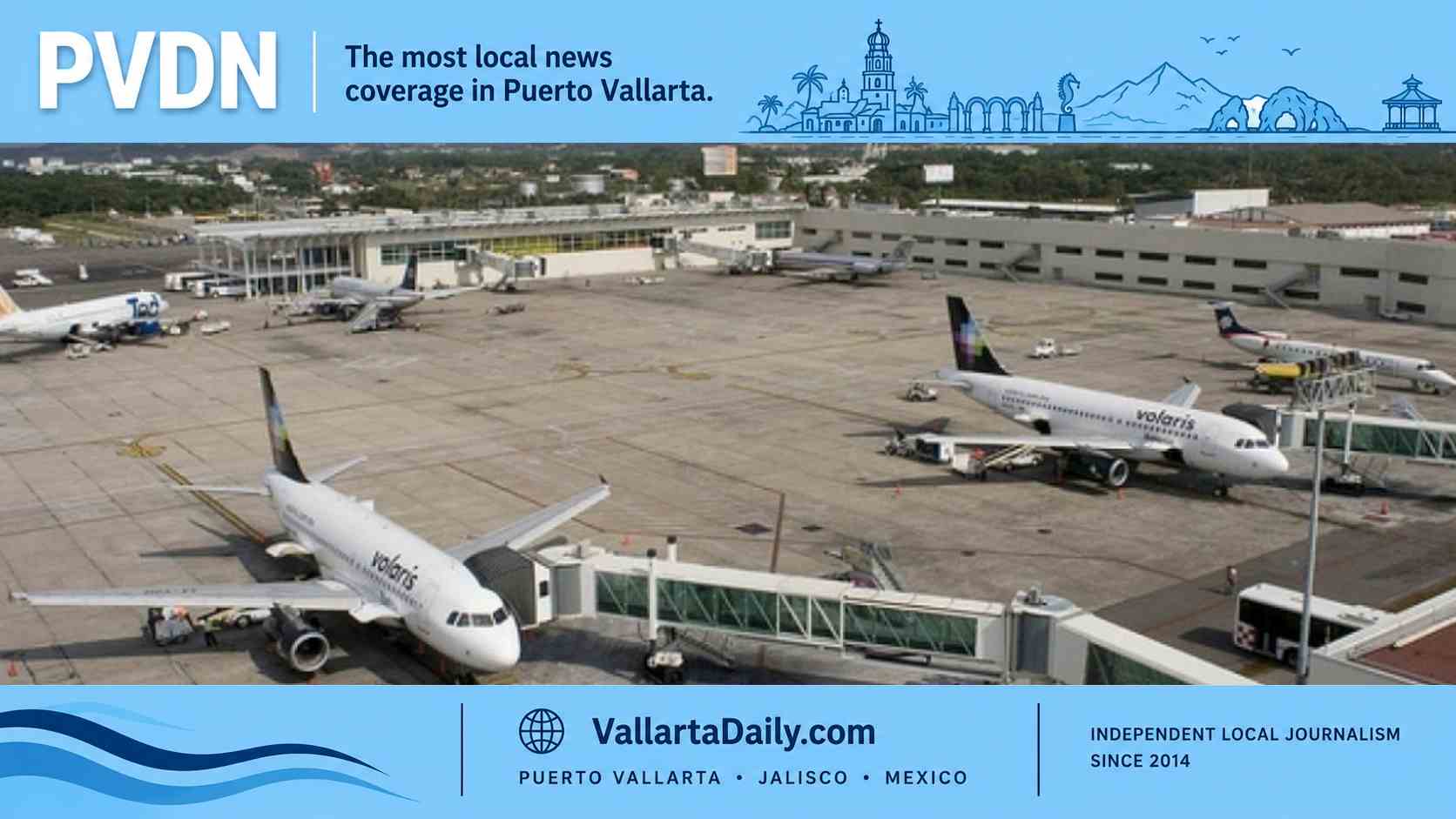
Puerto Vallarta’s airport opened 2026 with a rare bit of good news: more people came through the terminals than a year earlier, even as other big gateways slipped. Domestic travel did most of the heavy lifting, and international numbers finally nudged back into positive territory after a bumpy stretch. But one statistic suggests the story isn’t just about “more tourists.” Airlines also added more seats to the market, and planes were slightly less full. What does that say about demand heading into spring?
Puerto Vallarta International Airport started the year on an upswing, welcoming 731,700 passengers in January, a 2.6% increase compared with January 2025. That’s roughly 18,400 more travelers moving through the terminal at the height of the winter season, with gains coming from both domestic and international flights.
Across Grupo Aeroportuario del Pacífico’s network of 12 Mexican airports, January was a mixed month. Overall traffic in Mexico rose 1.2%, with Guadalajara and Puerto Vallarta posting increases while Tijuana and Los Cabos recorded declines. In that context, Vallarta’s growth stands out less as a one-off surge and more as steady momentum in a market that has become increasingly important to the region’s year-round economy.
Domestic routes keep climbing
The strongest driver was Mexico’s domestic market. Puerto Vallarta received 242,500 passengers on domestic flights in January, up 5.7% from the 229,500 recorded a year earlier. The jump continues an upward trend that matters to locals and long-term residents as much as to short-stay visitors: more domestic travelers often translate into steadier demand outside the classic holiday spikes, helping smooth the seasonal peaks that define resort economies.
International traffic turns slightly positive
International arrivals and departures also moved in the right direction, even if the pace was more modest. The airport handled 489,200 international passengers in January, a 1.1% increase over January 2025. After several months last year during which international comparisons were negative, the return to growth is notable. International travel still accounts for about two-thirds of Vallarta’s January traffic, so even small shifts can ripple through hotel occupancy, restaurant demand, and the broader tourism workforce.
More seats, slightly lower load factor
Capacity tells a second, quieter story. The number of seats offered in the market rose 3.0% compared with January 2025, but the load factor fell from 83.9% to 79.7%. In plain terms, airlines added supply faster than passenger growth, and planes flew a bit less full. For travelers, that can sometimes mean better availability and more flexibility on popular travel days. For the destination, it’s a reminder that growth isn’t only about demand—it’s also about how aggressively airlines and tour operators position Vallarta in their schedules, and how well the market absorbs those added seats as the year unfolds.
With information from Grupo Aeroportuario del Pacífico (GAP), Bolsa Mexicana de Valores filing