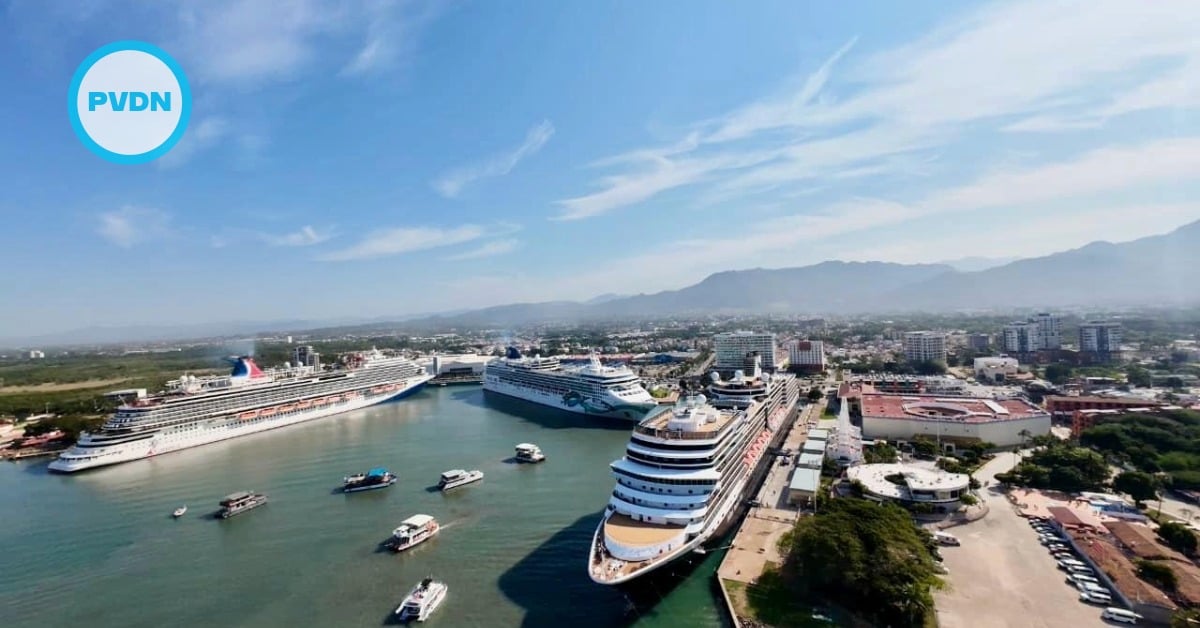
Puerto Vallarta is heading into one of its busiest cruise months of the year, with 27 ship calls on the April schedule and several first-time arrivals. That is the headline. The bigger story is what it means on the ground for traffic, tours, the Malecón, small businesses, and a tourism sector still trying to hold momentum after a disrupted stretch earlier this year. April could bring strong spending, but it will also test how well the city absorbs concentrated visitor surges.
A busy month is taking shape at the port
Puerto Vallarta is preparing for a heavy cruise month after local port authorities presented an April schedule with 27 cruise ship arrivals. The update came after the third 2026 session of the operations committee led by ASIPONA Puerto Vallarta, the federal port authority that oversees the city’s maritime terminal.
That number matters because cruise activity does not move through the local economy in a smooth, even way. It arrives in bursts. A ship call can mean thousands of visitors and crew members entering the city within hours. When several ships arrive close together, the effects spread quickly from the terminal to taxis, tour operators, restaurants, bars, pharmacies, beach vendors, and downtown shops.
April’s calendar is also notable for the types of ships expected. Among the names highlighted for first-time arrivals are Brilliant Lady, Star Seeker, and Queen Elizabeth. Those are not interchangeable vessels. They represent different segments of the cruise market, from large contemporary ships to smaller premium and luxury offerings. That can shape how passengers spend, where they go, and how long they stay ashore.
Why this is more than a tourism headline
A story about ship arrivals can sound like a simple tourism update, but in Puerto Vallarta, cruise schedules often work like an early signal for the broader local economy. Cruise visitors may only spend part of a day in the destination, but they arrive in dense waves. That creates short windows of high demand that are especially important for businesses tied to day visitors.
For readers who do not follow the port closely, the practical impact is easy to see. On heavy arrival days, the waterfront gets busier early. Shore excursions fill up faster. Demand for transportation to the Malecón, Zona Romántica, Marina Vallarta, and nearby beaches is rising. Restaurants that depend on walk-in traffic can see a lift around lunch. Jewelry stores, souvenir shops, pharmacies, and convenience businesses also tend to benefit from cruise foot traffic.
The gains are real, but they are not automatic. Cruise tourism can generate strong sales on arrival days, yet it also places significant pressure on public space and local services. More visitors at once can mean slower movement through downtown, longer waits for rides, and tighter timing for independent travelers trying to fit tours, meals, and shopping into a single port stop. A busy cruise month is an economic opportunity, but it is also an operations challenge.
April could bring concentrated surges
The schedule suggests April will not just be busy overall. It will be busy in clusters. Independent cruise listings show multiple double-ship days and at least one triple-ship day during the month. That matters more than the monthly total alone.
A single cruise call is manageable because the city has a familiar routine for it. Multi-ship days are different. They compress demand for transportation, guides, retail, and security into a much smaller period. Visitors move through the same corridors at the same time. Local businesses often welcome that demand, but the city experience can feel very different on those days than it does during a normal tourist week.
That is one reason April’s schedule stands out. It is not only about headline volume. It is about timing. If several larger ships overlap with holiday traffic already moving through the region, the strain on mobility and service capacity becomes more visible. Residents notice it in traffic and parking. Visitors notice it in wait times and crowding. Businesses notice it in staffing, stock, and how quickly the day turns.
The recovery angle behind the schedule
There is also a second layer to this story. April’s strong lineup follows a period when Puerto Vallarta’s cruise calendar had already shown signs of disruption and adjustment earlier in the year. March, for example, was revised down after cancellations, making each confirmed call more important for operators that depend on port activity.
That gives April added weight. A full schedule does not erase earlier disruptions, but it does help stabilize expectations for the sector. Cruise lines returning as planned send a signal that the port remains active and commercially important on the Mexican Pacific route. For local tourism businesses, that kind of consistency matters almost as much as raw visitor numbers.
The appearance of newer and more specialized ships matters too. It suggests the port is not only keeping its place on established itineraries but also staying visible to operators who sell a range of travel experiences. That does not guarantee larger local gains on its own. Still, it broadens the types of cruise traffic reaching the city, which can help diversify spending beyond the most familiar mass-market patterns.
What residents and visitors should watch
For people living in Puerto Vallarta, the most useful question is not whether 27 ships sound like a lot. It is where the pressure points will show first. Expect the clearest effects around the cruise terminal, main tourist corridors, excursion pickup areas, and central commercial zones on heavy arrival days.
For visitors and expats, the month may be a reminder that Puerto Vallarta is balancing two identities at once. It is a beach destination with long-stay residents, local neighborhoods, and everyday routines. It is also a port city that can receive thousands of short-stay visitors before lunch. When cruise activity spikes, those two realities collide in visible ways.
If the city manages the month well, April could support businesses during an important stretch of the tourism calendar and reinforce the port’s role in the regional economy. If bottlenecks become more pronounced, the same schedule could reopen familiar debates about congestion, infrastructure, and how much cruise growth the city can absorb comfortably. Either way, this is not a minor port update. It is a snapshot of how Puerto Vallarta’s tourism engine is working right now.
Deep Dive:
Puerto Vallarta expects 14 cruise calls in March 2026