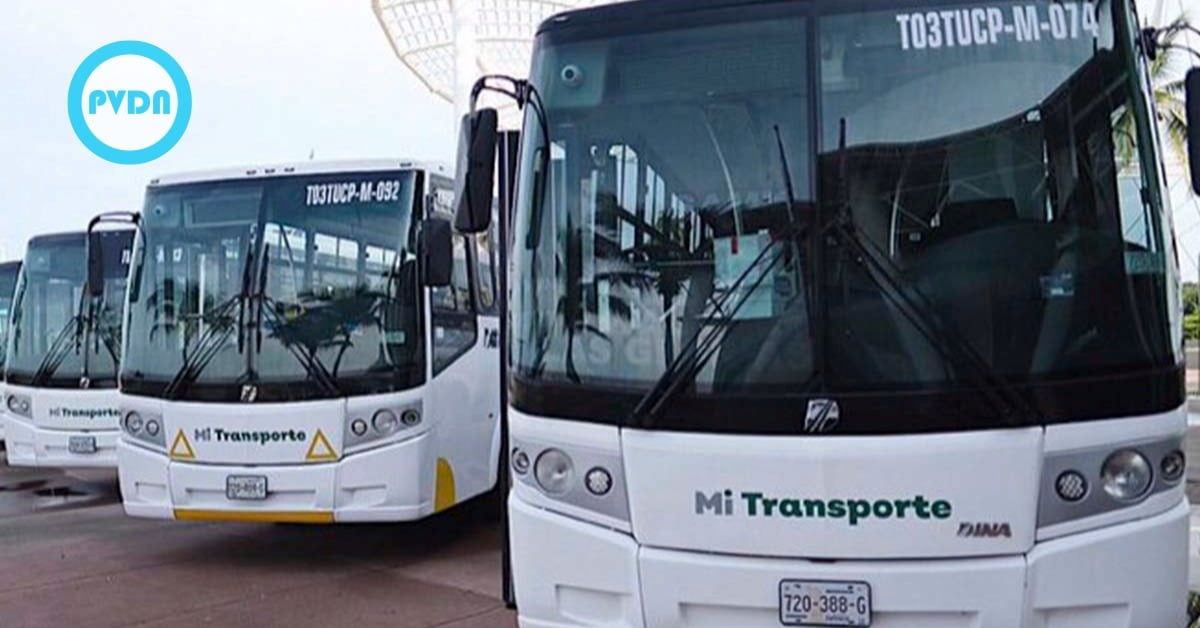
A one-peso increase may not sound dramatic, but the new bus fares taking effect in Puerto Vallarta on April 1 reach beyond the city fare alone. Urban riders will see a modest change, while commuters on suburban routes face a much sharper hit. For many readers, the bigger question is not just what the new price is, but what it says about how public transportation is changing in Puerto Vallarta and across Jalisco.
What changes on April 1
Starting Wednesday, April 1, 2026, public transportation in Puerto Vallarta will cost more. The standard urban fare moves from 10 pesos to 11 pesos. The student fare remains 5 pesos under the preferential program. For riders who stay within the main city network, the change is straightforward. For people who depend on routes outside the urban core, the increase is more noticeable.
That is because the updated fare table also applies to the suburban corridors operated by R-25 Palmas and R-25 Ecoterra. In those areas, prices vary by destination and distance. Published examples include 18 pesos to La Desembocada, 21 pesos to Ecoterra and El Colorado, 26 pesos to Las Palmas, and 30 pesos to Tebelchía. In other words, the headline one-peso increase only explains the urban base fare. The outer-route adjustments will have a bigger impact on many riders.
Why Puerto Vallarta riders are seeing this now
This was not announced overnight. The change had already been approved and forms part of a broader fare reset in Jalisco. For weeks, the fare debate centered on whether users would end up paying more, whether a higher technical rate would go forward, and whether riders would need a specific card to access the lower public fare. The final decision was to set the general fare at 11 pesos starting April 1.
That wider state context matters because many riders had been left with a confusing message. At one point, the discussion around Tarjeta Única Jalisco made it sound as if access to the lower fare could depend on how a person paid. The current rule is simpler. The effective public fare is 11 pesos, and it is meant to apply generally. For international residents, part-time residents, and visitors who use local buses, this removes one practical concern. The bus system may still have separate discount rules for eligible groups, but the base city fare is no longer tied to a special card requirement.
Why this matters beyond one peso
A one-peso increase can seem minor on its own. In daily life, it adds up. A person taking four urban bus rides in one day now spends 44 pesos instead of 40. Over a six-day workweek, that becomes 264 pesos instead of 240. Over a month of regular commuting, the added cost becomes harder to ignore.
The effect is sharper on longer suburban trips. That matters in Puerto Vallarta, where many workers, students, and service employees travel between the center, the northern fringe, and outer communities. For households already managing rent, groceries, school costs, and utility bills, transportation is not a small expense. It is a recurring one. The city’s international population should also pay attention to another reason. Many foreign residents rely on buses for routine trips because they remain the lowest-cost option compared with taxis or app rides. Even modest fare changes can alter the real cost of living over time.
The fare increase also tests public confidence
The increase arrives at a moment when public transportation in Puerto Vallarta is already under scrutiny. Riders have spent months watching bus fleet changes, route adjustments, and ongoing mobility pressure in corridors linked to Las Palmas and the eastern side of the municipality. That means the new fare will not be judged only by the posted number on the ticket. It will be judged by whether the service feels more reliable.
That is where the local debate is likely to move next. If buses remain crowded, infrequent, or difficult to connect with, many riders will see the increase as a simple transfer of cost to the public. If service improves, officials and operators will argue that the higher fare supports a system that must modernize, expand, and keep operating amid rising costs. The amount itself matters, but public reaction often depends more on whether riders believe they are getting a fair exchange.
What international readers should know
For readers new to Puerto Vallarta, the terms can be confusing. Urban service refers to the regular city network. Suburban routes connect the city with outlying communities, subdivisions, and road corridors where travel distances are longer, and pricing is not flat. That is why one person may still pay 11 pesos while another pays significantly more on the same day.
It is also worth understanding that fare policy in Mexico often combines politics, subsidies, and service promises. A posted fare does not always tell the whole story. In this case, the local increase in Puerto Vallarta is tied to a state-level decision in Jalisco, but the real effect depends on where a rider lives, how often they travel, and whether they qualify for a discount. For students, the 5-peso fare remains an important protection. For everyone else, the new rate begins immediately and becomes part of the daily math of getting around the city.
What to watch next
The immediate question is settled. The new fare is now in effect. The more important question is what comes next. Riders will be watching service frequency, route coverage, suburban reliability, and whether the fare discussion stays closed or returns if pressure builds again. In Puerto Vallarta, transportation policy rarely stays abstract for long. It shows up in wait times, commutes, and the cost of simply moving across the city.
For now, the clearest takeaway is this: urban bus service now costs 11 pesos, students remain at 5 pesos, and suburban riders on corridors such as R-25 Palmas and R-25 Ecoterra face a more meaningful adjustment. That makes this more than a routine fare notice. It is a reminder that transportation costs in Puerto Vallarta are still changing, and that the city’s outer edges often feel those changes first.
Deep Dive:
Puerto Vallarta Morning Coffee News to Start April 1
Puerto Vallarta new buses finally roll in after delay
Unexpected Public Transportation Fare Hike in Puerto Vallarta Sparks Discontent Among Users