A business group’s security warning is adding pressure on Puerto Vallarta authorities after weeks of violent cases, robbery concerns, and a sharp rise in perceived insecurity. Coparmex says the issue is no longer limited to police reports. It is beginning to shape expansion plans, tourism confidence, and how businesses prepare their staff. The question now is whether patrols, coordination meetings, and new equipment can produce results visible beyond official announcements, while businesses rewrite their own emergency rules.
Coparmex pushes for a stronger security response
Coparmex Puerto Vallarta is urging municipal, state, and federal authorities to strengthen the city’s security strategy following recent violent incidents, warning that insecurity is increasingly shaping investment decisions, tourism confidence, and day-to-day business planning.
Francisco Gabriel Vizcaíno Rendón, president of the local business group, said in comments published Saturday that some business owners who had considered expanding, opening branches, or creating jobs are now holding back resources as a security reserve. He described the current environment as a problem for both confidence and economic planning.
The sharpest concern came after an attack against a woman inside a local business. A May 25 video report described a man who posed as a customer, entered a stationery shop in the Primero de Mayo area, attacked the worker, and fled with cash and a computer.
Vizcaíno called that case “the final straw,” saying Coparmex members have repeatedly raised concerns about what is happening in Puerto Vallarta.
The pressure is no longer only about perception
The business group’s warning lands in a city already dealing with a sharp change in public-security sentiment. INEGI’s March National Urban Public Security Survey found that perceived insecurity in Puerto Vallarta rose from 32.0 percent in December 2025 to 59.9 percent in March 2026, placing the city among the urban areas with the largest measured increases in the country.
That perception has a crime-data backdrop. Puerto Vallarta recorded 389 robbery complaints from January through April, including increases in business and person robberies, according to a recent look at the city’s robbery reports in early 2026.
Coparmex has also been raising concerns over extortion attempts and the need for stronger patrols in commercial corridors. In a related statement, the group asked authorities to reinforce investigations, maintain visible operations in vulnerable zones, and reactivate Alerta Vecinos, a citizen-security program aimed at faster local communication.
The request goes beyond more patrol vehicles. Coparmex wants more consistent rondines in business areas, clearer follow-up on investigations and prevention work that does not depend on a single high-profile case. The group has said Puerto Vallarta’s competitiveness depends on whether the city can show order, response capacity, and continuity.
Authorities face a credibility test
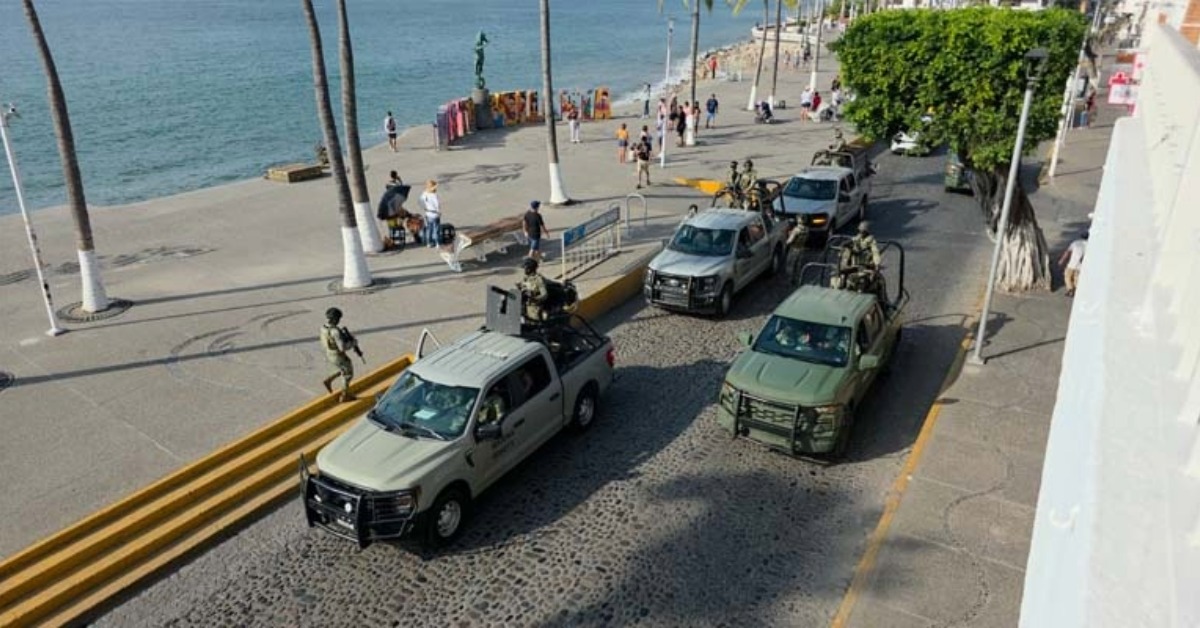
Puerto Vallarta officials have been announcing more security coordination in recent weeks. The city’s municipal communications page listed a regional security and business participation session tied to World Cup 2026 planning, while local authorities have also discussed new police equipment and wider coordination with nearby municipalities.
Those announcements now meet a narrower demand from the private sector. Coparmex is asking whether the measures will be visible in commercial districts, tourist corridors, and neighborhoods where businesses operate late, handle cash, and depend on predictable foot traffic.
Security agencies are also trying to contain misinformation around several recent deaths of women in Puerto Vallarta. Fiscalía-related statements said there were no objective elements or scientific evidence to establish the existence of a serial aggressor in the cases registered on May 10, 15, and 21, while stressing that the investigations remain open.
The distinction matters for public confidence. Prosecutors rejected one specific public claim, but that does not erase the broader security concern. The same cases have kept pressure on authorities, women’s groups, and business leaders, especially after other recent violent incidents drew attention to how quickly a local case can become part of Puerto Vallarta’s public image.
Vallarta Daily has recently covered the city’s growing violence concerns and the state’s rejection of a serial-killer claim in the Puerto Vallarta cases. Together, those stories show the gap authorities are trying to manage between crime investigations, public fear, and tourism-facing messaging.
Businesses prepare their own protocols
Coparmex Puerto Vallarta said it is preparing security protocols for both formal and informal businesses. The measures include internal emergency procedures, staff training, communication with authorities, cameras, panic buttons, and alert systems.
That shift moves part of the burden onto business owners. Many already face slow-season pressure, higher operating costs, and uncertainty around tourism demand. Security spending can mean cameras, lighting, digital backups, training time, and new habits for employees who may never have been taught how to respond during a robbery or violent incident.
The business group’s position is still institutional. It says it remains in communication with security authorities and the Fiscalía de Jalisco to follow the investigations and understand what actions will be taken. But the message is also firm. Meetings, patrol announcements, and equipment purchases will be judged by whether business owners, workers, and customers feel a measurable change.
Coparmex’s national leadership has made a similar argument this year, saying security requires “clear results and effective coordination” when violence affects mobility, workplaces, and local economies. The Puerto Vallarta chapter is now applying that test locally, as the city tries to protect its tourism economy while answering business-sector doubts that are becoming harder to dismiss.