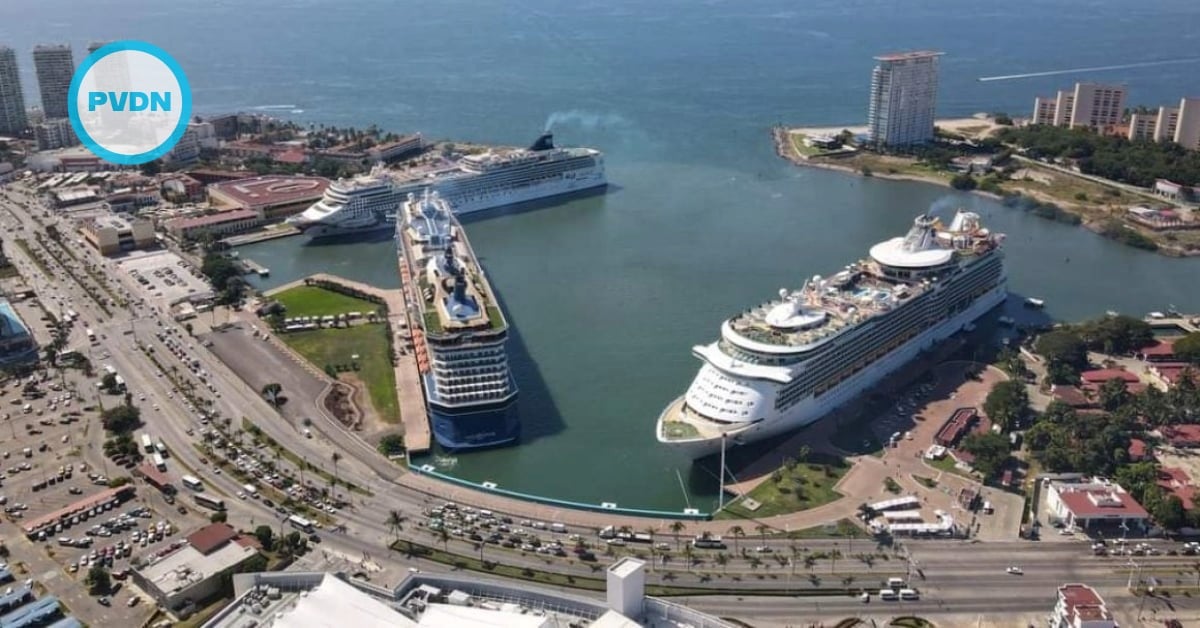
Puerto Vallarta ended March with the kind of image tourism officials wanted: two cruise ships in port and thousands of people moving through the city in a single day. But the headline number only tells part of the story. March still finished below its original cruise plan after cancellations tied to the February 22 violence. Now attention shifts to April, when the port is scheduled to receive 27 cruise calls and test whether the rebound is real.
Puerto Vallarta ends March with a visible cruise rebound
Puerto Vallarta closed March with a strong final postcard image for the tourism sector. On March 31, the city received Royal Princess and Carnival Panorama, bringing a combined 11,668 people to port when passengers and crew are counted together. That gave the destination a busy day at the waterfront and a clear sign that cruise traffic had regained rhythm after a difficult stretch in late February and early March.
The two ships arrived from Southern California and continued on to Mazatlán, keeping Puerto Vallarta in its familiar place on the Mexican Riviera route. For local businesses, that matters beyond the headline. A heavy cruise day can mean more shore excursions, more taxis, more foot traffic in the historic center, and more sales for restaurants, bars, and shops that depend on short but intense waves of visitors. For many readers outside Mexico, that is the practical meaning of a cruise rebound here. It is not just a port statistic. It is a direct measure of how much economic activity reaches the city in a single day.
Just as important, the late-March double arrival came after weeks in which the local tourism conversation had shifted from growth to damage control. The final image of the month was stronger than the start, and that is why this story matters.
Why the March numbers still need context
The rebound was real, but it was not a full recovery of the month’s original plan. Local port reporting said 14 cruise calls had been expected in March, but the total was cut to 11 after the violence of February 22 triggered itinerary changes and cancellations. An official ASIPONA March calendar published at month’s end also shows 11 arrivals for the month, matching the reduced operating picture.
That distinction matters because a good final day can hide a weaker month underneath. In cruise tourism, every missed call is a lost opportunity for spending that cannot be fully recovered later. A ship that skips port does not simply move its passengers to another day for the same local merchants. The business is gone. That affects guides, transport providers, restaurant staff, souvenir sellers, and many small operators whose income depends on ship schedules being held.
The March disruption was tied to the fallout from the February 22 security crisis in Jalisco, which shook traveler confidence and led some cruise lines to change routes. Cruise-industry reporting at the time said only a few calls were canceled in Mexico, with those cancellations concentrated in Puerto Vallarta. That gave the city a reputational hit at a sensitive point in the winter tourism cycle, even as the broader national cruise market continued to operate.
So the correct reading of the March 31 figure is not that the problem disappeared. It is that Puerto Vallarta ended the month looking more like itself again, even though the monthly total still fell short of the original expectation.
What the April schedule could mean
The next test is already on the calendar. The official April 2026 cruise schedule published by ASIPONA Puerto Vallarta shows 27 arrivals, though the port also notes that the calendar is tentative and subject to change. Separate local reporting says that if the schedule holds, Puerto Vallarta would reach 72 cruise calls in the first four months of the year, after posting 24 in January, 13 in February, and 11 in March.
That April figure is important for two reasons. First, it suggests the port remains firmly embedded in West Coast cruise planning despite the February shock. Cruise lines do not stack a calendar like that in a destination they are preparing to avoid. Second, it shifts the conversation from short-term disruption to whether confidence is returning fast enough to support the rest of the season.
For international readers, the broader point is simple. Puerto Vallarta’s cruise business is a highly visible signal of tourism confidence. Hotels can stay open, flights can resume, and city life can look normal, but cruise schedules provide a public, easy-to-track test of whether major travel operators still trust a destination enough to keep sending ships. That is why the March 31 double arrival mattered. It was not only a busy day. It was a message.
The bigger story for Puerto Vallarta
The larger story is not just about ships. It is about whether Puerto Vallarta can move from recovery optics to consistent tourism stability. The city has strong advantages. It remains one of the Pacific coast’s best-known resort markets, it serves both domestic and foreign travelers, and it sits on a cruise route with limited substitute stops. Those factors help explain why traffic can come back relatively quickly after a shock.
But confidence tends to recover more slowly than operations. Travelers, especially those booking from abroad, often remember the disruption longer than local business owners do. That is why March ended with two truths at once. Puerto Vallarta produced a strong final cruise day, and it also closed a month that finished below plan.
If April’s schedule stays close to what’s on the calendar now, the city will have a stronger case that the interruption was temporary. If more changes appear, the conversation will shift again from momentum to fragility. For now, the port ended March with a visible rebound, but the real measure of recovery is the month that follows.
Deep Dive:
Puerto Vallarta Braces for 27 Cruise Ships in April
Two cruise ships signal Puerto Vallarta recovery
Princess Drops Three Puerto Vallarta Calls This Week
Puerto Vallarta Tries to Win Back High Season Tourists
Puerto Vallarta’s spring break season took a hit after February violence