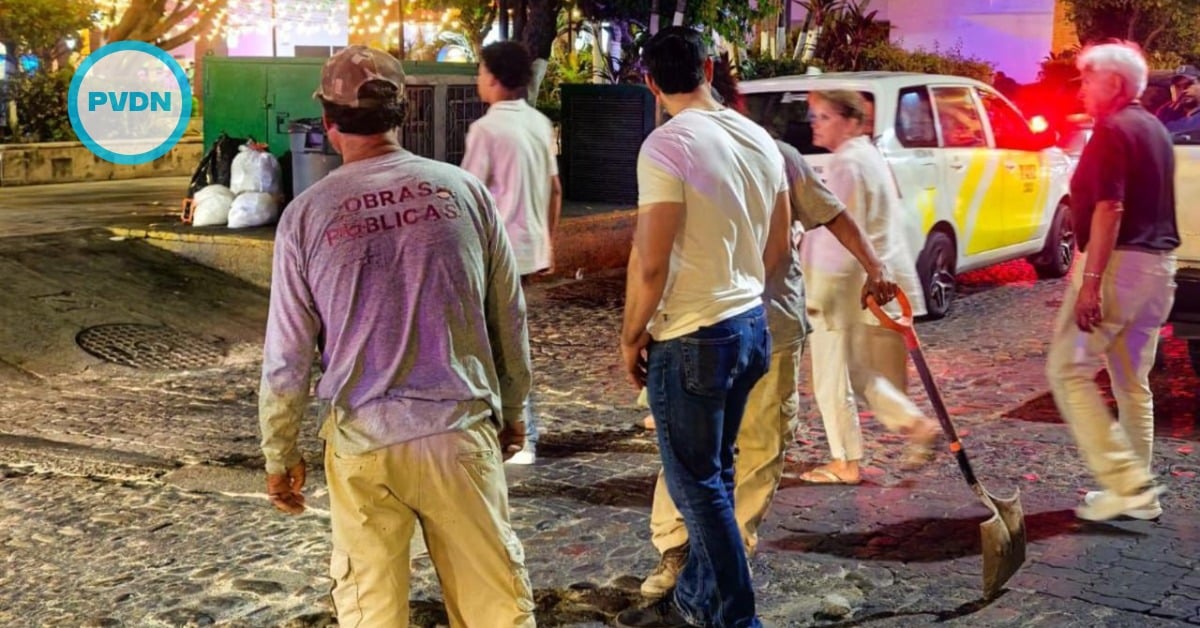
Just after midnight, the historic heart of Puerto Vallarta looks less like a postcard and more like a work site. Tanker trucks inch along Avenida México, hoses fan out across the pavement, and workers in reflective vests scrub the stone around the Malecón arches. Others haul cones into place on Morelos and Juárez while a small crew lifts manhole covers to pull trash out of the drains below.
The municipal government has rolled out an overnight maintenance push in the Centro Histórico as the city heads into the year-end tourism rush. The operation, ordered in mid-November, is focused on deep cleaning, repairing worn infrastructure, and refreshing road markings before the busiest weeks of the year land on the bay. The goal is simple: when the first wave of winter visitors hits the cobblestones, the streets should already look ready.
Crews are washing plazas and sidewalks, patching potholes on the main corridors, clearing debris from storm drains, and repainting traffic and pedestrian markings that faded under months of sun and tire wear. The work stretches across Avenida México, the spines of Morelos and Juárez, the plaza in front of the Church of Our Lady of Guadalupe, the iconic Malecón arches, and Parque Lázaro Cárdenas, one of the city’s most visited public spaces. Much of that happens between midnight and dawn to avoid blocking restaurant terraces, bar traffic, and evening strolls.
This is not just a one-off wash. City managers describe it as part of a broader effort to “rescue” and standardize the image of the historic core. The council has already set up a temporary Historic Center Rescue Commission, with a mandate that runs through 2027, to coordinate everything from paint rules to sidewalk repairs. The overnight operation is one of the most visible signs of that agenda on the ground.
Earlier this year, officials launched a campaign encouraging property owners in the core to repaint façades within a defined palette that keeps walls white and trims in earth tones and olive greens. The idea is to bring a sense of continuity back to the streets around the Malecón, where decades of ad-hoc remodeling left some blocks looking scattered and tired. At the same time, the city signed on to the federal “Rutas Mágicas de Color” program, which will channel paint and design support into murals and façade projects that highlight local identity rather than cover it up.
Those aesthetic pushes are now meeting a very practical one. Power washing stone that has absorbed years of grease and spilled drinks, scraping gum from the pavement, and unclogging drains are less glamorous than fresh murals, but they are what visitors notice under their feet. For residents, they matter even more. A cleaned drain can mean the difference between a passable sidewalk and an ankle-deep puddle the next time a tropical downpour hits at rush hour.
The timing is not accidental. Tourism projections for the bay point to another heavy winter, with forecasts of up to seven million air passengers moving through Puerto Vallarta’s airport this year, up from 6.7 million in 2023. Airlines and local authorities expect nearly 12,000 flight operations over the season as new routes and larger aircraft arrive. That traffic will pour straight into the streets of the Centro Histórico, where visitors grab their first tacos, first photos, and first late-night strolls along the oceanfront.
Keeping the cleanup going after high season
Under the glow of the Malecón’s lights, it can be easy to forget how quickly public spaces can slide when daily maintenance falls behind. Two years ago, a deep cleaning of the seaside promenade only came after weeks of complaints about stained pavement, overflowing bins, and lingering smells in the hottest stretches of the day. High-pressure washing finally arrived, but only after the problem was already obvious to anyone who walked the strip.
This time, the city is trying to get ahead of the curve. By tackling potholes, repainting crossings, and clearing drains before the holiday crowds arrive, officials are betting that visitors will spend more time looking up at the church tower and the bay, and less time dodging puddles or cracked concrete. The work in Parque Lázaro Cárdenas, a key meeting point for locals and visitors in the Romantic Zone, sends the same message: the core tourist circuit is not being left to fend for itself.
On the ground, the operation also changes the rhythm of life for the people who actually live and work in the neighborhood. Restaurant staff finishing the late shift step out onto wet, freshly washed sidewalks. Street vendors who push their carts through the center every morning now find fewer loose stones and less trash blocking their path. For many small business owners, a clean curb and a painted crosswalk can be the subtle difference that nudges a passerby to stop, snap a photo, and then sit down for breakfast.
At the same time, the cleanup points to larger tensions in how Puerto Vallarta manages growth. The city has seen a dip in U.S. arrivals this year, even as total visitor numbers stay high, thanks to stronger traffic from Canada and domestic travelers. Local leaders are under pressure to protect jobs and keep the destination attractive while also responding to long-standing complaints about uneven services between the tourist core and outlying neighborhoods.
That criticism surfaces most clearly when residents see crews and resources concentrated downtown while potholes and flooded corners remain in hillside colonias. City officials counter that the Centro Histórico is the front door for the entire bay, and letting it decay would hurt workers and families across the metro area. Both things can be true at once: the historic center needs intensive care, and other districts need consistent attention far beyond high season.
For now, the downtown operation is also a quiet show of solidarity with the people who keep the city running when visitors are asleep. Sanitation workers, maintenance crews, and line staff move through the dark with hoses, brooms, and paint rollers, often without much recognition. When the sun rises and early dog walkers cross Avenida México without stepping into a hole or sidestepping a blocked drain, they are walking through the results of labor that started while the bars were still closing their tabs.
As Christmas lights go up and New Year’s reservations fill hotels and rentals, the Puerto Vallarta historic center is about to face its annual stress test. If the pavement under the Malecón arches stays clean, drains keep up with passing storms, and freshly painted lines keep traffic a bit more orderly, the overnight blitz will have done its job. The challenge will be stretching that discipline beyond a single season, so that when the last charter flight of spring lifts off over the bay, the streets below still look cared for, not just polished for a moment.