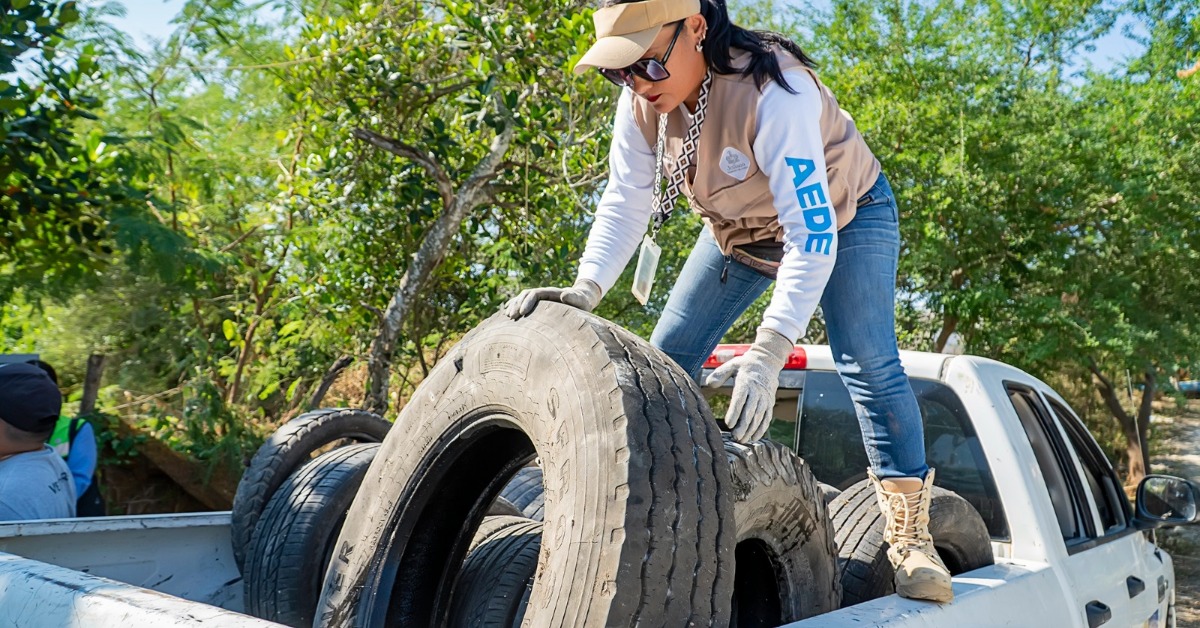
Puerto Vallarta has begun a new dengue prevention operation focused on eliminating mosquito breeding sites across the city. Health and municipal authorities launched the campaign on Thursday and called on residents to join cleanup work, remove junk that collects water, and cooperate with sanitation teams moving through neighborhoods. The effort combines public outreach with on-the-ground descacharrización, a common term in Mexico for removing discarded items and containers that can become breeding spots for mosquitoes.
The immediate message from officials is simple. Dengue prevention depends less on a single fumigation round than on reducing the places where mosquitoes can reproduce. That means emptying or removing buckets, tires, flowerpots, old containers, rooftop clutter, and any object that can hold standing water after rain. In a coastal city like Puerto Vallarta, where heat and humidity can speed mosquito activity, those everyday items matter more than many people realize.
Why the campaign is starting now
The campaign arrives at a moment when local authorities are trying to stay ahead of the seasonal rise in mosquito risk. Earlier this month, Region 8 health officials said Puerto Vallarta had only two confirmed dengue cases so far in 2026, a much lower figure than in the same period of the previous two years. That sounds encouraging, but officials have also stressed that low numbers in April do not remove the threat. In tropical cities, dengue pressure can change quickly when rain and warmer weather create new breeding sites across homes, patios, lots, and public spaces.
That caution also reflects recent experience in Jalisco. State data show dengue hit the state hard in 2024, then remained present in 2025, even after the worst surge eased. Those years left health authorities with a clear lesson. Waiting until hospitals see a visible increase in cases is too late. The more effective strategy is to reduce the mosquito population before transmission accelerates. That is why early cleanup campaigns often become a higher priority than they appear to be from the outside.
What descacharrización means in practice
For international readers, descacharrización is not just a neighborhood sanitation word. It is a frontline disease-control measure. The Aedes aegypti mosquito, the main dengue vector, often breeds close to homes in small containers with clean or relatively clean standing water. A neglected plant saucer, an uncovered barrel, or an old tire can do the job. You do not need a large puddle or a filthy drainage canal for dengue risk to grow.
That makes the city’s appeal for public participation especially important. Municipal crews can remove junk from the streets and coordinate neighborhood efforts, but they cannot fully control what happens in every patio, garden, roof area, or storage space. In practice, dengue prevention works best when households, building managers, schools, businesses, and local authorities all act together. A citywide campaign helps, but its success still depends on what residents do after the trucks and brigades move on.
Why this matters to expats and other residents
For foreigners living in Puerto Vallarta, dengue can be easy to underestimate because it often begins with symptoms that resemble other viral illnesses. Health agencies describe common signs such as high fever, headache, body pain, nausea, and rash. Most cases improve, but some can turn serious, especially if warning signs appear after the fever starts to drop. Severe abdominal pain, persistent vomiting, bleeding, or unusual weakness should not be ignored.
That makes the current campaign relevant beyond routine city maintenance. It is also a reminder that public health in Mexico often starts at the neighborhood level. Residents are being asked to do practical work that protects not only their own households but also the surrounding block. In a dense urban area, one neglected property can affect nearby homes. The city’s operation is therefore part cleanup drive, part civic participation effort, and part attempt to avoid a much larger problem later in the season.
A preventive move with familiar lessons
Puerto Vallarta’s latest dengue operation does not suggest the city is facing a major outbreak today. What it shows instead is that local authorities do not want to repeat the pattern seen in past high-risk periods, when mosquito control became more urgent once transmission was already established. Acting now gives officials a better chance to keep case numbers lower as weather conditions become more favorable for mosquito breeding.
The campaign also highlights a point that health authorities repeat each year because it remains true. Dengue control is intensely local. It depends on small actions taken in ordinary places, often before anyone feels sick. That is why a call to clear patios, remove junk, and watch for standing water should not be read as background noise. In Puerto Vallarta, those simple tasks are part of the city’s first line of defense.