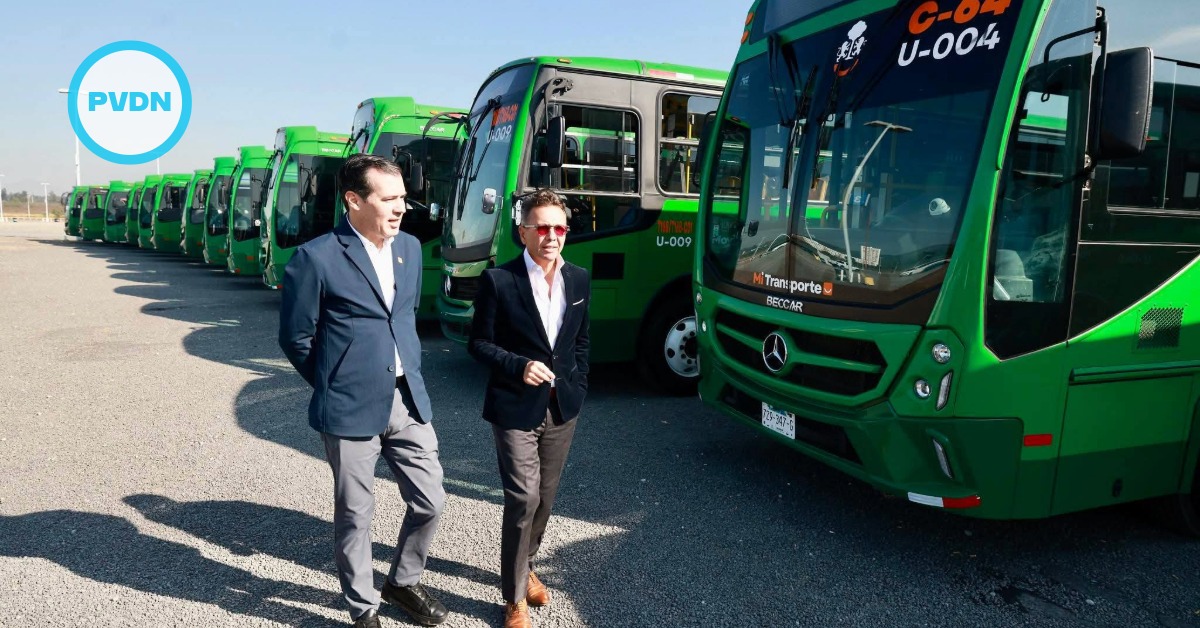
Puerto Vallarta gets 31 new buses, including 10 electric, after an 11-month delay. Officials say more units are due in 2026.
Puerto Vallarta’s public transit system is getting a long-awaited upgrade, but it arrives with a footnote riders won’t miss. After an extended delay from the original timeline, the city is set to receive 31 new buses, including 10 electric units, as the first wave of a larger fleet renewal. The delivery is meant to ease pressure on a system that residents have blamed for long waits, packed buses, and frequent breakdowns.
The new units were presented in Puerto Vallarta on Tuesday, December 16, during an official handover tied to the state’s broader transportation push. The buses are part of a larger package previously announced for the city. That broader plan has been a frequent reference point in local complaints, because daily service has struggled to keep pace with demand in a fast-growing, tourism-heavy city where workers often rely on buses to reach jobs, schools, and medical appointments.
For many riders, the headline is not the ceremony. It is whether the next week feels different at the stop. A fleet refresh can cut wait times, reduce cancellations, and lower the number of buses taken out of service for repairs. It can also fall flat if the new units are introduced slowly, or if they get pulled into a patchwork schedule that does not match where people actually ride.
Early official messaging has stressed modernization. The new buses include features meant to improve comfort and safety, including air conditioning and onboard monitoring systems. Officials have also described an electronic fare collection system designed to speed boarding and reduce cash handling. These upgrades matter, but riders usually measure progress in minutes, not features.
Puerto Vallarta new buses
The 31-unit delivery includes a mix of vehicle types, with 10 electric buses joined by units powered by natural gas and diesel. State transportation officials have described the mix as a bridge between immediate capacity needs and longer-term plans to expand cleaner transit in the city. The diesel units have been described as meeting Euro V emissions standards, a benchmark intended to reduce pollutants compared with older engines.
Officials have also shared technical details about the electric buses, including the expected range per charge and different bus sizes meant to match route needs. The electric units are described as designed with accessibility in mind, including universal access features. For riders with mobility challenges, that detail can be as important as the headline “electric,” especially in a city where sidewalks and curb cuts are uneven.
The money behind the purchase also matters because it hints at how quickly the next phases can arrive. Officials have described a total investment of nearly 150 million pesos, with a portion contributed by the state. Financing and procurement timelines have been part of the public frustration because the city heard earlier promises and then endured months of the same daily bottlenecks.
One challenge that will shape the near-term impact is deployment. On the day of the delivery, authorities had not publicly laid out a clear route-by-route plan for assigning the new units. Without that, riders in high-demand corridors can be left guessing, and the city loses a chance to build trust by showing exactly how service will improve.
Electric buses also come with a practical requirement that riders rarely see. They need a reliable charging infrastructure and a plan for downtime. Officials and local planning discussions around the rollout have pointed to charging terminals as a prerequisite before the electric units can operate at full capacity. If chargers are delayed, the electric buses can end up parked or used more cautiously than expected.
That is why the most important public information in the coming days may not be the number 31. It may be a simple service notice: which routes gain buses, what the new frequency will be, and how the system will track whether wait times actually fall.
What changes next for riders
The arrival of new buses does not automatically solve Puerto Vallarta’s transit problems. It can, though, create immediate relief if the units go straight into service and replace buses that were routinely breaking down. Even a modest increase in available units can help stabilize dispatching, reduce gaps, and prevent the worst overcrowding on peak trips.
Officials have pointed to follow-on deliveries as part of the larger plan, with additional units expected in the months ahead. The state has also described a future electric mobility project tied to one of Puerto Vallarta’s key corridors, Avenida Francisco Medina Ascencio, which links major residential areas with hotels, commercial zones, and transportation nodes. If that project arrives on schedule, it would reshape how large numbers of people move through the city each day.
Still, riders have heard timelines before. The reason this delivery is news is not only the buses. It is the gap between past promises and present reality. An 11-month delay is long enough for daily frustration to harden into skepticism. For many residents, the city does not need another announcement. It needs predictability.
The next test will be visible and fast. If wait times drop, riders will feel it within days. If buses remain crowded and infrequent, the new units will be seen as a partial fix that does not match the scale of the problem. The lack of a public route rollout plan raises the stakes, because riders will fill the silence with their own conclusions.
There is also a second, quieter test: maintenance and oversight. New buses only stay “new” if they are maintained, monitored, and kept on a schedule that makes sense. Air conditioning systems fail without upkeep. Electronic payment systems frustrate riders if they are inconsistent. Safety cameras help only if they are functioning and integrated into a real response system.
For Puerto Vallarta, the delivery of these buses can be the start of a reset, but only if the public gets clear information and quick results. If officials can show where the buses go, how often they run, and what changes for the busiest riders, the conversation shifts from complaints to accountability. If not, the city risks repeating a familiar cycle: a promise, a delay, and a service that still feels like a daily gamble.