Puerto Vallarta’s beaches are public, but the land rules behind them can be confusing. The city now says it has updated federal maritime zone maps with new coordinates and federally validated plans. The move could affect beach concessions, seaside businesses, construction records, and municipal collections tied to ZOFEMAT. For property owners, concession holders, and residents, the update is a reminder that the beach is not just a tourism asset. It is also a regulated federal zone.
[adinserter block=”3″]
Puerto Vallarta Redraws Its Federal Beach Zone
Puerto Vallarta has updated the official plans used to identify the city’s Federal Maritime-Terrestrial Zone, known in Mexico as ZOFEMAT.
Municipal officials said the new plans provide more precise boundaries for the beach and nearby coastal land. The update was presented through the municipal treasury, with support from the local ZOFEMAT fund.
The city said the new data includes coordinates and tools that can better show where federal beach-zone limits begin and end. Officials also said the plans have been validated by federal authorities.
The update is aimed at reducing disputes over beach concessions, clarifying land use, and improving fee collection from businesses and individuals using federal coastal areas.
What the federal maritime zone is
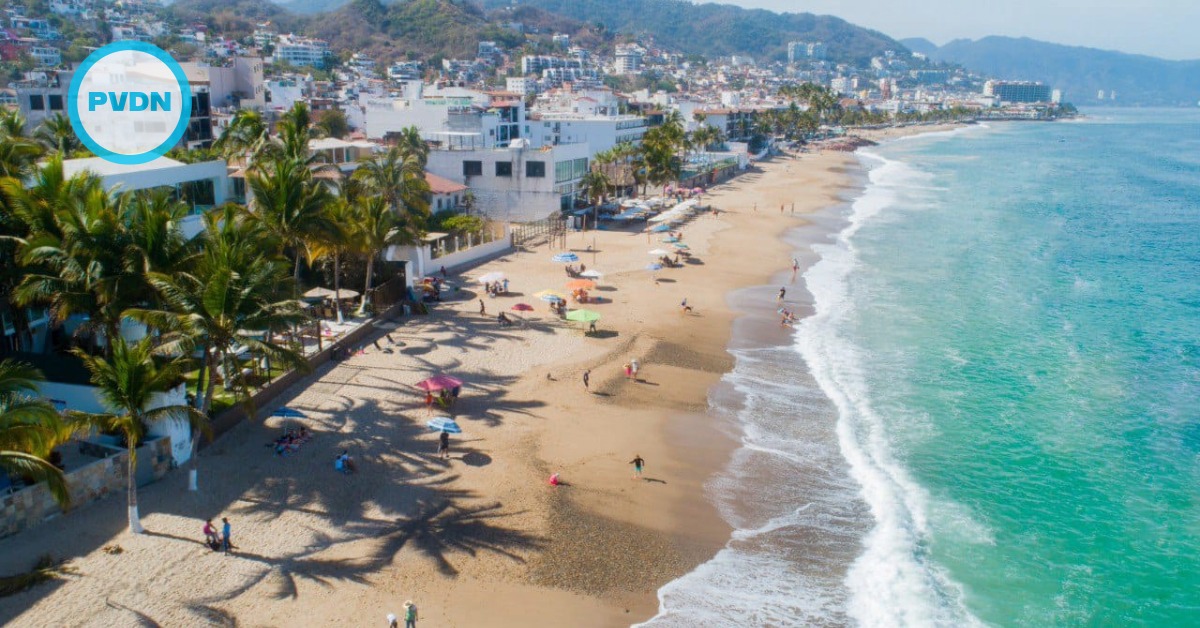
In Mexico, the ZOFEMAT is generally the 20-meter strip of firm, walkable land next to the beach. It is federal property, not municipal or private property.
That distinction matters in a coastal city like Puerto Vallarta, where hotels, restaurants, clubs, vendors, piers, and beach-service operators all depend on shoreline access.
The beach itself is also considered public-use federal property. Mexican law does not treat beaches as private land in the way many foreigners may understand the term.
A beachfront property can be privately owned. A hotel can own land next to the beach. But the beach and the federal maritime zone are governed under federal rules.
[adinserter block=”3″]
Why the maps needed an update
Coastal boundaries are not always simple. Beaches shift. Construction changes shorelines. Storms can alter sand levels. Some areas include rocky coast, river mouths, estuaries, or land gained from the sea.
For that reason, old maps can create problems. A concession may describe one use, while the current site has another. A space first authorized without construction may later include buildings, decks, or commercial structures.
Municipal officials said they have detected cases where the current use of a concession no longer matches what was originally authorized.
The city is asking concession holders to visit the municipal fiscal office and update the use and payment status of their spaces.
How this affects beach concessions
A ZOFEMAT concession does not make a section of beach private. It gives a person, business, or institution the right to use a federal area under specific conditions.
Those conditions can include the area size, approved use, authorization duration, and payment obligations.
For example, a concession may allow beach furniture, tourism services, access infrastructure, or another approved use. But changes in use, added construction, or expanded occupation can require review.
The updated maps should make it easier to compare the legal concession area with the land currently in use on the ground.
That can help avoid conflicts between neighboring concession holders. It can also help authorities identify cases where a business is occupying more space than allowed.
[adinserter block=”3″]
A revenue issue for Puerto Vallarta
The city also framed the update as a revenue issue.
Concession holders must pay rights for the use or exploitation of federal coastal areas. In practical terms, municipalities often help administer and collect these payments in coordination with higher levels of government.
When the boundaries are unclear, collection can be unclear as well. A business may be underpaying because its registered use is outdated. Another may dispute the amount owed because the mapped area does not match the site.
Municipal officials said more accurate mapping should enable fairer charges under the law. They also said a better collection would mean more resources for Puerto Vallarta.
ZOFEMAT funds are commonly tied to work such as beach maintenance, cleaning, supervision, access improvements, and coastal administration.
What this means for residents and visitors
For most beachgoers, the update will not change how they use the beach day to day.
The larger issue is management. Better maps can help authorities decide where concessions begin, where public areas must remain open, and where commercial activity may be operating outside its approved limits.
This is especially important in Puerto Vallarta because the beach is both a public space and a core part of the tourism economy.
For foreign residents and property buyers, the update is also a reminder to exercise caution when dealing with beachfront claims. Phrases such as “private beach” or “exclusive beach area” should be checked closely.
In Mexico, access to beaches and the adjacent federal maritime zone cannot be blocked or conditioned except in specific legal cases.
[adinserter block=”3″]
What concession holders should do next
The city’s immediate message is directed at concession holders.
Those using ZOFEMAT areas should review whether their concession matches the current use of the space. That includes checking construction, furniture, service areas, access points, and any commercial activity.
If the current use has changed, the concession holder may need to update records or payments with the municipal fiscal office.
This does not mean every concession is in violation. It means the city is moving to align old records with updated coordinates and current land use.
For Puerto Vallarta, the new maps could become a key tool in beach administration. For the public, the main test will be whether clearer boundaries lead to cleaner beaches, fewer disputes, open access, and more transparent use of the shoreline.