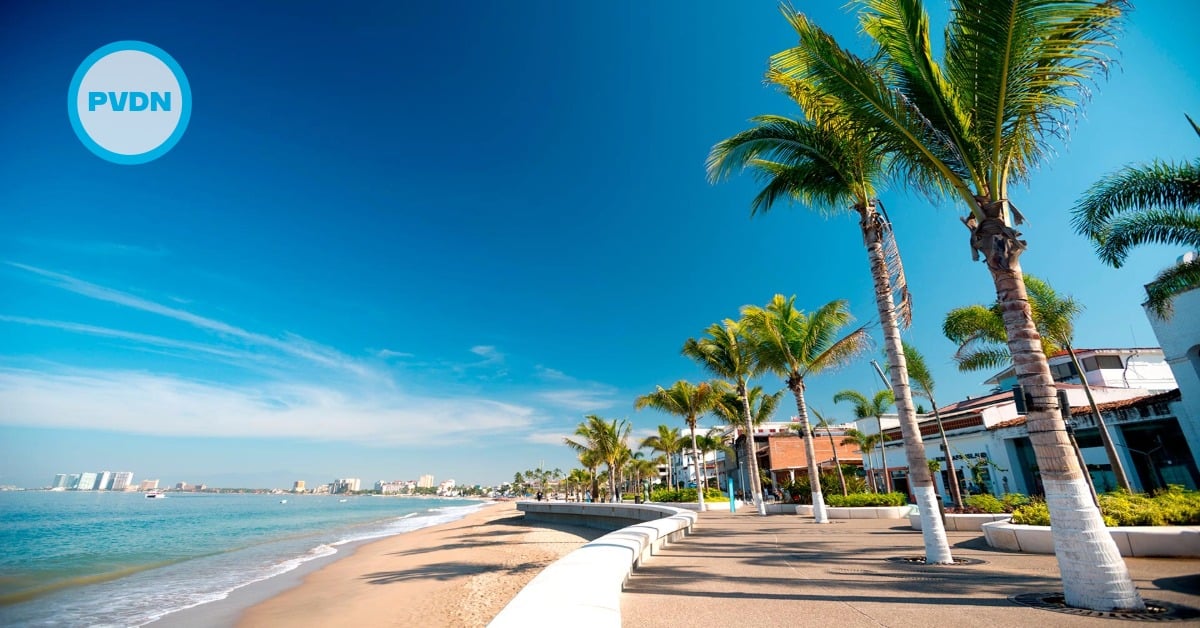
Business leaders expect hotels in Puerto Vallarta to finish 2025 around 70 percent full as winter visitors offset a weak spring and summer.
Speaking ahead of the peak winter season, local business chamber Coparmex says Puerto Vallarta tourism is already seeing a lift as visitors from Canada and the United States boost hotel bookings and restaurant sales in the city’s historic center. The group’s president in Puerto Vallarta, Francisco Gabriel Vizcaíno Rendón, estimates that traditional hotels could close the year with around 70 percent occupancy, driven largely by that foreign market. He described the horizon for the last weeks of 2025 as “very positive” after months of uneven results.
According to Coparmex, hotels that cater to long-stay snowbirds are currently reporting occupancy of about 30 percent from North American guests alone, a figure that is expected to climb as more travelers escape winter weather up north. Business owners say those guests are already beginning to show up in cafes, bars and small restaurants in the downtown area, giving some relief after what they consider an “atypical” economic year for the destination.
Puerto Vallarta tourism outlook after an atypical year
When local leaders talk about 2025 as an unusual year, they are referring to a string of underwhelming holiday periods. During Easter week, an internal Coparmex survey of small and mid-sized hotels in the Romantic Zone and central neighborhoods found occupancy as low as 25 to 50 percent in many properties, well below the levels seen in 2024. Most of the hoteliers consulted reported fewer visitors and lower spending than the previous year, even in normally busy corridors.
A broader diagnostic released later under the title “Un 2025 con señales de desgaste” painted a similar picture. Business groups in the city, including Coparmex, highlighted weaker demand from domestic tourists, slower consumption in local businesses and a noticeable drop in spending per visitor during the summer holidays. In that same document, entrepreneurs pointed to several structural pressures: Puerto Vallarta’s image as a more expensive destination, the rapid growth of vacation rentals that pull visitors away from traditional hotels and restaurants, and competition from other beach towns that are aggressively courting the national market.
State tourism authorities have also acknowledged that 2025 has not matched early expectations. Official monitoring of the summer vacation period showed hotel occupancy growing by only about one percentage point compared with the year before, a figure described publicly as “marginal” growth. For a city that has often led national rankings for hotel occupancy, such modest gains underscored how much room there is to recover.
National data helps explain the tension. Federal tourism statistics show that, between January and August 2025, overall hotel occupancy across Mexico’s main destinations hovered in the high-50 percent range, close to 2024 levels. International arrivals continued to grow, but the average spending per visitor in that period fell by more than six percent in dollar terms, suggesting that many travelers are watching their budgets more closely once they arrive.
At the same time, Mexico’s main airports serving beach destinations have remained busy. Passenger data for the first eight months of the year places Puerto Vallarta alongside Cancún, Los Cabos, Mexico City and other hubs as one of the top gateways for foreign visitors. Air arrivals from Canada in particular have increased compared with 2024, even as arrivals from the United States show a slight decline. For local businesses, that combination reinforces the sense that the winter season — when Canadian and northern U.S. residents traditionally escape the cold — could be decisive in balancing out weaker domestic demand earlier in the year.
Safety perceptions and winter demand for Puerto Vallarta tourism
The Coparmex forecast does not ignore the shadow cast by security headlines. Vizcaíno Rendón acknowledges that each new crime warning from abroad can unsettle potential visitors, especially when alerts about violence in other parts of Mexico are applied broadly to the entire country. He argues that Puerto Vallarta maintains what he calls an acceptable perception of safety and that the city has not seen the levels of violence present in other states.
Recent national surveys back up the claim that residents feel relatively secure. In this year’s Urban Public Security Survey, Puerto Vallarta ranked among the cities where the smallest share of people say they feel unsafe, and it was the only beach destination to appear in the top tier. Fewer than a quarter of respondents in the survey reported feeling insecurity in their daily lives, compared with well over half of adults nationwide.
Even so, the wider security context remains complex. Jalisco as a state is subject to a U.S. travel advisory that urges visitors to exercise increased caution because of crime and kidnapping. In June, the U.S. consulate in Guadalajara issued a specific notice warning tourists about kidnappings linked to dating apps in Jalisco, including in coastal areas around Puerto Vallarta and Nuevo Nayarit. More recently, a winter-season message aimed at so-called snowbird travelers has encouraged U.S. citizens to be especially careful in popular beach towns after dark and to follow basic safety steps such as sticking to well-lit areas and licensed transportation.
Local business leaders say these messages can weigh on booking decisions, even when they do not advise against travel outright. For a destination that depends heavily on repeat visitors from the United States and Canada, sustaining the image of a safe, well-managed city is part of the economic equation. The fact that Puerto Vallarta still ranks among the safest cities in national perception surveys suggests that its security strategy, while imperfect, continues to differentiate it from other Pacific resorts.
For now, Coparmex and other chambers are focusing on what they can control: lobbying for stronger promotion of the historic center, pushing for improvements in urban infrastructure and public services, and coordinating with authorities on security details in tourist zones. Their joint proposal to revitalize the downtown area leans on Puerto Vallarta’s existing strengths — walkable streets, local gastronomy and a dense network of small businesses — to encourage visitors to spend more time and money beyond the beachfront resorts.
Whether the year truly closes at the 70 percent occupancy mark will depend on how the next few weeks play out, from airline capacity to weather and security headlines. What is clear is that, after an uneasy 2025, a solid winter could make the difference between a year many hoteliers remember simply as difficult and one they remember as a turning point.