A water outage during one of Puerto Vallarta’s busiest holiday periods is more than a temporary inconvenience. The immediate problem was an electrical failure near the Pozo Radial, but the bigger story is how one breakdown can ripple through a city that depends heavily on wells, storage tanks, and timed pressure recovery. For residents, hotel workers, and visitors, the disruption offers a clear look at how Vallarta’s water system works, and where it remains vulnerable.
What happened at the radial well
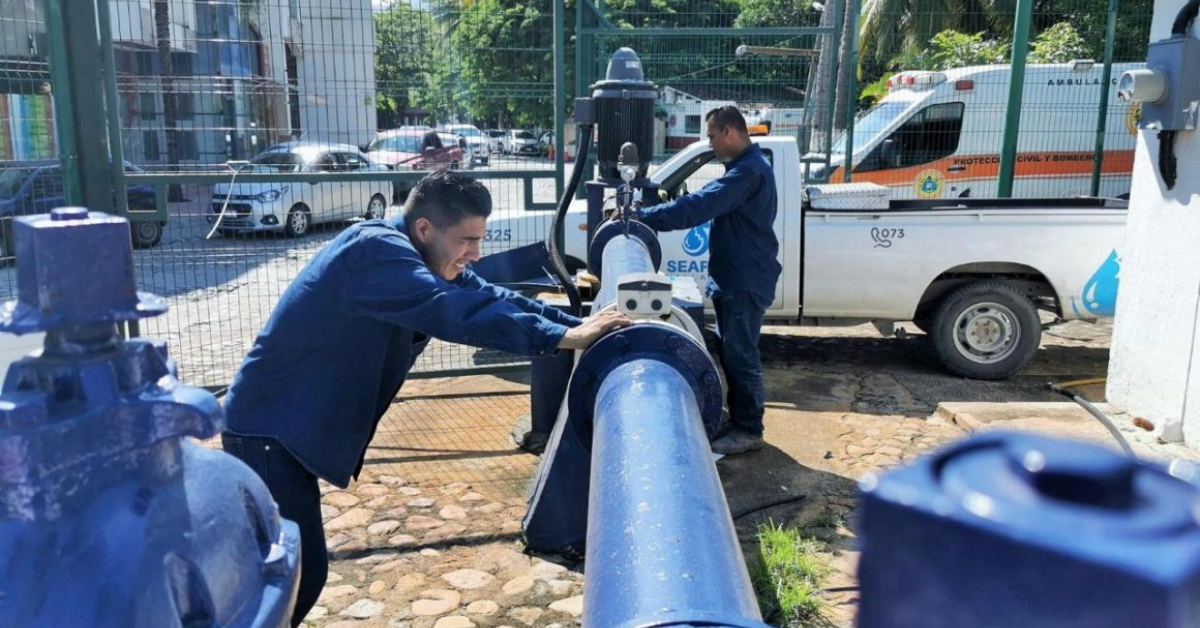
A water outage in Puerto Vallarta spread across multiple neighborhoods after an electrical failure in the Pozo Radial area triggered problems in the city’s north-side well battery. Officials said the trouble began Thursday afternoon, when the system started failing in sequence. First came problems at Well 37, then Well 38, and later Well 39. The result was a sharp drop in water production at a moment when demand was already elevated by Holy Week.
That chain reaction mattered because the outage did not remain confined to a single installation. Once production fell, the system could no longer keep up with normal demand. Officials said the tanks at San Francisco and El Mangal were emptied, leaving less stored water to maintain stable pressure while repairs were underway. By Friday, several parts of the city were reporting low pressure, intermittent service, or no water at all, especially in higher-elevation areas and on the north side.
The city’s water utility said it was working to stabilize the network and aimed to normalize service over the weekend. It also said free water tanker service would remain active for the most affected areas. That response is important in Puerto Vallarta because once pressure drops and tanks drain, recovery is rarely immediate. Even after the mechanical problem is corrected, the system still needs time to refill storage and rebuild pressure through the network.
Why one failure spread so quickly
For readers unfamiliar with how local water systems in Mexico often work, the key point is that not every neighborhood receives water at the same time. Puerto Vallarta relies on a combination of wells, pumping stations, treatment infrastructure, and storage tanks. When one part of that chain fails, the consequences tend to show up first in the places that are hardest to serve, especially upper neighborhoods and zones at the edge of the main distribution network.
The Pozo Radial is not just another well. It is one of the city’s most important supply points and forms part of the north system that helps move water toward the plant serving the city’s northern sector and the higher parts of El Pitillal. In past descriptions of the system, officials have identified the radial well as a core source for a large share of the city’s supply. They have also described the cluster that includes wells 37, 38, 39, and Radial as fundamental to service in the north side, parts of Ixtapa, Las Juntas, and the hotel zone.
That helps explain why the outage was felt so widely during a holiday week. Puerto Vallarta not only serves residents. It also serves hotels, restaurants, vacation rentals, and businesses that experience higher demand during major travel periods. When demand rises while supply drops, the system loses margin. Pressure falls faster, tanks empty sooner, and neighborhoods farther from the strongest pressure points tend to feel the disruption first.
Why Holy Week made the problem worse
The timing is a major part of this story. Holy Week and Easter week are among the busiest travel periods in Mexico, and Puerto Vallarta feels that surge directly. More visitors means more showers, more laundry, more restaurant activity, and more overall water use. The utility had already warned in other recent communications that the city faces greater strain during estiaje, the dry season, when heat rises, demand grows, and water production has less room for error.
That context matters because this was not simply a case of one broken component. The outage occurred within a broader system already under pressure. The utility has said that most of the water used by residents and visitors comes from deep wells, which makes the city especially dependent on pumping equipment and electrical reliability. Officials have also acknowledged that part of the system needs rehabilitation, and that the Pozo Radial itself has lost production capacity over time.
In plain terms, Puerto Vallarta’s water network can still deliver large volumes of water, but it has less redundancy than residents might hope for during peak periods. That means an electrical failure can become a citywide story much faster than people expect.
What this means for residents and visitors
For many households, the difference between a frustrating interruption and a true emergency comes down to storage. That is why officials again urged residents to keep tinacos, cisterns, and other storage systems ready. A tinaco is the rooftop water tank seen on many homes across Mexico. When street pressure falls, that stored water can keep a household functioning for basic needs while the network recovers.
That advice also reveals something bigger about daily life in Puerto Vallarta. In many international readers’ home countries, water service is expected to be continuous and largely invisible. In much of Mexico, including fast-growing tourist cities, families often plan for interruptions as part of the ordinary reality of infrastructure. A water outage during a busy holiday is still news, but it also fits into a larger pattern of residents’ adaptation to service variability.
For now, the immediate question is how quickly the utility can restore steady pressure across the affected areas. Even when pumps restart, some neighborhoods recover first, and others wait longer. Lower zones usually see service return before higher ones, because the system has to rebuild volume and pressure step by step. That means some residents may see water reappear while others continue with weak flow or intermittent service for hours longer.
The outage is likely to pass. The bigger issue will remain. Puerto Vallarta is growing, tourism continues to push demand upward, and the water system still relies heavily on a few critical production points. This holiday-week disruption did not create that reality, but it exposed it clearly.