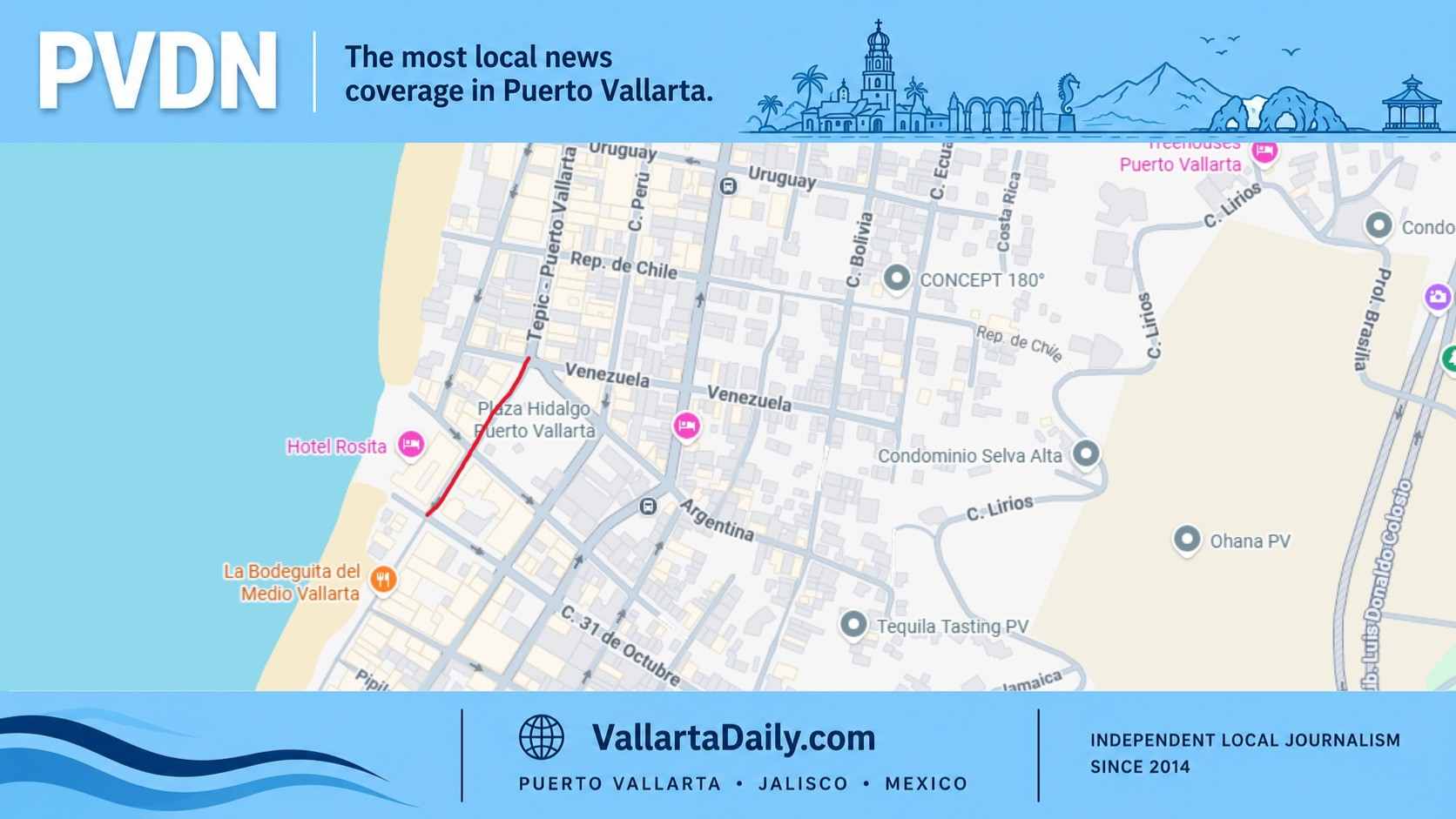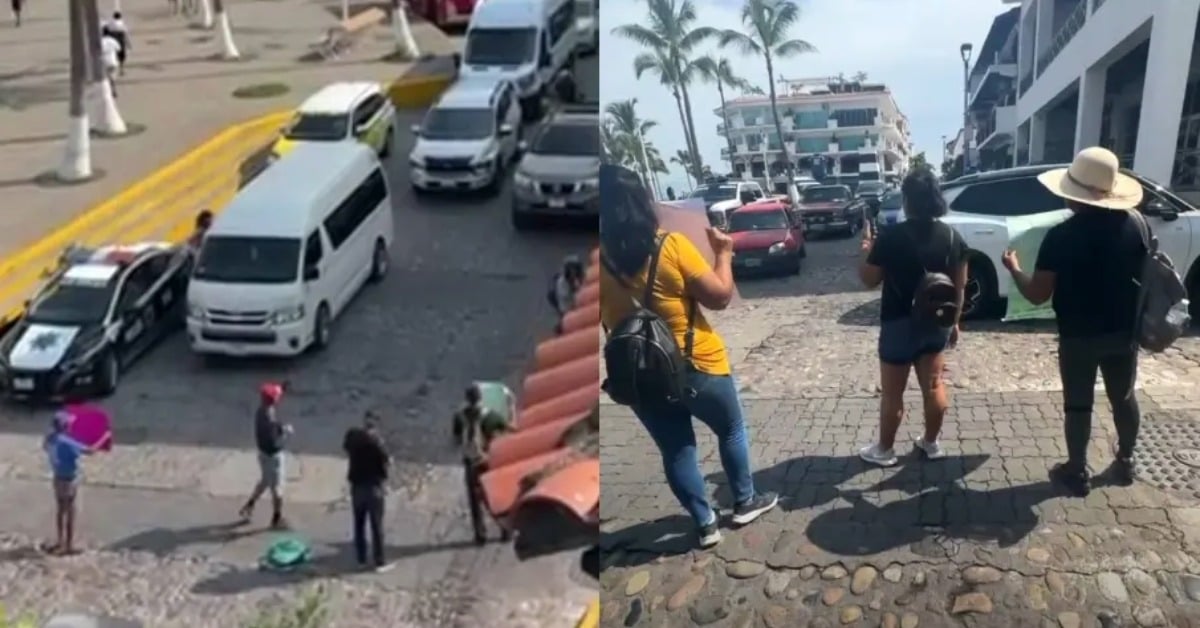
Neighbors from several colonias blocked Morelos Street beside the Malecón on Thursday morning, saying months of dry taps and brown water have pushed them to the edge. They carried jars of murky water and bills that still arrive on time. The protest landed on the mayor’s doorstep and on SEAPAL’s promises to stabilize service by late August. What residents describe as tracks with recent outages and aging pipes, but money is now flowing into upgrades. The question is whether relief will reach homes soon—or if the streets will fill again.
Puerto Vallarta water protest
Residents shut down Morelos Street, steps from City Hall and the Malecón, starting around 9 a.m. and were still there past midday. They demanded clean, quality drinking water and a steady supply after months of intermittent service. Many said the water that does arrive comes out cloudy and unusable.
Organizers framed the action as a last resort. They said they will keep demonstrating until authorities deliver a fix they can feel at the tap.
What residents say on the ground
A second local report described a small but loud group that blocked traffic on Morelos, one block from the municipal palace. Protesters called out both City Hall and SEAPAL, raising concerns about tariffs and displaying bottles of contaminated water as evidence. They asked to speak directly with Mayor Luis Ernesto Munguía. City staff and SEAPAL representatives arrived, but the crowd pressed for the mayor himself.
Munguía is the current municipal president, sworn in for the 2024–2027 term, and the protest specifically invoked his campaign promise to guarantee access to drinking water.
What SEAPAL says and is doing
SEAPAL has stated that service will begin stabilizing by late August, citing new production works coming online. The utility has also pointed to external factors—especially power outages—that can delay pumping and distribution in the city’s north side for hours. Both statements match recent SEAPAL notices.
The agency notes that more than 85% of Vallarta’s water now comes from deep wells, and it continues emergency repairs in problem zones, such as 5 de Diciembre. That reliance on wells makes the system vulnerable to power outages and aging equipment.
Investments and a long road to reliability
This week and last, City-aligned outlets and local media highlighted a 131.8-million-peso package of SEAPAL works through the PROAGUA program to modernize key infrastructure. Officials bill it as part of the promised stabilization push. Execution—and how quickly those upgrades translate to steady neighborhood flow—remains the test residents care about.
Puerto Vallarta has seen similar water-related mobilizations this month, including a separate action over waste discharge in 5 de Diciembre, which ended with a pledge for a technical review. The pattern is clear: citizen pressure is forcing timelines and oversight
Thursday’s blockade put the crisis in the city’s showcase corridor. Residents say they are tired of paying on time for water that is not safe to drink or never arrives. SEAPAL says relief is imminent and money is flowing into pipes, pumps, and tanks. The Puerto Vallarta water protest will be judged by what changes at the faucet over the following days, not weeks.