Puerto Vallarta, Jalisco – The latest national survey on urban safety and quality of life leaves no doubt — people in Puerto Vallarta are frustrated. In the July 2025 edition of the National Urban Public Safety Survey (ENSU), carried out by Mexico’s National Institute of Statistics and Geography (INEGI), every single adult respondent said the city has at least one major problem that affects daily life.
Three issues stood out above all others: failures and leaks in the drinking water supply, inadequate public transportation, and streets in poor condition. The numbers are striking — 83.2% of residents pointed to problems with water service, 80.7% criticized public transit, and 80.4% cited potholes or deteriorating roads. That level of dissatisfaction places Puerto Vallarta among the more troubled medium-sized cities in Mexico.
Water problems run deeper than shortages
For many, the water issue is more than just a few days without service. It’s aging pipes that leak constantly, low water pressure in entire neighborhoods, and the occasional risk of contamination. In some areas, repair work can drag on for weeks, leaving households dependent on bottled water or paying private trucks to deliver the most basic necessity.
“Every time they fix one leak, another one bursts,” one resident told local media recently. “It feels endless.”
A transit system struggling to keep up
Public transportation is the second-most common frustration, and it’s easy to see why. People describe buses that are often overcrowded, unpredictable schedules, and routes that fail to cover the city’s expanding inland neighborhoods. Urban growth has stretched the system thin, leaving entire areas underserved and forcing many residents into long, costly commutes.
Even recent additions of new bus units haven’t eased the strain for everyone.
Streets that don’t last a season
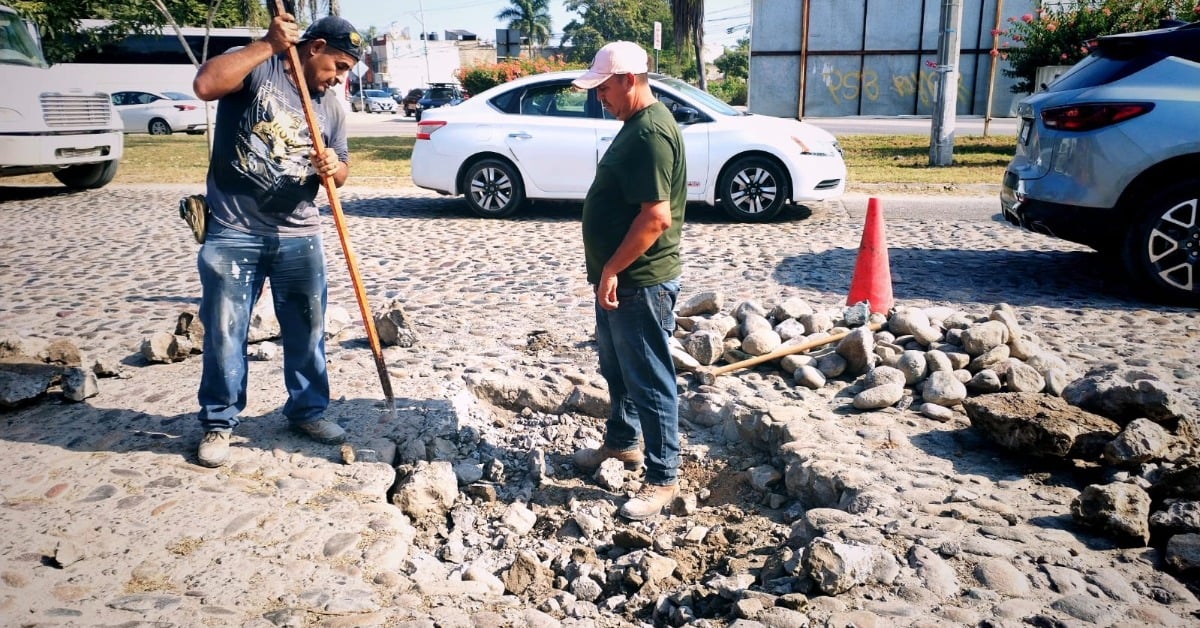
Then there’s the state of the roads. After the summer rains, potholes seem to multiply overnight along main avenues. Repairs do happen, but residents say they are often just temporary patches. Within months, the same holes reappear — a cycle that erodes both the pavement and public patience.
Safety concerns and visible disorder
While infrastructure dominates the complaints, the ENSU also tracks where people feel unsafe. More than half of Vallarta’s residents — 51.6% — said ATMs on public streets are the riskiest spots. Banks followed at 37.7%, public transportation at 28.7%, and highways at 24%.
The perception isn’t unfounded. In tourist cities, ATMs and banking areas often attract theft and scams, a problem that affects both locals and visitors.
Crime reports from the survey show extortion as the most common offense, impacting 7.5% of households. Partial vehicle theft came next at 6.3%, followed by burglary at 2.1%. Substance-related problems are also visible — 58.5% of residents reported seeing alcohol consumed in the streets, and 50.1% said they’d witnessed drug sales or use in public areas.
Confidence in local government slipping
Perhaps the most politically sensitive finding is that 42.9% of adults believe the municipal government is failing to address the city’s main problems. Urban policy experts warn that when people see declining infrastructure, visible petty crime, and unreliable public services, trust in institutions starts to crumble.
In Puerto Vallarta, where tourism drives the economy, basic services aren’t just about comfort — they’re essential to protecting the city’s image and stability.
Tourism under the same pressure
The problems flagged by residents are not confined to locals. Tourists rely on the same roads, drink from the same water system, and use the same public transport. A breakdown in any of these areas can influence the visitor experience and, over time, the city’s reputation.
City hall has invested in new buses and periodic roadwork, but critics argue these efforts fall short of what’s needed. So far, no comprehensive action plan has been announced in response to the ENSU results.
A warning — and a chance
The fact that 100% of surveyed residents reported at least one major concern is rare in a national study of this kind. It’s a signal that Puerto Vallarta is at a crossroads. Addressing these problems head-on could strengthen the bond between the city’s leadership and the people it serves. Ignoring them risks widening an already visible gap.