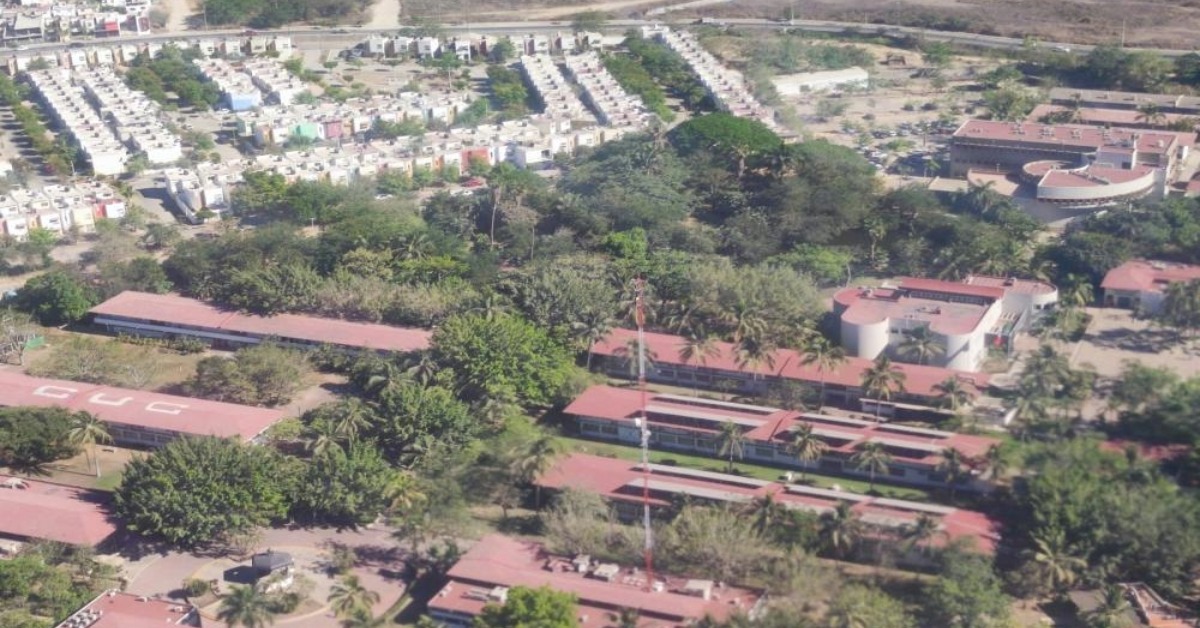
Puerto Vallarta’s planned Hospital Civil de la Costa has taken a formal step forward, with Jalisco officials and the University of Guadalajara presenting the project at the Centro Universitario de la Costa, known locally as CUCosta.
The project is planned for the north side of Puerto Vallarta, near Avenida Universidad 203 in the Ixtapa delegation. Officials presented it as a hospital-school, meaning it would provide medical care while also training future doctors, nurses, and specialists.
The first stage is expected to begin with an initial investment of 400 million pesos. The broader project has been described as a regional health investment that could grow over several stages.
For Puerto Vallarta, the announcement matters because the city and surrounding coastal communities have long depended on a limited public hospital network. Many specialized cases still require travel to Guadalajara, which can mean added costs, longer wait times, and stress for patients and families.
Why this project matters for Puerto Vallarta
Puerto Vallarta is often viewed from the outside as a resort city with a large private medical market. That view is incomplete.
The city also serves working families, rural communities, nearby towns, and people without private insurance. It is the main urban center for much of the surrounding coast and mountain region. When public medical services are limited, the pressure is felt far beyond the city itself.
The Hospital Civil de la Costa is being presented as part of a wider effort to decentralize specialized care in Jalisco. Instead of sending more patients to Guadalajara, the goal is to build capacity closer to where people live.
That point is important for foreign residents, too. Many expats use private doctors and hospitals for routine care. But a stronger public health infrastructure still affects the whole community. It can improve emergency response, reduce pressure on existing hospitals, and help train more medical professionals locally.
What is a hospital-school model?
A hospital-school combines patient care with medical education. Students and residents train in a real clinical environment, while experienced professionals supervise their work.
This model is common in major medical systems. It allows universities to connect classroom training with daily hospital practice. It also helps build a pipeline of doctors and specialists for the same region.
For CUCosta, the project fits with its existing health-related programs. The campus already trains students in fields such as medicine, nursing, nutrition, and physical culture. A hospital beside the university would give those programs a stronger clinical base.
Officials have framed this as more than a building project. The broader aim is to keep more health professionals in Puerto Vallarta and the Costa Sierra Occidental region after they finish their studies.
That is one of the major challenges in regional health care. Specialists often train in larger cities and stay there. Smaller cities and rural areas then struggle to attract the same level of care.
Planned services and first-stage focus
The hospital is expected to begin with a focus on maternal and child care. That is a practical starting point because women’s and children’s services are often among the highest-demand areas in public health systems.
The larger plan has been described as a third-level hospital model. In Mexico, that generally means a facility with more specialized services than a basic community clinic or general hospital.
Early project descriptions include 180 hospital beds, operating rooms, laboratory services, imaging, and outpatient consultation areas. Some reported technical details vary, including the exact number of operating rooms and consulting rooms. Those figures should become clearer as the project moves into construction and formal planning documents are released.
The hospital has also been linked to the regional Hospitales Civiles network in Jalisco. That network includes major institutions in Guadalajara and new regional projects aimed at expanding public care beyond the state capital.
The regional impact could be larger than the city
The project is not only about Puerto Vallarta. It is also about the wider Costa Sierra Occidental region.
Communities such as Tomatlán, Mascota, Talpa de Allende, and other nearby municipalities often rely on Puerto Vallarta or Guadalajara for more advanced medical care. Travel can be difficult, expensive, and time-consuming, especially for families without strong financial support.
A stronger regional hospital could reduce some of that burden. It could also create a clearer referral point for patients who need specialized attention but do not require transfer to Guadalajara.
This does not mean every medical need would be handled in Puerto Vallarta. Highly complex cases may still require transfer to larger facilities. But a stronger hospital based on the coast could change the first line of care for many patients.
What foreign residents should understand
For many international residents, Mexico’s health system can be confusing. Public, social security, and private systems often operate side by side.
A Hospital Civil is generally part of the public health structure and is especially relevant for people without access to social security medical systems. It is not the same as a private hospital focused on medical tourism or on insured foreign patients.
Still, the project matters for anyone living in the area. A larger public hospital can affect ambulance routing, emergency capacity, specialist availability, and the overall medical ecosystem.
It may also indirectly support the private sector. When a region trains more doctors and specialists, the larger health workforce can grow over time. That can benefit public and private care.
A major project with unanswered questions
The presentation marks progress, but several questions remain.
The first is timing. Officials have presented the project and the first-stage investment, but large hospital projects often move in phases. Construction, equipment, staffing, licensing, and service openings can each follow different timelines.
The second is staffing. A modern hospital needs more than buildings and beds. It requires specialists, nurses, technicians, administrative staff, maintenance teams, and steady operating funds.
The third is integration. The hospital will need to connect with existing local services, including the Regional Hospital, emergency units, municipal health programs, and state-level referrals.
Those questions do not reduce the importance of the announcement. They show why the project should be followed closely. For Puerto Vallarta, the Hospital Civil de la Costa could become one of the most important public health investments in years if it moves from presentation to full operation.